

By SherRhonda R. Gibbs, PhD, Monica D. Guillory, PhD[1], Caroline Glackin, PhD
Background
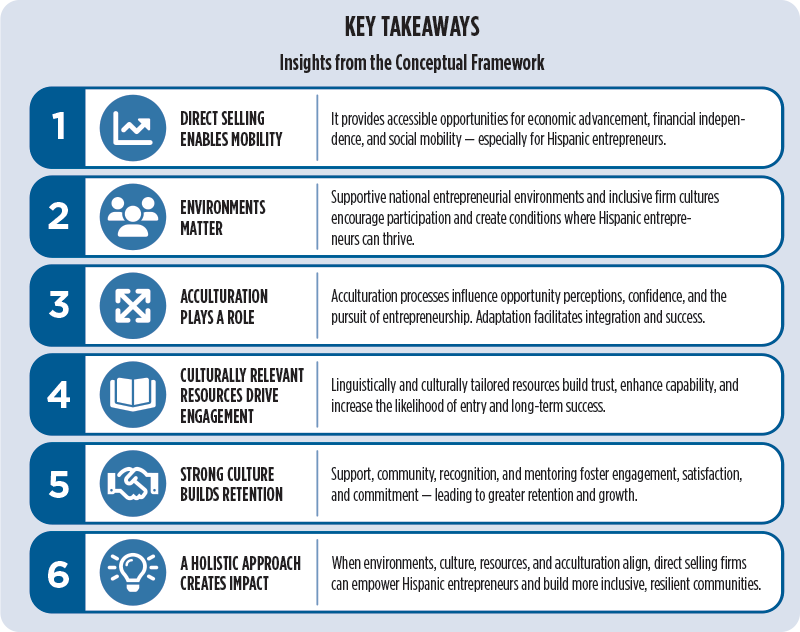
Entrepreneurship has long served as a pathway for economic integration and acculturation of immigrants in the United States. This study suggests that the unique structure and features of the direct selling channel are particularly appealing to Hispanic entrepreneurs generally, supporting both business participation and acculturation into U.S. society.
Implications for Policymakers
- Entrepreneurship depends on supportive government, economic, and organizational environments.
- The Global Entrepreneurship Monitor (GEM) ranked the United States as 5th out of 31 in Total Early-stage Entrepreneurial Activity (TEA) and 16th in Established Business Ownership (EBO), among countries considered high-income economies.
- Direct selling companies strengthen the entrepreneurial ecosystem by providing:
- Low-barrier access to entrepreneurship.
- Structured training, mentorship, and business resources, often in English and Spanish.
- Entrepreneurial cultures that build self-efficacy and help Hispanic entrepreneurs develop the skills, norms, and networks that support business success and acculturation.
Abstract
Hispanic communities are disproportionately represented in the direct selling channel, yet little is known about the factors influencing direct selling entry decisions among Hispanic entrepreneurs. Drawing on acculturation theory and entrepreneurship literature, this study develops a conceptual model of external factors that influence direct selling entry decisions of Hispanic entrepreneurs and distributors. The literature suggests that supportive entrepreneurial environments and firm cultures may facilitate both entrepreneurial participation and acculturation. For Hispanic entrepreneurs, direct selling may provide opportunities for economic and social mobility while serving as a mechanism for integration into the broader society. The study contributes to the entrepreneurship literature by extending acculturation theory to the direct selling context and offers practical implications for firms seeking to attract and support Hispanic entrepreneurs.
Keywords: direct selling, acculturation, entrepreneurial environment, Hispanic entrepreneurs, entrepreneurial culture, minority entrepreneurship.
 Executive Summary
Synopsis
This study examines acculturation and its application for Hispanics in the direct selling channel. With Hispanics constituting 26 percent of U.S. direct sellers (distributors), and the Hispanic population in the United States at 20 percent, there is an opportunity to understand the appeal of the channel to this population.
Methodology
This study analyzes the literature on acculturation theory, direct selling, the entrepreneurial environment, and Hispanics in the United States. It considers the data findings presented in the Hispanic Marketing Survey: Results Report (Gamse, 2016), the underlying data, and the data from the Direct Selling 2025 Growth and Outlook Study (DSEF, 2026). A conceptual model compiles findings from the literature into a viable model.
Results/Findings
Hispanics may become direct sellers for reasons of acculturation, social and economic mobility. Acculturation is more prominent in countries with strong entrepreneurial environments and direct selling entry decisions positively relate to the entrepreneurial culture in direct selling firms.
Conclusion and Implications for Theory, Research, and Practice
Direct selling firms that wish to increase the number of Hispanic distributors should strive to create a supportive entrepreneurial culture with culturally and linguistically specific and appropriate resources that facilitate success in the field salesforce.
Implications for Entrepreneurship Education
The study addresses the application of acculturation theory to Hispanics in the direct selling channel, providing insights into several topics that are not frequently a part of the entrepreneurship literature or the entrepreneurship classroom. While much has been written about minority entrepreneurship, little is known about the go-to-market strategies of the companies in which they engage and the cultural fit. We address the entrepreneurial culture of direct selling organizations, the culturally and linguistically appropriate resources provided for Hispanic distributors, and the national entrepreneurship environment. Entrepreneurship educators can begin to address ethnicity and acculturation in the classroom with more specificity and can discuss the direct selling channel as an entrepreneurial entry option and as a go-to-market strategy. It is important that we discuss entrepreneurial options across the spectrum and provide insights into them.
1) Introduction
Direct Selling is viewed as an attractive entrepreneurial entry point by minorities and immigrants. The direct selling retail channel offers a welcoming culture, low entry barriers, easy access to suppliers and customers, and accessible training programs. The Direct Selling Education Foundation defines direct selling as “a business model that provides entrepreneurial opportunities to individuals as independent contractors to market and/or sell products and services…” (DSEF, 2026). Hispanic communities are disproportionately represented in direct selling, constituting 26 percent of the direct selling salesforce despite being 20 percent of the U.S. population in 2025 (DSEF, 2026). Prior research has suggested that immigrant populations who are disadvantaged in the labor market pursue entrepreneurship (Sequeira & Rasheed, 2006), and the willingness to participate is compelled by the size of the group and encountering adverse environments (Evans, 1989). Plausible explanations for the large participation rates of Hispanic Immigrants and Hispanic Americans in direct selling are: (1) the entrepreneurial environment in these firms provides a means of economic sustainability (i.e., necessity entrepreneurship), and (2) firm culture in direct selling facilitates acculturation.
Acculturation is the “process of cultural and psychological change that takes place as a result of contact between cultural groups and their individual members (Berry, 2004, p. 27).” The acculturation process explains how individuals engage in intercultural contact to achieve desirable outcomes (Berry, 2005). Berry (2005) describes four acculturation strategies employed by immigrants and minorities who choose to engage or disengage with the host country or dominant culture. Strategies include integration, assimilation, separation, and marginalization. There is a growing body of extant literature that has focused on the importance of cultural and ethnic identity in the reasoning behind the selection of acculturation strategies (Williams & Liu, 2023; Forrest-Bank & Cuellar, 2018; Schwartz et al., 2006; Ting-Toomey et al., 2000) and the relationship between acculturation strategies and organizational outcomes of immigrant employees (Williams & Liu, 2023; Gurlek, 2021; Hajro et al., 2019, Hommey et al., 2020).
Marginalized minority communities beleaguered by perceived and practiced inequality may view direct selling opportunities as viable income-producing alternatives to overcome structural barriers which prohibit full integration or assimilation into dominant culture. Immigrants without permanent residency often rely on low wage or informal employment and may view self-employment in direct selling as an opportunity to transition into the host country culture. Gunter (2017) concluded in his study that the average rates of informal business ownership in the Hispanic community was 26.9 percent for Latinos and 14.2 for Latinas. The entrepreneurship literature is surprisingly lean on the topic.
To address this gap, we review acculturation theory, the criteria for strong national entrepreneurial environments, and entrepreneurial culture created by direct selling firms. We further theorized that supportive entrepreneurial environments and firm culture lead to acculturation and direct selling entry decisions. For Hispanic communities in particular, opportunities to develop professional networks and entrepreneurial businesses, yields dual benefits (e.g. self-employment and acculturation) which may explain the higher participation rates in direct selling.
We advance acculturation research in entrepreneurship by conceptually demonstrating how entrepreneurial environments within the context of the direct selling retail channel facilitates acculturation processes. The study specifically addresses the phenomenon of a disproportionate participation rate in direct selling relative to the Hispanic population in the United States. We suggest that the unique structure and features of the channel are particularly appealing to Hispanic immigrants and the general Hispanic population alike.
2) Literature Review/Theory Development Acculturation Theory
Acculturation theory originates from cross-cultural psychology and is applicable in business contexts. The acculturation process occurs when individuals are exposed to culturally different others or move from their home country to reside in another (host) country while navigating sociocultural and psychological changes that occur when transitioning towards the dominant culture (Schwartz, Unger, Zamboanga, & Szapocznik, 2010). While many Hispanic direct sellers have not moved from a home country to a host country, they experience the “otherness” in cultural and linguistic terms. According to Berry (1980), immigrants and minorities are faced with two questions upon arrival to host countries. The questions are categorized as acculturation dimensions. The first dimension refers to maintenance of the heritage culture (i.e., Is it important to maintain my heritage culture?), and the second dimension refers to host culture contact (i.e., Is it important to engage with the host culture?).
Scholars put forth unidimensional and bidimensional models of acculturation which immigrants can adopt in new societies. The unidimensional model infers a bidirectional dependency relationship between an individual’s host culture and heritage culture. The first viewpoint of the unidimensional model holds that the more individuals affiliate with the host culture, the more their affiliation with the heritage culture weakens. The second viewpoint suggests that the more individuals retain their heritage culture, the less likely they are to adopt host country culture (Laroche, Kim, Hui, & Joy, 1996), thus, a commitment to affiliate with the host culture (i.e., viewpoint one) weakens the heritage culture (i.e., viewpoint two). Conversely, the bidimensional model of acculturation posits that individuals’ affiliation with the host culture is largely independent of heritage culture (Berry, 1980). In the bidimensional model, each dimension can be assumed to have predictive power that is independent from the other (Cheung-Blunden & Juang, 2008).
Within each model, individuals pursue one of four acculturation strategies. First, assimilation refers to individuals seeking full participation in the host country by adopting the host country culture rather than their own. Second, separation refers to individuals who retain their heritage culture and avoid participating in the host culture. Third, integration refers to individuals who maintain their own cultural identity while also seeking to participate in the host culture. Fourth, marginalization refers to individuals who refrain from both heritage and host cultures. Marginalists do not acculturate towards either culture. As it relates to entrepreneurship, some authors postulate that integration is the optimal acculturation strategy (Arrighetti, Bolzani & Lasagni, 2017; Dheer, 2014).
Whereas most acculturation research centers on immigrants, a growing number of studies explore the phenomenon among minority groups or in colonial settings where a person’s own culture becomes subsidiary to another because of colonization (i.e., see Seitz, 1998; Cheung-Blunden & Juang, 2008). These studies may examine minorities (i.e., Hispanics, Native Americans, and Blacks) in the United States, or in British colonies and territories (i.e., Hong Kong) where native population culture is subordinate to British culture. Researchers found that in colonial settings, acculturation towards the majority culture resulted in maladaptive implications (i.e., adverse outcomes), and the bidimensional model was more robust in measuring outcomes influenced by psychological stress (Cheung-Blunden & Juang, 2008).
Difficulty with acculturation processes results in psychological maladjustments, or stress. Cheung-Blunden and Juang (2008) purport that when individuals are exposed to two or more cultures, norms, values and languages, acculturative stress occurs, and mental disturbances ensue (i.e., depression, negative affect, and poor academic achievement). Immigrants and minorities experience difficulties with acculturation when attempting an assimilation strategy without fully adjusting to mainstream society. Immigrants may be viewed as “passing” in mainstream society fostering rejection from the heritage culture and lowering self-esteem (Krishnan & Berry, 1992). Similarly, separation and marginalization yielded negative effects and life dissatisfaction resulting in isolation and exclusion (Berry, 1980). Drawing on Berry’s (1997) acculturation framework, many of the entrepreneurship studies have argued that integration — simultaneously maintaining one’s heritage culture while engaging with the host society — provides entrepreneurs access to broader social networks, knowledge, and resources and is generally associated with more favorable adaptation outcomes (Arrighetti et al., 2017; Szapocznik & Kurtines, 1980; Walsh et al., 2022). Immigrants or minorities with bicultural competence possess the attitudinal repertoire to transition between and successfully negotiate heritage and host cultures (Cheung-Blunden & Juang, 2008).
Acculturation perceptions indicate whether or not majority groups react positively to minority groups perceived as adopting an assimilation strategy compared to minorities choosing separation or marginalization (Kosic, Mannetti, & Sam, 2005). Although acculturation perceptions are beyond the scope of the current study, we assume that majority groups react positively to minorities attempting integration or assimilation acculturation strategies. Acculturation psychologists have called for more action-oriented research (Chirkov, 2009) that empowers acculturating individuals and communities, enhances social integration, and improves intergroup relations to better assist immigrant communities and immigrant-assisting organizations (Ward & Kagitcibasi, 2010). Scholars answered this call with contributions examining the components of integration to situate acculturation within social and political contexts (Paloma, Garcia-Ramirez & de la Mata, 2010). Other studies used Ward’s (2001) ABC framework to demonstrate how acculturation can be used to create opportunities for cultural maintenance in group settings (Smith, Smith & Peang-Meth, 2010), or multicultural programs to enhance social engagement (Sakurai, McCall-Wolf, & Kashima, 2010).
Our exploration of acculturation in domestic and entrepreneurial contexts is an appropriate contributive act to Chirkov’s (2009) call for action research. The United States has a rich history of hosting immigrants from every corner of the globe (e.g., Irish, Italian, Jewish, and Asian). Each of these immigrant groups tapped entrepreneurship as a social organizing acculturating mechanism to enter mainstream society. Hispanic immigrants are embarking upon a similar acculturation process into U.S. culture, and Hispanic American culture. Collectively, Hispanic immigrants and Hispanic Americans are swelling the ranks of entrepreneurship and direct selling. To advance the study’s framework on Hispanic direct selling entry decisions using acculturation, we transition the discussion towards the meaningful intersections of entrepreneurial environments, entrepreneurial culture in direct selling, and acculturation.
Entrepreneurial Environment
Entrepreneurship is influenced by relationships between entrepreneurs, enterprises and the environment (Lundström & Stevenson, 2005). Entrepreneurial environments are influenced by factors external to the firm (De Hoyos-Ruperto, Rummager, et al., 2012). Researchers point to institutional agreements, the role of government, economic policy, and country social structure as external factors contributing to the entrepreneurial environment (Lundström & Stevenson, 2005;). Generally, the entrepreneurial environment refers to the economic, social, cultural, and institutional conditions surrounding individuals that influence entrepreneurial cognitions, intentions, and venture creation decisions (Lim et al., 2010; Nguyen & Phan, 2024).
To capture the relative supportiveness of the entrepreneurial environment, the Global Entrepreneurship Monitor (GEM) publishes the total early-stage entrepreneurial activity (TEA) and entrepreneurial framework conditions (EFC) model using a national expert survey (NES) database and macro-variables to capture the extent of entrepreneurial finance, government entrepreneurship programs, entrepreneurship education, and cultural and social norms, to name a few. According to GEM, the entrepreneurial environment “directly influences the existence of entrepreneurial opportunities, entrepreneurial capacity and preferences, which in turn determines business dynamics. Hence, it is expected that different economies and regions have structures and quality of EFCs or different ‘rules of the game’ that directly affect entrepreneurial activity’s inputs and outputs (“What is the National Expert Survey (NES)?”, 2017). GEM ranked the United States as 5th out of 31 in total early-stage Entrepreneurial Activity (TEA) among countries that are considered high-income economies (more than $50,000 GDP per capita), and 16th in the established business ownership (EBO) rate among these same countries (DSEF, 2026).
GEM’s NES database provides information from experts on a particular country’s entrepreneurial framework conditions. EFCs may affect the creation and development of new firms (De Hoyos-Ruperto, Romaguera, et al., 2012), and although EFC factors are traditionally used to assess the entrepreneurial environments of countries, its components can also measure the entrepreneurial culture in SMEs, and the likelihood of new entrants in industries like direct selling. Entrepreneurial culture in firms has a considerable impact on entrepreneurial behavior as societal norms influence the resources individuals have access to and the entrepreneurial activities they undertake (Mueller & Thomas, 2001; Amine & Staub, 2009). Supportive entrepreneurial environments with plentiful economic resources lay the foundation for businesses to emerge, grow and succeed (Shabbir & DiGregorio, 1996; Pennings, 1982). Direct selling firms make concerted efforts to effectuate entrepreneurial cultures that build self-efficacy and promote the concept that entrepreneurial success results in societal integration.
Direct Selling: Definition, Background, and Culture
Direct selling has a long, interesting history in the United States. Direct selling companies use independent sales teams to market products and services, with the benefit of low start-up and overhead costs for distributor entrepreneurs (DSEF, 2017). For many types of organizations, direct selling is also a viable go-to-market strategy. The first organized trade group in the direct selling industry was Agents Credit Association, formed in 1910 for door-to-door salesmen (Taylor, 2012). For many decades, households were visited by representatives of companies such as Fuller Brush, Avon, Charles Chips, and World Book Encyclopedia. Direct selling then transitioned from door-to-door sales toward network selling (person-to-person) and party plans over the years.
According to the Direct Selling Education Foundation’s Growth and Outlook reports, U.S. direct selling retail sales peaked at $42.7 billion in 2021 before softening to $34.7 billion in 2024, which is more consistent with pre-pandemic sales levels. Similarly, the number of full- and part-time U.S. direct sellers decreased from 7.7 million in 2020 to 5.4 million in 2024, reflecting the industry’s post-pandemic adjustment period. Table 1 shows U.S. retail sales and the number of direct sellers. Within direct selling, there are person-to-person, party plan and other companies. The majority are person-to-person or network sales (71.5 percent) wherein a direct seller (representative, consultant, designer) sells directly to her customer. The second most popular method is the party plan (22.4 percent), wherein a direct seller sells to groups of customers in homes, other locations, or through an online party.
Table 1
Direct Sales Statistics
| Year | U.S. Retail Sales ($ billions) |
U.S. Direct Sellers (millions) |
| 2025 | $34.2 | 5.2 |
| 2024 | $34.7 | 5.4 |
| 2023 | $36.7 | 7.3 |
| 2022 | $40.5 | 6.7 |
| 2021* | $42.7 | 7.3 |
| 2020 | $40.1 | 7.7 |
Source: Growth & Outlook Reports (2021–2025) Washington, DC: Direct Selling Association.
*Start of the global pandemic
According to the Direct Selling Education Foundation, of the 5.2 million U.S. direct sellers, 73 percent are women, primarily selling person-to-person, in the categories of wellness, services, home and family care/home durables, personal care, clothing and accessories, and leisure/education. Of the 5.2 million business builders, 92.3 percent are part-time workers. Most direct sellers are between 35 and 54 years of age, with the two categories (35-44 years old; 45-55 years old) tying as the largest categories with 23% each.
Direct selling companies need to recruit and retain excellent independent representatives to generate revenues and to grow. Because they do not sell through brick-and-mortar retail stores or wholesalers, these representatives are their go-to-market strategy for the channel. Therefore, direct selling leaders focus considerable attention on the field salesforce. Interestingly, no sales experience is required, and recruitment is primarily through the distributor network. The cost of entry into direct sales is low, at an average of $262 for a starter kit, with 35% of DSA member companies surveyed offering $0 cost in this category (DSEF, 2023) and Direct Selling Association (DSA) member companies offer a 90% buyback of the cost of products and kits, a requirement of the DSA Code of Ethics (DSA 2026).Training, upline mentoring, and performance incentives are typical in the direct selling channel.
In recent years, direct selling firms have reframed, focusing more on the end customer, and creating entrepreneurial cultures with more transparency in the company-distributor-customer matrix (Fleming, 2017). Many direct sellers now track retail customers more carefully, and new strategies have been initiated to help distributors acquire customers, especially after the economic slowdown triggered by the pandemic. However, those in the industry remain optimistic even after the pandemic surge. Stuart Johnson, Chairman and Founder of Direct Selling News wrote, “The direct selling model isn’t a relic. It’s a viable opportunity that is showing signs of growth, particularly in the U.S.” and he further concluded that “Success in the remainder of 2025 and beyond won’t come from maintaining the status quo. It will belong to those ready to build what’s next. The past, my friends, is in the past (Johnson, 2025).” This aligns with an early quote from the World Federation of Direct Selling Associations 2024 report, “The growth potential for direct selling remains substantial, given the continuing desire of people for entrepreneurial opportunities” (Paulk, 2024).
Entrepreneurial Culture in Direct Selling
Differences in firm culture necessitate taking stock of cultural practices in direct selling companies to gain insight into unique entrepreneurial processes that position direct selling distributors for success (Sequeira, Gibbs, & Juma, 2014). Direct selling organizations provide more than materials and training. Each has a unique corporate culture and brand. They expend considerable resources creating and sharing this culture with their field salespeople. Charismatic company founders and leaders often become “larger than life” through their outreach to representatives, dynamic presence at annual gatherings, incentive trips, and social media posts. Direct selling networks, characterized by an inspiration-driven, collaborative atmosphere, promote work styles that support these networks (Bhattacharya & Mehtra, 2000; Biggart, 1989; Crittenden & Crittenden, 2004; Lan, 2002; Merrilees & Miller, 1999; Sparks & Schenk, 2001). Sales meetings are often filled with visible celebration, joy, tears, and pride, complemented by the effusive and expressive behavior exhibited by company leaders and distributors alike (Biggart, 1989). For example, Scentsy holds reunions for their salespeople rather than annual conferences. They are also highly motivational, encouraging representatives to “Swing for the Fences” (Scentsy in 2017). Mary Kay, Inc. is known to treat their “employees, consultants, customers and suppliers as family… ” Mary Kay Ash’s saying on balancing priorities in life, “Faith first, family second, and career third” is still a core company value (Crittenden & Crittenden, 2023, p.361), as evidenced by the Mary Kay consultants who continue to share this motto on their social media today. Rather than creating a fiercely competitive sales environment like those fostered in other personal selling companies, direct selling firms encourage collaboration and supportive environments where coaching and mentoring are encouraged and valued (Biggart, 1989).
Direct sellers in the United States are independent contractors paid commission for sales. Distributors in multi-level marketing organizations earn commissions on sales by individuals recruited as downline distributors. Most direct sellers work part-time, selling inside, or outside the home — in person, or online. Those engaged in party plans sell in other homes, workplaces or neutral settings in a social and entertainment-oriented environment (Peterson & Wotruba, 1996). Direct selling firms perpetuate an entrepreneurial culture that exposes distributors to entrepreneurial training, tools, and professional networking (Peterson & Wotruba, 1996). These practices develop an entrepreneurial mindset among the direct selling salesforce. Direct selling firms teach useful skills on relationship marketing, generating repeat business, and allow distributors to plug into the value chain at any point with access to suppliers, potential customers, physical resources, and virtual selling platforms (Peterson & Wotruba, 1996).
The life of a fully engaged distributor becomes intertwined with the company, its brand, and the lives of other distributors. In fact, Biggart (1989, p. 9) argued that “committed distributors see their work as a superior way of life that embraces political values, social relations, and religious beliefs. It gives them not a job, but a worldview, a community of like-minded others, and a self-concept.” More than this, distributors may come to see themselves as part of a “family” as they engage with the direct selling company and other representatives (Biggart, 1989). Distributors can easily and inexpensively join and exit the companies, yet they often join for the products and stay for the environment (Coughlan, Krafft, & Allendorf, 2017).
The direct selling industry eliminates entry barriers by lowering capital requirements for becoming a distributor, offering free training seminars (face-to-face and online), and developing Spanish-only product brochures and marketing campaigns which target Spanish-speaking distributors and consumers (Gamse, 2016). Even today, access to capital remains a salient problem among minority entrepreneurs. Minority entrepreneurs are still disproportionately denied loans by banking institutions, underfunded by investors, and lack fully developed social networks. Direct selling addresses these issues in its core structure. Like most U.S. businesses, direct selling firms are microcosms of societal entrepreneurial culture and cultural norms. More importantly for minority and disadvantaged populations, distributors integrate spheres of life normally separate in modern society (Biggart, 1989). Children, spouses, and even religious values are brought together in the enterprise. Direct selling draws minority entrepreneurs with a compelling promise of granting status and recognition to workers largely excluded from both in most workplaces (Biggart, 1989). Hence, we propose that:
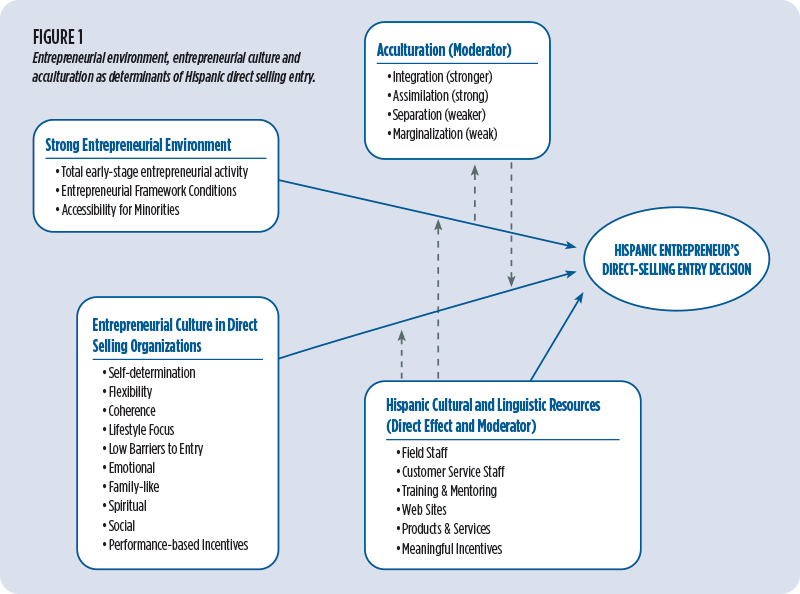
Proposition 1: Strong national entrepreneurial environments (countries ranked highly on total early-stage entrepreneurial activity and entrepreneurial framework conditions) and entrepreneurial culture in direct selling firms will be positively related to direct selling entry decisions.
Hispanics in Direct Selling
Hispanics are increasingly important players in direct selling channels, both as distributors and as customers, particularly with the size of the U.S. Hispanic population growing exponentially. Because direct selling relies on face-to-face selling and social and family networks, it has shone a light on Hispanics in the salesforce. While the academic literature is essentially silent on the topic, the Direct Selling Association conducted surveys of member companies and their Hispanic distributors in 2016 to learn more about this influential group.
Princess House, Shaklee Corporation, and Gold Canyon are a subset of direct selling companies actively involved in the recruitment of Hispanic distributors and targeting the Hispanic market (Gamse, 2016). Hispanic distributors comprised more than twenty percent of the salesforce for fifty percent of firms targeting Hispanic markets during this time. Many firms had Spanish language materials primarily for marketing and training with replicated websites. Most had Spanish-fluent field leaders (83 percent) and call center staff (73 percent). Among Hispanic distributors, approximately 59 percent were of Mexican ancestry and 10.3 percent were Puerto Rican. This trend has continued. Recent industry reports within Direct Selling News indicate that many direct selling companies are intentionally expanding their efforts to recruit Hispanic distributors (Paulk, 2023). This is a trend that is consistent with demographic and entrepreneurship research on the growing economic influence of the U.S. Hispanic population (Gamse, 2016).
Recent evidence suggests that Hispanic Americans possess strong entrepreneurial orientations and substantial interest in self-employment. Nearly one-quarter of new entrepreneurs in the United States were Latino (Hispanic) (U.S. Department of the Treasury, 2023), and Latino-owned (Hispanic) employer firms increased by 44% between 2018 and 2023 (Steen, 2025). Furthermore, Hispanic workers demonstrate higher rates of self-employment than non-Hispanic workers across all age categories (Gumber and Martinez, 2025), indicating a strong propensity toward working for themselves and pursuing entrepreneurial opportunities. A key finding of the Consumer Trends study is “Hispanics seem to be the minority searching most for meaning and balance in their work yet not always finding it in their current jobs. As they are also the group most intrigued by the idea of working for themselves, direct selling could be a natural fit. (GfK Consumer Life, 2016, p. 100).” In fact, Hispanic-owned businesses have been one of the fastest-growing segments of U.S. entrepreneurship (Donoghoe et al., 2025). Quite possibly, industry strategies to grow its Hispanic salesforce and customer base could continue to spur the adoption of entrepreneurial culture and accelerate acculturation in Hispanic communities.
According to the DSA’s Hispanic Marketing Survey (2016, p.8):
Hispanic people involved in direct selling are more likely to be male, younger, single, have children, live in the West and South, and have less education than non-Hispanic direct sellers. They also provide more positive ratings of their direct selling experience than non-Hispanics. They are more satisfied with the experience and more likely to recommend direct selling to others. Hispanic people involved in direct selling also seem more committed to direct selling as they are more likely than non-Hispanics to work full time and to be satisfied with the amount of money earned for the amount of time spent on their business. They believe the materials provided by their direct selling organizations meet their needs and give high marks to their company for providing materials in languages other than English.
Direct Selling and Acculturation
Albeit scant, entrepreneurial scholars have initiated studies that examine the role of acculturation in entrepreneurship. A single study by Dheer (2014) consisted of a conceptual exploration on immigrants’ introduction and acculturation to a new society, and the resulting impact on his or her entrepreneurial intentions. The study contends that acculturation evokes cognitive outcomes of creativity, innovativeness, a desire for economic and social status excellence, and entrepreneurial intentions. Dheer (2014) notes that biculturals (those individuals who acculturate through integration) are more proficient at recognizing entrepreneurial opportunities when exposed to elements of the host and home culture given their wider knowledge base. Based upon Dheer’s (2014) findings; it stands to reason that if traditional entrepreneurial entry opportunities fail to materialize, direct selling distributorships may be viewed by immigrant and minority groups as a viable entrepreneurial entry point.
For Hispanic entrepreneurs, the attraction of direct selling stems from industry efforts to eliminate structural disadvantages and socially embedded institutional barriers, too great to overcome (Ramirez Bishop & Surfield, 2013; Samli & Molina, 2013; Suárez, 2016). Direct selling firms provide representatives with structured training platforms and other resources, often in Spanish and English, and supportive entrepreneurial environments in which nascent and novice entrepreneurs can quickly test their entrepreneurial acumen and success. Operations and procedures in firms usually reflect the dominant culture’s values, beliefs, and norms, allowing immigrants and minorities to use firm social structures to implement the necessary changes in behavior, attitudes, and cultural norms in pursuit of entrepreneurship. Direct selling firms’ engagement with independent sales representatives is frequent, inspirational, motivational, and heavily reliant on social networks, with a strong sense of family, and branding (Coughlan, Krafft, & Allendorf, 2017; Crittenden & Crittenden, 2004; Dai, Teo, & Wang, 2017).
Hispanic Community and Acculturation
Hispanics are the fastest growing demographic in the United States and the country’s second largest ethnic group. Between 2000 and 2024, the Hispanic population nearly doubled, rising from 35.3 million to 68 million, accounting for more than half of all U.S. population growth during that period (Pina and Martinez, 2025). Hispanics are extremely diverse with regard to race, ethnicity, and culture. Although most Hispanics are from collectivistic countries and cultures, differences abound. Hispanics speak various languages (i.e., English, Spanish, Portuguese), have unique cultural traditions and celebrations, and signature cuisines. A survey on Hispanic entrepreneurs found that many identify more with ethnicity (i.e., Mexican, Puerto Rican, Chicano) rather than race (i.e., White, Black). Acculturation issues may develop from social and cultural differences in Hispanic communities which lead to social and economic disadvantage, stereotyping, and discrimination (Christiansen, 2010).
Diverse ethnicities, subcultures, and environmental conditions obfuscate acculturation in Hispanic communities. Entrepreneurship, however, may be the unifying factor. Suárez’s (2016) study compared Hispanic immigrants and U.S.-born Hispanic entrepreneurs. Suárez found that U.S. Hispanics have higher self-esteem than Hispanic immigrants, and Hispanic immigrants had lower educational levels and greater external locus of control (Suárez, 2016). The preponderance of acculturation research centers on immigrants; however, research findings often relate to minority groups, such as U.S.-born Hispanics, whose subcultures vary from the dominant culture, particularly in ethnic enclaves (Berry, 1997; Cheung-Blunden & Juang, 2008; Seitz, 1998). Certain personal (i.e., self-efficacy) and sociocultural factors (i.e., social recognition, legitimacy) influence the extent to which immigrant and minority groups pursue acculturation (Berry, 1997; Dheer, 2014). These factors not only predict acculturation but entrepreneurial intentions as well (Boyd & Vozikis, 1994; Dheer, 2014). The remarkable connection implies that acculturation may not only act as a determinant for entrepreneurial or direct selling entry but may also interact with certain factors (i.e., race, entrepreneurial environment, entrepreneurial culture, resources offered) to strengthen entry decisions.
As a group, Hispanic entrepreneurs hold more traditional attitudes towards working women, have lower perceptions of mastery, and a slightly greater external locus of control (Ramirez Bishop & Surfield, 2013). Latina entrepreneurs, a relatively disadvantaged group, choose self-employment for non-pecuniary reasons (Lofstrum & Bates, 2009). These findings may indicate an environmental dependency on the part of Hispanic entrepreneurs. Of great interest to the current study is Abebe’s (2012) finding that social factors (i.e., social status and social support) are predictors of entrepreneurial career intentions among Hispanic adults. Direct selling firms provide ample social support and entrepreneurial resources for distributors which could explain why direct selling is attractive to Hispanics.
Collectively, Ramirez Bishop & Surfield (2013), Lofstrum and Bates (2009), and Abebe (2012) allude to theoretical assumptions that social and environmental forces propel Hispanics toward self-employment, for which direct selling is a form. Analogous to Hispanic American entrepreneurs, Hispanic immigrants use transnational entrepreneurship as a means of acquiring material gains, social status, and expanding their middle-class status (Zhou, 2004). Sociocultural transnationalism serves to “forge and sustain multi-stranded social relations that link together their societies of origin and settlement (Basch, Glick-Schiller, & Blanc-Szanton, 1994, p. 6).” A study by Allen and Busse (2016) describe personal and business acculturation as a form of breakout and found that Latino immigrant business owners positioning themselves for breakout initiate casual social interaction with non-Latino residents and customers. The authors purport that Latino immigrants achieve breakout by creating spaces (i.e., restaurants, markets, and retail) of social cohesion, cross-ethnic interaction, encounters and cultural consumption by non-Latinos (Allen & Busse, 2016).
Most Hispanic entrepreneurs rate acculturation as being very positive to their communities and businesses (Samli & Molina, 2013). Samli & Molina’s (2013) strategic model for successful Hispanic entrepreneurship depicts support systems and strategic tools such as the ability to assess the degree of acculturation of Hispanic consumers as prerequisites to success. Prior studies intimate that minorities pursue entrepreneurship due to ‘push’ factors such as social integration, and social and economic mobility (Mavoothu, 2009; Suarez, 2016), giving further evidence of causality between entrepreneurship and acculturation. As a whole, Hispanic populations may view the culture of direct selling as a path to entrepreneurship, and a bridge between the familiar heritage culture, and the unfamiliar host, or dominant culture. Moreover, scholarly discourse alludes to the premise that Hispanics enter direct selling to facilitate acculturation, achieve economic and social mobility, and more often than not, acculturate using integration strategies.
Proposition 2: The availability of Hispanic cultural and linguistic resources from direct selling firms will positively relate to direct selling entry decisions, and moderate the relationship between strong national entrepreneurial environments, entrepreneurial culture in direct selling firms, and Hispanic direct selling entry decisions.
Proposition 3: Acculturation moderates the relationship between direct selling entry decisions of Hispanics in host countries with strong national entrepreneurial environments (ranked highly on total early-stage entrepreneurial activity or entrepreneurial framework conditions), and entrepreneurial culture in direct selling firms. This relationship will hold for bicultural Hispanics who enter the direct selling channel for economic and social mobility and acculturate using integration.
Figure 1 shows the proposed framework of acculturation, entrepreneurial environment and direct selling entry decisions.
 Results/Findings
Overall, it was found that acculturation can be useful in explaining direct selling entry decisions of Hispanic distributors. Supportive host country entrepreneurial environments and firm cultures attract individuals to the industry, and social integration through acculturation is a desirable outcome as Hispanic immigrants pursue economic and social mobility with hopes of expanding to the ranks of the middle class. Hispanics’ preferred acculturation strategy seems to be integration, and to a lesser extent, assimilation. Successful acculturation leads to positive psychological adjustment in minority communities, and in large part may have contributed to the relative success achieved by Hispanics in the direct selling industry.
3) Conclusion and Implications for Theory, Research, and Practice
We conducted a thorough conceptual review of three externalities that impact direct selling entry decisions of Hispanics. More specifically, the intersection of acculturation, national entrepreneurial environments and entrepreneurial culture are critical in the distributorship decision, along with an understanding of needed cultural resources. The framework developed advances theory on cross-cultural psychology and entrepreneurial entry in the direct selling channel.
There are several managerial implications for direct selling organizations that leverage both entrepreneurial culture and acculturation processes to improve recruitment, retention, and venture success among Hispanic/Latino entrepreneurs. First, direct selling firms can establish bicultural onboarding and mentorship programs that pair new Hispanic/Latino distributors with successful bilingual mentors. Beyond product and sales training, these programs can provide support in networking, business communication, financial literacy, and relationship building. Such initiatives enable new entrants to maintain their cultural identity while developing the competencies needed to operate effectively in the broader business environment. By reducing uncertainty and increasing access to social capital, these relationships may strengthen entrepreneurial persistence and contribute to long-term business growth. Second, direct selling organizations can sponsor culturally responsive events that connect Hispanic/Latino distributors with the broader business ecosystem. Through bilingual programming, networking opportunities, and workshops on topics such as access to capital, business regulations, digital marketing, and wealth creation, these events can strengthen entrepreneurial self-efficacy and accelerate acculturation by increasing access to professional networks and institutional resources.
Third, direct selling firms can leverage their entrepreneurial culture to create community-based initiatives for Hispanic/Latino entrepreneurs and their families. Programs such as family entrepreneurship workshops, youth entrepreneurship camps, and leadership development activities can build on collectivistic cultural values while connecting participants to broader economic and professional networks. By engaging existing family support systems, these initiatives may strengthen entrepreneurial commitment, improve retention, and enhance social and economic mobility within Hispanic/Latino communities. Collectively, these strategies suggest that direct selling organizations can move beyond traditional recruitment and sales training by promoting entrepreneurial socialization, cultural integration, and economic empowerment.
We believe this study to be a useful starting point for future research on direct selling, entrepreneurship and acculturation in many contexts. A logical next step would be empirically testing and validating the model using direct selling channel salesforce data and extending the model to determine whether acculturation leanings may result in a decision to stay or leave the distributorship.
4) Implications for Entrepreneurship Education
The study addresses the application of acculturation theory to Hispanics in the direct selling channel, providing insights into several topics that are not frequently a part of the entrepreneurship literature or the entrepreneurship classroom. While much has been written about minority entrepreneurship, little is known about the go-to-market strategies of the companies in which they engage and the cultural fit. We address the entrepreneurial culture of direct selling organizations, the culturally and linguistically appropriate resources provided for Hispanic distributors, and the national entrepreneurship environment. Entrepreneurship educators can begin to address ethnicity and acculturation in the classroom with more specificity and can discuss the direct selling channel as a viable option for entrepreneurial entry and integration into dominant culture.
[1] Corresponding Author
Dr. SherRhonda Gibbs is a Professor of Management and President of Texas College.
Dr. Monica D. Guillory is an Associate Professor of Marketing at Morehouse College.
Dr. Caroline Glackin is the Thomas Family Distinguished Professor of Entrepreneurship at the University of North Carolina Pembroke.
References
- Abebe, M. A. (2012). Social and institutional predictors of entrepreneurial career intention: Evidence from Hispanic adults in the U.S. Journal of Enterprising Culture, 20(1), 1–13.
- Allen, R., & Busse, E. (2016). The social side of ethnic entrepreneur breakout: Evidence from Latino immigrant business owners. Ethnic and Racial Studies, 39(4), 653–670.
- Amine, L. S., & Staub, K. M. (2009). Women entrepreneurs in sub-Saharan Africa: An institutional theory analysis from a social marketing point of view. Entrepreneurship & Regional Development, 21, 183–211.
- Arrighetti, A., Bolzani, D., & Lasagni, A. (2017). Acculturation and ethnic hybridism in immigrant entrepreneurship. Argomenti, 8, 27–48. https://doi.org/10.14276/1971-8357.1057
- Basch, L., Glick Schiller, N., & Blanc-Szanton, C. (1994). Nations unbound: Transnational projects, post-colonial predicaments and deterritorialized nation states. Gordon and Breach.
- Berry, J. W. (1980). Acculturation as varieties of adaptation. In A. M. Padilla (Ed.), Acculturation: Theory, models, and some new findings (pp. 9–25). Westview Press.
- Berry, J. W. (1997). Immigration, acculturation, and adaptation. Applied Psychology, 46(1), 5–34.
- Berry, J. W. (2004). Acculturation. In C. Spielberger (Ed.), Encyclopedia of applied psychology (pp. 27–34). Elsevier.
- Berry, J. W. (2005). Acculturation: Living successfully in two cultures. International Journal of Intercultural Relations, 29(6), 697–712.
- Bhattacharya, P., & Mehtra, K. (2000). Socialization in network marketing organizations: Is it cult behavior? Journal of Socio-Economics, 29, 361–374.
- Biggart, N. W. (1989). Charismatic capitalism: Direct selling organizations in America. University of Chicago Press.
- Boyd, N. G., & Vozikis, G. S. (1994). The influence of self-efficacy on the development of entrepreneurial intentions and actions. Entrepreneurship Theory and Practice, 18, 63–77.
- Bromley, D. G. (1998). Transformative movements and quasi-religious corporations: The case of Amway. Sacred companies: Organizational aspects of religion and religious aspects of organizations, 349-363.
- Cheung-Blunden, V. L., & Juang, L. P. (2008). Expanding acculturation theory: Are acculturation models and the adaptiveness of acculturation strategies generalizable in a colonial context? International Journal of Behavioral Development, 32(1), 21–33.
- Chirkov, V. (2009). Summary of the criticism of and potential ways to improve acculturation psychology. International Journal of Intercultural Relations, 33, 177–180.
- Crittenden, V.L., & Crittenden, W.F. (2023). The power of language to influence people: Mary Kay Ash the entrepreneur. Journal of Research in Marketing and Entrepreneurship, 25(3), 349-373.
- Coughlan, A., Krafft, M., & Allendorf, J. (2016). Join, stay, leave: A study of the salesforce (Working paper).
- Crittenden, V. L., & Crittenden, W. F. (2004). Developing the sales force, growing the business: The direct selling experience. Business Horizons, 47(5), 39–44.
- Dai, F., Teo, S. T. T., & Wang, K. Y. (2017). Network marketing businesses and Chinese ethnicity immigrants in Australia. Journal of Small Business Management, 55(3), 444–459.
- De Hoyos-Ruperto, M., Romaguera, J. M., Carlsson, B., & Perelli, S. (2012). Entrepreneurial environment dilemma in Puerto Rico: A challenge of self and system. Journal of Marketing Development and Competitiveness, 6(3), 11–28.
- Dheer, R. S. (2014). Cognitive implications of acculturation: Impact on entrepreneurial intentions. Academy of Management Proceedings, 2014(1), 1532–1537. https://doi.org/10.5465/AMBPP.2014.165
- Direct Selling Association. (2017). 2017 Growth and Outlook Report: U.S. Direct Selling in 2016.
- Direct Selling Education Foundation. (2023). 2023 National Salesforce Survey.
- Direct Selling Education Foundation. (2026). Direct selling in the United States: 2025 Industry Overview. https://dsef.org/wp-content/uploads/2026/08/dsa-2025-g-o-factsheet.pdf
- Donoghoe, M., Stephens, H., Khan, F., & Perry, A. M. (2025, April 30). Charting the surge in Latino or Hispanic-owned businesses in the US. Brookings Institution. https://www.brookings.edu/articles/charting-the-surge-in-latino-or-hispanic-owned-businesses-in-the-us/
- Evans, M. D. R. (1989). Immigrant entrepreneurship: Effects of ethnic market size and isolated labor pool. American Sociological Review, 54(6), 950–962.
- Fleming, J. (2017, October). Defining distributors versus customers. Direct Selling News, 18, 32.
- Forrest-Bank, S. S., & Cuellar, M. J. (2018). The mediating effects of ethnic identity on the relationships between racial microaggression and psychological well-being. Social Work Research, 42(1), 44–56. https://doi.org/10.1093/swr/svx023
- Gamse, B. (2016). Hispanic marketing survey: Results report. Direct Selling Association.
- GfK Consumer Life. (2016). U.S. consumer trends impacting the direct selling industry. Roper Reports.
- Gumber, C., & Martinez, A. (2025, June 18). New Census Bureau tables reveal differences in work arrangements among Hispanic and non-Hispanic populations. U.S. Census Bureau. https://www.census.gov/library/stories/2025/06/hispanic-self-employment.html
- Gunter, S. R. (2017). Dynamics of urban informal labor supply in the United States. Social Science Quarterly, 98(1), 16–36.
- Gürlek, M. (2021). Workplace ostracism, Syrian migrant workers’ counterproductive work behaviors, and acculturation: Evidence from Turkey. Journal of Hospitality and Tourism Management, 46, 336–346. https://doi.org/10.1016/j.jhtm.2021.01.012
- Hajro, A., Stahl, G. K., Clegg, C. C., & Lazarova, M. B. (2019). Acculturation, coping, and integration success of international skilled migrants: An integrative review and multilevel framework. Human Resource Management Journal, 29(3), 328–352.
- Hommey, C., Ma, J., Asamani, L., & Hanson, P. (2020). The moderating effect of acculturation strategies on the relationship between newcomer adjustment and employee behavior. Frontiers in Psychology, 11, Article 2117. https://doi.org/10.3389/fpsyg.2020.02117
- Johnson, S. (2025, July 22). Direct selling isn’t declining — It’s evolving. Direct Selling News. https://www.directsellingnews.com/2025/07/22/direct-selling-isnt-declining-its-evolving/
- Krishnan, A., & Berry, J. W. (1992). Acculturative stress and acculturation attitudes among Indian immigrants to the United States. Psychology and Developing Societies, 4(2), 187–212.
- Lan, P.-C. (2002). Networking capitalism: Network construction and control effects in direct selling. The Sociological Quarterly, 43(2), 165–184.
- Laroche, M., Kim, C., Hui, M. K., & Joy, A. (1996). An empirical study of multidimensional ethnic change: The case of the French Canadians in Quebec. Journal of Cross-Cultural Psychology, 27(1), 114–131.
- Lim, D. S., Morse, E. A., Mitchell, R. K., & Seawright, K. K. (2010). Institutional environment and entrepreneurial cognitions: A comparative business systems perspective. Entrepreneurship Theory and Practice, 34(3), 491–516.
- Lofstrom, M., & Bates, T. (2009). Latina entrepreneurship. Small Business Economics, 33, 427–439.
- Lundström, A., & Stevenson, L. (2005). Entrepreneurship policy: Theory and practice. Springer Science+Business Media.
- Mavoothu, D. (2009). A literature review on the benefits of ethnic and minority entrepreneurship. Journal of Asia Entrepreneurship and Sustainability, 5(2), 46–58.
- Merrilees, B., & Miller, D. (1999). Direct selling in the west and east: The relative roles of product and relationship (guanxi) drivers. Journal of Business Research, 45(3), 267–273.
- Mueller, S. L., & Thomas, A. S. (2001). Culture and entrepreneurial potential: A nine-country study of locus of control and innovativeness. Journal of Business Venturing, 16, 51–75.
- Nguyen, T. T., & Phan, H. T. T. (2024). Entrepreneurship environments and entrepreneurial intention: The role of self-efficacy and role model. International Journal of Engineering Business Management, 16, Article 18479790241275925. https://doi.org/10.1177/18479790241275925
- Paloma, V., García-Ramírez, M., de la Mata, M., & A.M.A.L. Association. (2010). Acculturative integration, self and citizenship construction: The experience of Amal-Andaluza, a grassroots organization of Moroccan women in Andalusia. International Journal of Intercultural Relations, 34(2), 101–113.
- Paulk, S. (2023, November 1). Hispanic market is booming: Are you keeping pace? Direct Selling News. https://www.directsellingnews.com/2023/11/01/hispanic-market-is-booming/
- Paulk, S. (2024, October 1). 2023 billion dollar markets. Direct Selling News. https://www.directsellingnews.com/2024/10/01/2023-billion-dollar-markets/
- Pennings, J. M. (1982). The urban quality of life and entrepreneurship. Academy of Management Journal, 23, 63–79.
- Peterson, R. A., & Wotruba, T. R. (1996). What is direct selling? Definition, perspectives, and research agenda. Journal of Personal Selling and Sales Management, 16(4), 1–16.
- Pina, G., & Martinez, G. (2025, October 22). Key facts about U.S. Latinos. Pew Research Center. https://www.pewresearch.org/short-reads/2025/10/22/key-facts-about-us-latinos/
- Ramirez Bishop, D., & Surfield, C. J. (2013). Hispanic entrepreneurs: Moving forward by looking back. Journal of Marketing and Management, 4(2), 1–34.
- Sakurai, T., McCall-Wolf, F., & Kashima, E. S. (2010). Building intercultural links: The impact of a multicultural intervention programme on social ties of international students in Australia. International Journal of Intercultural Relations, 34(2), 176–185.
- Samli, A. C., & Molina, D. F. (2013). The critical problems of Hispanic entrepreneurs in decision making: Strategic implications. Annals of the Society for Marketing Advances Proceedings, 2.
- Schwartz, S. J., Montgomery, M. J., & Briones, E. (2006). The role of identity in acculturation among immigrant people: Theoretical propositions, empirical questions, and applied recommendations. Human Development, 49(1), 1–30. https://doi.org/10.1159/000090303
- Schwartz, S. J., Unger, J. B., Zamboanga, B. L., & Szapocznik, J. (2010). Rethinking the concept of acculturation: Implications for theory and research. American Psychologist, 65(4), 237–251.
- Seitz, V. (1998). Acculturation and direct purchasing behavior among ethnic groups in the U.S.: Implications for business practitioners. Journal of Consumer Marketing, 15(1), 23–31.
- Sequeira, J. M., Gibbs, S. R., & Juma, N. A. (2016). Factors contributing to women’s venture success in developing countries: An exploratory analysis. Journal of Developmental Entrepreneurship, 21(1), Article 1650001.
- Sequeira, J. M., & Rasheed, A. A. (2006). Start-up and growth of immigrant small business: The impact of social and human capital. Journal of Developmental Entrepreneurship, 11(4), 357–375.
- Shabbir, A., & Di Gregorio, S. (1996). An examination of the relationship between women’s personal goals and structural factors influencing their decisions to start a business: The case of Pakistan. Journal of Business Venturing, 11, 507–529.
- Smith, S. T., Smith, K. D., & Peang-Meth, A. (2010). University-based services for asylum seekers on Guam: Empowerment, culture learning and community. International Journal of Intercultural Relations, 34(2), 150–162.
- Sparks, J. R., & Schenk, J. A. (2001). Explaining the effects of transformational leadership: An investigation of the effects of higher-order motives in multilevel marketing organizations. Journal of Organizational Behavior, 22(8), 849–869.
- Steen, M. (2025, March 27). A decade of data shows Latino entrepreneurs growing and adapting. Stanford Graduate School of Business. https://www.gsb.stanford.edu/insights/decade-data-shows-latino-entrepreneurs-growing-adapting
- Suárez, M. D. (2016). An assessment of Hispanic entrepreneurship in the United States. Journal of Multidisciplinary Research, 8(3), 67–82.
- Szapocznik, J., & Kurtines, W. (1980). Acculturation, biculturalism and adjustment among Cuban Americans. In A. M. Padilla (Ed.), Acculturation: Theory, models, and some new findings (pp. 139–159). Westview Press.
- Ting-Toomey, S., Yee-Jung, K. K., Shapiro, R. B., Garcia, W., Wright, T. J., & Oetzel, J. G. (2000). Ethnic/cultural identity salience and conflict styles in four U.S. ethnic groups. International Journal of Intercultural Relations, 24(1), 47–81. https://doi.org/10.1016/S0147-1767(99)00023-1
- U.S. Department of the Treasury. (2023, October 12). Latino business ownership up, pandemic recovery efforts helped grow Latino-owned businesses. https://home.treasury.gov/news/press-releases/jy1798
- Walsh, L., & Cooney, T. (2023). Understanding the interplay between immigrant nascent entrepreneurship and cross-cultural adaptation. Journal of Small Business and Enterprise Development, 30(5), 919–946.
- Ward, C., & Kagitcibasi, C. (2010). Introduction to acculturation theory, research and application: Working with and for communities. International Journal of Intercultural Relations, 34(2), 97–100.
- What Is the National Expert Survey (NES)? (n.d.). Global Entrepreneurship Monitor. http://gemconsortium.org/wiki/1142
- Williams, M. S., & Liu, C. (2023). Who am I and where do I belong? The impact of heritage cultural identity salience on immigrant workers’ acculturation strategies. Journal of International Migration and Integration, 24(2), 793–815. https://doi.org/10.1007/s12134-022-00978-7
- Zhou, M. (2004). Revisiting ethnic entrepreneurship: Convergences, controversies, and conceptual advancements. International Migration Review, 38(3), 1040–1074.
