

By Jae Hwan Lee, PhD and Jiyoon An, PhD
Direct Selling and the Birth of Prosumers
A prosumer is an individual who both consumes and produces a good or service. The term is a portmanteau of the words producer and consumer.
This study contributes to research on prosumption by shifting attention from participation as an outcome to participation as a process of formation. It reframes direct selling as a structured participation system that teaches individuals how to act in markets.
In the Amway materials analyzed here, individuals are shown how to use products, diagnose needs, demonstrate value, interact with others, and advise on product combinations. These practices are not left to improvisation; they are modeled through catalogs, training guides, demonstration formats, recommendation tools, and ordering systems. Through repetition, these practices become recognizable and transferable.
These practices are not unique to one firm. Demonstration, advising, diagnosis, hosting, and facilitation are visible across the direct selling field.
Implications for Platform Economies and Gen Z Participation
Digital environments often make product demonstration, peer advising, community hosting, and transaction facilitation appear new. These activities are especially visible among Generation Z, whose consumption practices are closely intertwined with creator content, peer influence, and social commerce.
The present study suggests that these behaviors are better understood as contemporary reconfigurations of roles that have long been structured in other market contexts. Digital platforms change the medium, scale, speed, and visibility of participation, but they do not eliminate the underlying role logic.
Managerial Implications
The findings have several practical implications for organizations that rely on participant engagement, peer recommendation, social selling, or platform-enabled commerce.
- Design materials that model action. Scripts, guides, examples, prompts, templates, and transaction tools can help individuals learn how to participate effectively
- Design for roles rather than isolated tasks. A participant who demonstrates a product may also need to diagnose needs, advise on fit, host interaction, and facilitate exchange. Treating these activities as disconnected tasks may weaken participation. Designing materials and tools around roles can help organizations support more coherent engagement.
- Role integration. The Amway case suggests that participation becomes more powerful when role integration occurs. A demonstration can lead into diagnosis; diagnosis can lead into advising; advising can lead into facilitation. Strengthen participation through materials that guide individuals across linked forms of engagement rather than supporting each activity separately.
- Improve digital engagement by designing platform tools that support role transitions: from content viewing to product understanding, from peer discussion to recommendation, and from recommendation to transaction.
Abstract
Direct selling is an innovator in creating a creative consumer role, moving from the mere, passive consumer to the entrepreneurial, active prosumer. Drawing on 27 Amway print advertisements spanning 1970 to 2001, evolving participation roles, such as Early Phase (1970s), Transition Phase (1980s), and Later Phase (1990s- 2001), led to coordinated market participation through foundation roles (e.g., caretaker and diagnostician), interaction roles (e.g., demonstrator and host), and exchange roles (e.g., advisor and facilitator), indicating five core practices (use, diagnose, demonstrate, interact, and advise) that stabilize into six recognizable roles. These novel insights reframe direct selling as a structured formation system rather than a distribution channel, thereby repositioning consumers as prosumers with a learned capability. Prior to the age of platform economy via social media, this role transition enabled them to engage with the community by taking on active roles, including content demonstration, peer advising, community hosting, and transaction facilitation, demonstrating how the artifacts function as enactments across different infrastructures.
Introduction
In many markets, individuals do more than consume products; they demonstrate them, recommend them, and help others make decisions. These activities blur the boundary between consumption and participation, positioning individuals as active contributors to how products are communicated and exchanged (Cova & Dalli, 2009; Ritzer & Jurgenson, 2010). Yet this familiar observation conceals a more fundamental question: how do individuals become capable of performing these roles in the first place? Direct selling offers a particularly revealing context for examining this question because it organizes market activity through interpersonal interaction, demonstration, explanation, and relationship-based exchange (Biggart, 1989; Peterson & Wotruba, 1996). In 2024, U.S. direct selling generated $34.7 billion in retail sales and included 12.2 million individuals who have signed or renewed independent contractor agreements with direct selling companies. Of these, 5.4 million were direct sellers actively working to build businesses, while 6.8 million were discount buyers who purchased products for personal use rather than business building. The channel also reached 34.3 million preferred customers and discount buyers, according to DSA/DSEF reporting (Direct Selling Education Foundation, 2025). These figures highlight direct selling as an important setting for understanding how individuals enter and perform market participation.
What distinguishes this context is the central role of materials — catalogs, training guides, demonstration formats, recommendation tools, and ordering systems — that shape how individuals engage with products and with one another. These materials do more than communicate product attributes; they model how individuals act. They show how to use products, demonstrate value, interact with others, interpret needs, and facilitate exchange (Orlikowski, 2000; Shove et al., 2012). Across firms, these materials emphasize different aspects of participation. Tupperware and Pampered Chef foreground demonstration and group-based interaction; Mary Kay and Avon emphasize advisory roles grounded in consultation and recommendation; Herbalife and Nu Skin center engagement on diagnostic routines that align products with identified needs. Other firms, including Arbonne, Young Living, and doTERRA combine demonstration, advising, and community-based engagement in varying ways. These patterns suggest that diverse participation across direct selling firms reflects different emphases within a broader participation system (Biggart, 1989; Peterson & Wotruba, 1996; Weitz et al., 2020).
The contemporary relevance of this issue is especially visible in Generation Z market participation. Gen Z consumers routinely encounter products through creator content, peer recommendations, digital communities, livestream demonstrations, and platform-enabled shopping environments (Elshaer et al., 2024). In these settings, product value is often made visible through short-form video, interpreted through peer or influencer commentary, and converted into purchase through embedded links, storefronts, and checkout tools (Djafarova & Bowes, 2021; Ki et al., 2020; Lou & Yuan, 2019). These activities are often treated as novel features of platform economies, where digital infrastructures scale interaction, exchange, and ecosystem participation (Nambisan et al., 2019). Yet they also resemble long-standing participation roles: demonstrating products, advising others, hosting interaction, and facilitating transactions. Gen Z therefore makes the paper’s central puzzle more visible: if contemporary consumers appear increasingly capable of participating in markets, how are those participation capabilities learned, structured, and coordinated?
This question connects to the broader concept of prosumption, in which individuals participate in the creation, communication, and exchange of value (Toffler, 1980; Ritzer & Jurgenson, 2010). Existing research documents what prosumers do — how they create content, share knowledge, shape meanings, and contribute to value — but offers limited insight into how individuals become capable of doing so (Schau et al., 2009). This limitation matters because participation does not simply appear when markets become more social, digital, or decentralized. Individuals must learn how to demonstrate, advise, interact, and facilitate exchange in ways that are recognizable to others. Gen Z’s digital participation is therefore not treated here as a separate phenomenon, but as a contemporary expression of a broader question about how market participation is formed.
This study addresses that gap by examining Amway advertisements from 1970 to 2001. The analysis shows that participation is not left to individual interpretation but is structured through recurring practices — use, diagnose, demonstrate, interact, and advise — that are made observable and repeatable. These practices provide the foundation through which individuals learn how to engage with products and with others. The findings further show that these practices stabilize into recognizable roles — caretaker, diagnostician, demonstrator, host, advisor, and facilitator — that organize participation across contexts. In this sense, Amway is not treated as a representative direct selling firm, but as an integrative context in which roles that are often emphasized separately across different selling companies become visible within a single participation system. Here, “separately” does not refer to traditional retail structures, but to variation within the direct selling field itself. Some firms organize participation primarily around demonstration and hosting, others around consultation and advising, and still others around diagnosis, product routines, or community-based engagement. Amway is analytically useful because its materials bring these role elements together and show how they can be coordinated within one participation system.
The analysis also shows that market exchange is not driven by isolated behaviors but emerges from the coordination of these roles. Within Amway, materials explicitly link demonstration, diagnosis, advising, and facilitation into sequences of engagement that guide participants from initial interaction to completed transactions. Demonstration scripts make product value visible, needs-assessment prompts guide diagnosis, bundle recommendation sheets support advising, and order coordination tools translate interest into exchange. This sequencing helps explain why contemporary Gen Z participation should not be understood only as platform-driven novelty. Digital platforms may change the medium, speed, and visibility of participation, but the underlying role structure — demonstrating, advising, hosting, and facilitating — reflects a longer-standing participation logic.
This study contributes to research on prosumption by shifting attention from participation as an outcome to participation as a process of formation. Rather than asking only what prosumers do, it explains how individuals become capable of performing prosumption activities through structured materials, repeated practices, and recognizable roles. It also contributes to direct selling research by reframing direct selling as a participation system rather than merely a distribution channel or sales format. Finally, by showing how Amway integrates participation roles emphasized separately across different selling companies, the study provides a process-based account of how participation capabilities are structured, learned, and coordinated into market exchange.
Conceptual Background
Direct Selling as a Participation System
Direct selling encompasses a diverse set of organizational models that structure participation in different ways. Rather than representing a single approach to market exchange, the field consists of firms that promote different forms of engagement. Some organizations center participation around demonstration and shared experience. Tupperware and Pampered Chef, for example, organize interaction through group settings in which products are presented, tested, and discussed collectively. Other firms emphasize advisory relationships. Mary Kay and Avon position participants as guides in product selection and use, making consultation and recommendation central to participation. A third set of firms extends participation into diagnostic and system-based guidance. Herbalife and Nu Skin structure engagement around identifying needs and connecting those needs to product systems, while firms such as Arbonne, Young Living, and doTERRA combine demonstration, advising, routines, and community-based engagement in varying ways. These differences reflect direct selling’s broader reliance on interpersonal exchange, demonstration, and relationship-based selling (Biggart, 1989; Peterson & Wotruba, 1996; Weitz et al., 2020).
Historically, direct selling depended on materials that shape how participation occurs. Catalogs, training guides, demonstration formats, recommendation sheets, and ordering systems do not merely support exchange; they organize it. They show participants how to use products, explain them, interact with others, and move from interest to transaction. In this sense, direct selling materials function as practical guides for participation, making market activity observable, repeatable, and learnable (Biggart, 1989; Peterson & Wotruba, 1996). This matters because participation is not evenly distributed across direct selling firms. Different organizations emphasize particular roles within a broader system. Demonstration, advising, diagnosis, hosting, and facilitation may appear separately across firms, but together they point to a larger structure through which individuals are taught to participate in markets. Understanding that structure requires moving beyond firm-level descriptions to examine how participation is formed.
Prosumption, Platforms, and the Formation of Participation
The forms of engagement visible in direct selling align with the broader concept of prosumption, in which production and consumption become intertwined (Toffler, 1980; Ritzer & Jurgenson, 2010). Prosumers do not simply consume value; they contribute to its creation, communication, and circulation. Prior research has documented these activities in contexts such as brand communities, co-creation settings, digital platforms, and peer-to-peer exchange, showing how consumers generate content, advise others, shape meanings, and participate in value creation (Cova & Dalli, 2009; Humphreys & Grayson, 2008; Schau et al., 2009). Yet this literature often treats participation as already available, emphasizing what consumers do more than how participation capabilities are formed (Cova & Dalli, 2009; Schau et al., 2009). The ability to demonstrate products, interpret needs, guide others, and facilitate exchange is often assumed rather than explained. This limitation is central to the paper’s argument because participation requires more than access to markets or technologies; it requires learned practices, recognizable roles, and structured forms of interaction.
This issue is especially visible in contemporary platform economies, where markets increasingly rely on users, creators, influencers, and peer participants who perform market-facing roles at scale. Platformization reshapes consumer culture by reorganizing interaction, mediation, visibility, and market participation (Caliandro et al., 2024). Product value is demonstrated through short-form videos, livestreams, reviews, and tutorials; needs are interpreted through creator commentary, peer discussion, and recommendation systems; interaction is organized through digital communities and platform-mediated audiences; and exchange is facilitated through embedded links, affiliate storefronts, shoppable posts, and checkout tools (Busalim et al., 2021). Generation Z makes this process particularly visible because Gen Z consumers frequently encounter products through creator content, peer recommendations, social commerce interfaces, and platform-mediated communities (Djafarova & Bowes, 2021; Ki et al., 2020; Lou & Yuan, 2019). These behaviors are often described as features of digital platforms or influencer economies, but they also depend on recognizable participation roles: demonstrating, advising, hosting, and facilitating.
The platform economy therefore sharpens the theoretical problem. Platforms expand the visibility, speed, and reach of participation, but they do not by themselves explain how individuals learn to perform market-facing roles (Nambisan et al., 2019; Scaraboto & Fischer, 2024). A platform may provide the infrastructure for content creation, recommendation, interaction, and transaction, but participation still requires capabilities that must be learned and recognized by others. This creates a bridge between direct selling and platform-mediated markets: both rely on participants who connect products, audiences, recommendations, and exchange. The difference is that direct selling materials make the formation of those roles more observable, while platforms amplify their circulation.
Practice theory offers a way to examine this formation process. Practices are routinized patterns of activity shaped by the relationship among materials, competencies, and meanings (Reckwitz, 2002; Shove et al., 2012). From this perspective, participation is not simply an expression of individual preference or motivation. It is learned through repeated engagement with materials and situations that make action possible. Materials matter because they provide cues, scripts, and formats that make practices visible and performable (Orlikowski, 2000; Warde, 2005). In direct selling, materials such as catalogs, demonstration guides, recommendation sheets, and ordering tools provide precisely this kind of structure. They do not only describe products; they show participants how to perform market-facing activities. Through repeated exposure to these materials, individuals learn how to use, diagnose, demonstrate, interact, advise, and facilitate exchange. Over time, these practices become more stable and recognizable.
This reframes prosumption as a process of formation. Rather than asking only what prosumers do, the central issue becomes how participation capabilities are developed. Direct selling provides a useful context for this question because it makes the formation process visible in organizational materials that explicitly guide action. Gen Z and platform-mediated participation, by contrast, show the contemporary expression of the same underlying issue: participation appears widespread, but it still depends on learned practices, recognizable roles, and coordinated forms of interaction.
From Distributed Roles to an Integrative System
Practice theory explains how participation is learned, but it does not fully explain how repeated activities become organized into recognizable forms of engagement. Role theory provides a complementary lens. Roles are patterned forms of behavior that guide interaction and allow others to understand what kind of participation is being performed (Biddle, 1986; Goffman, 2023). In market contexts, roles such as demonstrator, advisor, host, or facilitator organize how individuals engage with products, customers, audiences, and one another. In direct selling, these roles appear to be distributed across firms, reflecting variation in demonstration, advising, diagnostic engagement, and relationship-based selling practices (Biggart, 1989; Peterson & Wotruba, 1996). One firm may foreground the demonstrator role through product presentations, another may foreground the advisor role through consultation, and another may emphasize diagnostic engagement through product systems and needs assessment. These patterns suggest that direct selling firms do not simply differ in product categories or sales formats; they emphasize different role configurations within a broader participation system.
The central analytical challenge is to observe how these roles operate together. If roles are distributed across firms, it is difficult to see how they interact within a single participation system. This is where Amway becomes analytically useful. Amway’s materials span multiple domains — household products, personal care, beauty, wellness, product systems, recommendations, and ordering tools. This breadth makes it possible to observe how practices associated with use, diagnosis, demonstration, advising, interaction, and facilitation co-occur within one organizational context. Amway is therefore not treated here as a typical or representative direct selling firm. It is treated as an integrative empirical lens. Its materials make visible how roles that are often distributed across firms can be linked within a single participation system. This distinction is important because the study is not simply about identifying roles, but about explaining how practices stabilize into roles and how those roles coordinate participation toward exchange.
This role-based perspective also clarifies how the study connects historical direct selling materials to contemporary platform participation. The argument is not that Amway predicts Gen Z behavior or that direct selling and platform economies are identical. Rather, Amway provides an archival setting in which the formation of participation roles can be observed in detail. Platform economies show why this formation process matters today: digital markets depend on participants who can demonstrate, advise, host, and facilitate exchange across technologically mediated settings. Amway is relevant not because it is a simple precursor to platforms, but because it reveals the underlying role logic that platform environments now scale, accelerate, and reconfigure.
Methods
Research Design
This study uses a qualitative, interpretive research design to examine how participation is constructed through materials that guide action and interaction. The purpose is not simply to document direct selling practices, but to explain how individuals become capable of performing prosumption activities. This design is appropriate because the study focuses on processes of learning, repetition, stabilization, and coordination — processes that are difficult to capture through outcome-based measures alone (Gioia et al., 2013; Langley, 1999).
Amway is used as an integrative empirical lens. As developed in the conceptual background, direct selling firms often emphasize particular forms of participation, such as demonstration, advising, diagnosis, hosting, or facilitation. Amway is analytically useful because its materials span multiple domains, including household products, personal care, beauty, wellness, product systems, recommendation tools, and ordering materials. This breadth makes it possible to observe how practices that are often distributed across firms co-occur and become linked within a single participation system. The study therefore treats Amway not as a representative case, but as a context in which the structure of participation becomes visible.
Data Collection
The empirical analysis draws on a curated set of 27 archival artifacts produced by Amway between 1970 and 2001. These artifacts include catalogs, training guides, demonstration formats, recommendation tools, and ordering materials. The period is useful because it captures the development of direct selling materials across product use, interaction, advising, and transaction facilitation. Rather than focusing only on promotional content, the dataset includes materials that guide what participants are expected to do and how they are expected to engage with others.
Artifacts were selected because they contained explicit or implicit guidance on participation. Some materials modeled routine product use, while others showed how to demonstrate products, assess needs, recommend product combinations, host interaction, or coordinate orders. This selection strategy supports the study’s central aim: to examine how participation is structured through materials rather than assumed as an individual trait.
Table 1 summarizes the artifact categories used in the analysis. The table is included here because the credibility of the study depends on showing the range of materials analyzed before presenting the coding and findings. Together, the artifacts provide a longitudinal view of how participation was modeled across product use, interpersonal interaction, role formation, and exchange.
Table 1
Overview of Amway Archival Artifacts Analyzed (1970-2001)
| Artifact Category |
Description | Participation Function in the Analysis |
Illustrative Artifacts | Period Covered |
| Product catalogs and product system materials | Catalogs and product-oriented materials presenting household, personal care, beauty, wellness, and related product systems | Model routine product use and provide the foundation for the use practice and caretaker role | Household cleaning routines catalog; extended product system guides; usage manuals | 1970s–2001 |
| Training and needs-assessment materials | Materials that guide participants in identifying customer needs, asking questions, and interpreting situations | Support the diagnose practice and diagnostician role by showing participants how to assess needs before recommending products | Customer needs assessment guide; diagnostic training frameworks | 1990s–2001 |
| Demonstration materials and presentation scripts | Materials that show participants how to present product features, sequence demonstrations, and make product value visible | Support the demonstrate practice and demonstrator role by scripting visible product performance | Kitchen product demonstration script; advanced demonstration guides | 1980s–2001 |
| Hosting and interaction guides | Materials that structure group engagement, invitations, discussion, and shared product experiences | Support the interact practice and host role by organizing social participation around products | Hosted demonstration event guide; group engagement materials | 1980s–2001 |
| Recommendation and product-bundle tools | Materials that connect identified needs to product combinations, routines, or solution sets | Support the advise practice and advisor role by guiding product choice and recommendation | Product bundle recommendation sheet; expanded recommendation frameworks | 1990s–2001 |
| Ordering and transaction- coordination materials |
Forms and tools that guide order placement, coordination, fulfillment, and transaction completion | Support the facilitator role by connecting interaction and recommendation to exchange | Order coordination and fulfillment form; later ordering tools | 1990s–2001 |
Coding Procedure
The coding procedure moved from concrete material evidence to broader conceptual categories. The first stage focused on observable actions within the artifacts. These included actions such as using products, presenting product features, asking questions, identifying needs, recommending product combinations, inviting interaction, and coordinating orders. At this stage, the goal was to capture what the materials asked participants to do before interpreting those actions as broader practices or roles. The second stage grouped recurring actions into broader practice categories. Actions related to routine product application were grouped under use. Actions involving need identification were grouped under diagnose. Product presentation actions were grouped under demonstrate, while conversation, hosting, and group engagement actions were grouped under interact. Recommendation-oriented actions were grouped under advise. These practice categories reflect repeated forms of engagement that participants could observe, copy, and refine. The third stage examined how practices stabilized into recognizable roles. Repeated practices of routine use supported the caretaker role. Need-identification practices supported the diagnostician role. Presentation practices supported the demonstrator role. Group engagement practices supported the host role. Recommendation practices supported the advisor role. Transaction-coordination practices supported the facilitator role. This coding progression allowed the analysis to move from materials to practices, from practices to roles, and from roles to exchange, consistent with qualitative approaches that develop concepts through iterative abstraction from empirical evidence (Gioia et al., 2013).
Detailed artifact-level coding examples are provided in Appendix A, which links specific artifacts to coded actions, practice categories, and roles. Appendix B provides coding definitions and inclusion criteria. These appendices make the analytical movement from artifact evidence to conceptual interpretation visible while keeping the main text focused on the core analysis.
Analytical Approach
The analysis was iterative rather than strictly linear. Codes were refined through repeated movement between individual artifacts, emerging categories, and the broader conceptual framework. This movement between data and emerging interpretation is consistent with process-oriented qualitative analysis, where concepts are developed through comparison over time and across evidence (Langley, 1999). The purpose of this iterative process was not only to identify recurring practices, but to understand how those practices became linked into roles and coordinated toward exchange.
Three analytical moves were especially important. First, the analysis compared practices across different artifact types to determine whether they appeared consistently or only within isolated materials. Catalogs, training guides, demonstration formats, recommendation tools, and ordering materials each modeled different aspects of participation. Examining them together made it possible to trace how product use, demonstration, advising, interaction, and transaction facilitation were connected across the broader participation system.
Second, the analysis refined the boundaries between adjacent practices and roles. Some categories initially appeared close to one another. Demonstration and advising, for example, both involved communicating product value. They were separated analytically because demonstration makes value visible through performance, whereas advising interprets needs and guides product choice. Similarly, interaction and facilitation were distinguished because interaction organizes engagement, while facilitation operationalizes exchange. These distinctions were central to explaining how participation roles coordinate without collapsing into a single generalized selling activity.
Third, the analysis examined whether patterns were reinforced across the full corpus rather than concentrated in a few illustrative artifacts. Primary artifacts are used in the results to make each practice and role concrete, while later artifacts show how these patterns recur across the dataset. This corpus-level comparison supports the interpretation that the findings reflect a structured participation system rather than isolated examples. Appendix A provides artifact-level coding examples, and Appendix B provides coding definitions and inclusion criteria, making the movement from material evidence to conceptual interpretation visible.
Results
The results trace how participation is constructed through a cumulative process: materials model practices, practices stabilize into roles, and roles coordinate market exchange. This progression corresponds to the study’s central empirical logic. First, the analysis shows how direct selling materials structure participation practices. Second, it shows how those practices become recognizable roles. Third, it shows how roles work together to enable exchange. Rather than treating participation as an outcome, the findings show how it is formed through structured engagement. Materials make participation visible; repeated practices make it performable; roles make it recognizable; and the coordination of roles makes exchange possible, consistent with practice-based perspectives on how action becomes routinized and socially shared (Reckwitz, 2002; Shove et al., 2012).
Participation Practices
Participation first appears in the materials as a set of concrete, repeatable activities. Individuals are not simply presented with products; they are shown how to act — how to use products, demonstrate their value, engage others, interpret needs, and provide recommendations. These actions recur across materials and converge into five core practices: use, diagnose, demonstrate, interact, and advise.
The use practice is most visible in early catalog materials. A household cleaning product catalog from the 1970s presents products within structured routines — daily, weekly, and situational applications — implicitly guiding participants to integrate products into ongoing patterns of use (A1). Rather than framing consumption as a one-time act, the catalog normalizes repeated engagement. This reflects how practices are sustained through repetition and embedded in everyday routines (Warde, 2005). This emphasis on continuity is reinforced in later product system guides and extended usage manuals (A9–A12).
The diagnose practice emerges in training-oriented materials. A customer needs assessment guide includes prompts that encourage participants to identify problems before recommending products (A5). This shifts engagement from product presentation to situational interpretation. Later materials expand these diagnostic routines into structured frameworks, reinforcing the participant’s role as an evaluator of needs rather than a passive presenter of products (A13–A16).
The demonstrate practice is explicitly structured in product demonstration materials. A kitchen product demonstration script provides step-by-step guidance on how to present features in sequence, ensuring that performance becomes visible and observable (A3). Demonstration operates as a performative practice that makes product value tangible, consistent with research on how consumer practices generate shared meaning (Schau et al., 2009). This scripting is echoed in more advanced demonstration guides (A10–A14).
The interact practice appears in materials that organize group participation. A hosted demonstration event guide outlines how to invite participants, facilitate discussion, and structure shared experiences (A4). Interaction is therefore not incidental but designed into participation, reflecting how engagement is socially organized (Cova & Dalli, 2009). These patterns are reinforced in later materials that formalize engagement strategies and group interaction (A11–A15).
The advise practice appears in recommendation-oriented materials. A product bundle recommendation sheet presents combinations of products tailored to specific needs, guiding participants to frame choices around situations rather than isolated features (A7). Later frameworks extend these bundles into more complex systems of recommendation, reinforcing advising as an interpretive practice through which participants connect needs to product combinations (A14–A18).
Across these examples, participation is made learnable. The materials repeatedly encode actions that can be observed, copied, and refined. Appendix A shows how these practices recur across the full set of artifacts (A1–A27). Participation is therefore not assumed; it is constructed through structured exposure to practices (Reckwitz, 2002; Shove et al., 2012). These practices are not unique to one firm. Demonstration, advising, diagnosis, hosting, and facilitation are visible across the direct selling field, but different firms tend to foreground different practices. Tupperware and Pampered Chef make demonstration and hosting especially visible; Mary Kay and Avon foreground advising; Herbalife and Nu Skin emphasize diagnostic engagement through product systems; and firms such as, Arbonne, Young Living, and doTERRA combine advising, routines, and community-based engagement in varying ways. What distinguishes the Amway materials examined here is that these practices are observed together and linked within a single artifact system. Demonstration scripts connect to need-identification prompts, recommendation sheets translate needs into product bundles, and ordering tools convert recommendations into completed transactions (A3, A5, A7, A8). This linkage provides the bridge from individual practices to participation roles.
Figure 1 captures this cumulative process. Practices begin as modeled activities, but through repetition and combination they become stable forms of participation. Individuals move from routine engagement to more complex forms involving diagnosis, demonstration, interaction, and advising. The figure therefore shows how participation develops through structured exposure rather than spontaneous adoption.

Role Formation
As practices accumulate and interact, they stabilize into recognizable forms that organize participation. Across firms, these forms often appear as distinct modes of engagement. In Amway’s materials, however, they appear as interconnected roles within a broader participation system. The analysis identifies six such roles: caretaker, diagnostician, demonstrator, host, advisor, and facilitator. These roles reflect patterned forms of social action that guide interaction and make participation recognizable to others (Biddle, 1986; Goffman, 2023).
The caretaker role is grounded in routine use. In the household cleaning routines catalog, products are embedded within repeated applications, positioning participants as stewards of ongoing product engagement rather than one-time consumers (A1). This role is reinforced in extended usage materials that emphasize continuity across product systems (A9–A12).
The diagnostician role builds on need-identification practices. The customer needs assessment guide positions participants as evaluators who interpret situations before recommending products (A5). Later diagnostic frameworks elaborate this role by formalizing how participants identify needs and connect them to product systems (A13–A16).
The demonstrator role emerges from structured presentation. The kitchen product demonstration script specifies how participants should present product features in sequence, making product value visible through performance (A3). Demonstration therefore becomes a repeatable role rather than an improvised activity. Additional demonstration materials reinforce this role by standardizing presentation techniques across settings (A10–A14).
The host role is evident in materials that organize interaction. The hosted demonstration event guide provides instructions on structuring group engagement, inviting participation, and facilitating discussion (A4). Hosting organizes the social conditions in which demonstration, interaction, and advising can occur. Later materials extend this logic into broader engagement strategies (A11–A15).
The advisor role extends recommendation practices. The product bundle recommendation sheet aligns products with identified needs, guiding participants to support decision-making (A7). The advisor role therefore depends on interpretation and judgment, not merely product knowledge. Later recommendation materials expand this advisory logic into more comprehensive solution frameworks (A14–A18).
The facilitator role becomes visible in transaction-oriented materials. An order coordination and fulfillment form structures how product selections are translated into completed transactions, including ordering, coordination, and delivery processes (A8). This role connects participation to exchange by operationalizing the transaction itself. Later ordering and coordination tools further systematize this role across the dataset (A15–A27).
While each role is anchored in specific materials, the broader corpus shows that these roles are repeatedly reinforced across artifact types. Roles therefore emerge not as isolated categories but as stabilized configurations of practice shaped through repeated exposure and coordination (Reckwitz, 2002).
Figure 2 illustrates how these roles form an interconnected system. Demonstration supports advising because visible product performance provides the basis for recommendation. Interaction enables hosting because participation often requires a social setting. Facilitation connects these activities to exchange by providing the mechanisms through which transactions are completed. Participation therefore emerges through coordination among roles rather than through isolated actions (Shove et al., 2012).
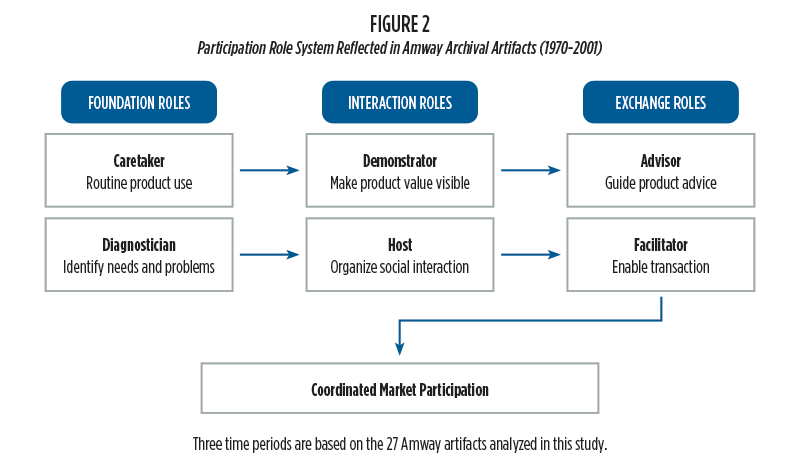
Table 2 places the role system in comparative context. The table is not intended to classify firms as mutually exclusive role types. Rather, it shows how different direct selling firms make particular participation roles especially visible. Tupperware and Pampered Chef foreground demonstration and hosting because their models organize participation around group-based product presentation. Mary Kay and Avon make advising especially visible through consultation and personalized recommendation. Herbalife and Nu Skin foreground diagnostic engagement by linking needs assessment to product systems. Firms such as, Arbonne, Young Living, and doTERRA combine elements of advising, routines, community interaction, and product-system guidance. These examples indicate that participation roles are distributed across the direct selling field, reflecting variation in how firms structure interpersonal exchange and relationship-based selling (Biggart, 1989; Peterson & Wotruba, 1996).
Table 2
Participation Roles Across Firms and Contemporary Contexts
| Participation Role | Core Function | Role Manifestation in Comparative Firms | Amway’s Integrative Coverage | Contemporary Digital/Platform Expression |
| Caretaker | Maintains routine product use and embeds products in everyday practices | Often implicit across product-based direct selling firms where repeated use, replenishment, and routines are central | Product catalogs and usage materials frame products as part of ongoing household, personal care, beauty, and wellness routines | Routine-sharing content; “daily use” videos; product routine posts; recurring subscription or replenishment practices |
| Diagnostician | Identifies needs, problems, or situations that products may address | Herbalife and Nu Skin make diagnostic engagement especially visible through needs-based and product-system guidance; Rodan + Fields and Arbonne also show routine/system-based diagnosis | Needs-assessment materials guide participants to interpret situations before recommending products across multiple product domains | Problem-solution content; personalized recommendation quizzes; diagnostic influencer content; needs-based peer advice |
| Demonstrator | Makes product value visible through presentation or performance | Tupperware and Pampered Chef make demonstration especially visible through product parties, cooking demonstrations, and hosted product experiences | Demonstration scripts show participants how to sequence product presentations and make benefits observable across product categories | Product tutorials; reviews; short-form demonstration videos; livestream product showcases |
| Host | Organizes social interaction around products | Tupperware and Pampered Chef strongly manifest hosting through parties, gatherings, and shared product experiences; Young Living and doTERRA also show community-based engagement | Hosted demonstration guides structure invitations, group discussion, and shared engagement | Livestream hosts; online community moderators; group chats; social commerce events |
| Advisor | Guides interpretation, product choice, and recommendation | Mary Kay and Avon make advising especially visible through consultation, personalized recommendation, and relational guidance; Rodan + Fields and Arbonne also emphasize routine-based advising | Bundle recommendation materials connect identified needs to product combinations and solution sets | Influencer recommendations; peer advising; “best for you” content; creator-curated product lists |
| Facilitator | Coordinates access, ordering, fulfillment, and transaction completion | Present across direct selling firms but often backgrounded as transaction support rather than foregrounded as a participation role | Ordering and coordination tools link interaction and recommendation to completed exchange, making facilitation visible as part of the role system | Embedded checkout links; affiliate storefronts; shoppable posts; platform-based transaction tools |
Amway is analytically useful because its materials provide the most comprehensive view of this distributed role system within a single organizational context. The Amway artifacts do not simply show isolated practices; they connect routine use, diagnosis, demonstration, interaction, advising, and facilitation into linked sequences of engagement. This breadth makes Amway especially useful for examining how participation roles operate together rather than separately. Amway is therefore distinct not because it is superior to other firms, but because its materials make role integration visible. In many firms, participation is organized around a dominant mode of engagement. In Amway’s materials, roles are linked: demonstration connects to advising, advising connects to product systems, and interaction connects to facilitation (A3, A7, A8). This structure allows participants to move across roles within a coordinated system rather than remain within one dominant form of engagement. This distinction is central to the findings. Amway does not merely display a broader role set; it organizes roles relationally. Its materials show how use, diagnosis, demonstration, advising, interaction, and facilitation can reinforce one another. In this sense, Amway functions as an integrative empirical lens through which a distributed participation system becomes visible within a single organizational context.
Participation and Market Exchange
The final pattern concerns how participation extends into market exchange. Exchange does not appear as a single act or as the result of isolated persuasion. It emerges from the coordination of roles.
Material evidence shows how this coordination operates. Demonstration scripts make product value visible (A3), needs-assessment prompts frame problems and guide diagnosis (A5), recommendation materials support interpretation and product matching (A7), and transaction tools operationalize exchange (A8). Later artifacts further systematize this process by linking interaction, advising, and ordering into coordinated sequences (A15–A27).
This coordination matters because exchange requires more than awareness. Product value must be made visible, needs must be interpreted, trust must be established, and transactions must be completed. The role system performs these functions collectively. Demonstration makes value observable. Advising makes value meaningful. Hosting creates a setting for interaction. Facilitation converts interest into exchange. Market exchange is therefore produced through role alignment rather than isolated behavior, consistent with prosumption perspectives that view value as emerging through multiple forms of participation (Ritzer & Jurgenson, 2010).
Table 3 shows how this role system develops over time. Early materials emphasize routine use and maintenance, as seen in household product catalogs that embed products in repeated domestic routines (A1). Transitional materials increasingly incorporate demonstration and interaction, as seen in scripted demonstration and hosted event guides (A3, A4). Later materials integrate advising and facilitation, as seen in bundle recommendation sheets and order coordination tools (A7, A8). Over time, participation becomes more coordinated, reflecting the emergence of a role-based system.
Table 3
Evolution of Participation Roles Reflected in Amway Archival Artifacts (1970-2001)
| Period | Primary Material Emphasis | Dominant Practices | Dominant Roles | Participation Pattern | Representative Artifact Evidence |
| Early phase: 1970s |
Product use, household routines, and maintenance | Use; early diagnosis |
Caretaker; emerging diagnostician | Participation is organized around routine product use and problem solving. Materials teach participants how to incorporate products into repeated domestic and household practices. | Household cleaning routines catalog (A1); early product system and usage materials (A9, A9, A12) |
| Transitional phase: 1980s |
Demonstration, presentation, and group interaction | Demonstrate; interact |
Demonstrator; host | Participation expands from routine use to socially visible product presentation. Materials show participants how to make product value observable and how to organize interaction around products. | Kitchen product demonstration script (A3); hosted demonstration event guide (A4); advanced demonstration and group engagement materials (A10–A14) |
| Later phase: 1990s–2001 |
Advising, product systems, recommendation, and transaction coordination | Advise; facilitate; advanced diagnosis | Advisor; facilitator; reinforced diagnostician | Participation becomes more coordinated and exchange-oriented. Materials link needs assessment, product recommendation, and ordering into sequences that move participants from interaction to completed exchange. | Customer needs assessment guide (A5); product bundle recommendation sheet (A7); order coordination and fulfillment form (A8); later ordering and coordination tools (A15–A27) |
This progression is cumulative rather than substitutive. Later roles build on earlier ones rather than replacing them. Advising depends on product familiarity; demonstration depends on use; facilitation depends on interaction and trust. Direct selling materials first stabilize practices of use, then expand participation through demonstration and interaction, and eventually link those roles to advising and exchange. This pattern aligns with practice-based accounts of how repeated activities evolve into organized systems of action (Reckwitz, 2002; Shove et al., 2012).
In summary, these findings show that market exchange is produced through structured participation systems that connect practices, roles, and interaction. Contemporary forms of participation — such as digital content creation, peer advising, and platform-based transactions — reflect this same underlying structure, even as the contexts in which roles are performed have changed (Djafarova & Bowes, 2021; Ki et al., 2020; Lou & Yuan, 2019).
Discussion
This study examined how individuals become capable of participating in market processes commonly associated with prosumption. Rather than treating participation as an outcome of social, digital, or decentralized markets, the analysis shows how participation is formed through materials that model action, practices that become repeatable, and roles that coordinate exchange. The findings reposition prosumption as a process of formation: individuals become prosumers not simply because markets invite participation, but because participation capabilities are structured, learned, and organized.
Reframing Prosumption as a Formation Process
Prior research on prosumption has shown that consumers contribute to value creation through activities such as content generation, peer advising, product interpretation, and co-creation (Cova & Dalli, 2009; Ritzer & Jurgenson, 2010; Schau et al., 2009). This literature has been important in moving beyond passive models of consumption. However, it often begins after participation has already occurred. It documents what prosumers do but gives less attention to how individuals acquire the capability to perform these activities.
The present study addresses that gap by showing that participation capabilities are formed through structured exposure to participation practices. In the Amway materials analyzed here, individuals are shown how to use products, diagnose needs, demonstrate value, interact with others, and advise on product combinations. These practices are not left to improvisation; they are modeled through catalogs, training guides, demonstration formats, recommendation tools, and ordering systems. Through repetition, these practices become recognizable and transferable. Prosumption, in this account, is not simply an expression of consumer agency or co-created value; it is a learned capability developed through structured materials and repeated action. This distinction is important because recent work continues to examine how co-creation produces consumer and firm value, while the present study explains how the capability to participate in such value creation is formed (Sahi et al., 2022).
This reframing shifts the central question from “what do prosumers do?” to “how are prosumers made?” The answer developed in this study is that prosumers are formed through a participation system that links materials, practices, roles, and exchange. This process-based view helps explain why participation can appear natural in contemporary markets even though it depends on learned routines and structured forms of interaction.
Extending Practice and Role Perspectives
The findings extend practice theory by showing how practices become organized into participation roles. Practice theory emphasizes that action is shaped through recurring relationships among materials, competencies, and meanings (Reckwitz, 2002; Shove et al., 2012; Warde, 2005). The present study builds on this view but adds a further step: repeated practices do not remain isolated activities; they stabilize into roles that make participation recognizable to others.
The six roles identified in the analysis — caretaker, diagnostician, demonstrator, host, advisor, and facilitator — show how practices become socially organized. Routine use supports the caretaker role; needs assessment supports the diagnostician role; structured presentation supports the demonstrator role; group engagement supports the host role; recommendation supports the advisor role; and order coordination supports the facilitator role. These roles matter because they translate repeated practices into recognizable forms of market participation.
This finding also contributes to role theory. Role theory explains how patterned behavior guides interaction and allows participants to understand what is expected in social settings (Biddle, 1986; Goffman, 2023). In this study, roles are not treated as fixed positions assigned in advance. Instead, they emerge from repeated engagement with materials and practices. This connection between practice theory and role theory clarifies how learned action becomes organized and intelligible in market interaction.
Amway and the Integration of Distributed Participation Roles
A central insight of the study is that direct selling participation is distributed across firms but can be observed as an integrated system in Amway. Comparative examples show that firms tend to emphasize different aspects of participation. Tupperware and Pampered Chef make demonstration and hosting especially visible; Mary Kay and Avon foreground advising and relational guidance; Herbalife and Nu Skin emphasize diagnostic and system-based engagement; and firms such as, Arbonne, Young Living, and doTERRA combine advising, routines, community interaction, and product-system guidance in varying ways. These examples suggest that direct selling firms do not merely differ in product categories or selling formats. They emphasize different configurations of participation roles.
Amway is analytically useful because its materials provide a more comprehensive view of this distributed role system within a single organizational context. The findings show that Amway materials do not simply contain multiple roles; they link them. Demonstration scripts connect product performance to advising. Needs-assessment materials connect diagnosis to recommendation. Bundle recommendation sheets connect advising to product systems. Ordering tools connect interaction to transaction. This role integration is the mechanism that makes Amway useful as an empirical lens.
This distinction matters because it clarifies the contribution of the case. Amway is not presented as a typical direct selling firm or as a superior organizational model. Rather, it provides a context in which the broader participation system becomes visible. By bringing multiple roles into one coordinated sequence, Amway’s materials reveal how participation can move from product use to demonstration, from demonstration to advising, and from advising to exchange. The study therefore reframes direct selling as more than a distribution channel or sales method. It is a structured participation system that teaches individuals how to act in markets.
Implications for Platform Economies and Gen Z Participation
The findings also help reinterpret contemporary platform-based participation. Digital environments often make product demonstration, peer advising, community hosting, and transaction facilitation appear new. Influencers demonstrate products through short-form content and livestreams; peers advise one another through comments, reviews, and communities; and platform tools enable embedded transactions through links, storefronts, and checkout systems (Busalim et al., 2021; Djafarova & Bowes, 2021; Ki et al., 2020; Lou & Yuan, 2019). These activities are especially visible among Generation Z, whose consumption practices are closely intertwined with creator content, peer influence, and social commerce.
The present study suggests that these behaviors are not entirely new forms of participation. They are better understood as contemporary reconfigurations of roles that have long been structured in other market contexts. Digital platforms change the medium, scale, speed, and visibility of participation, but they do not eliminate the underlying role logic. Demonstration, advising, hosting, and facilitation remain central; they are enacted through different infrastructures.
This interpretation avoids treating Gen Z participation as a complete break from earlier market forms. Instead, Gen Z makes visible a broader shift in how participation roles are mediated. What appears distinctive about Gen Z participation is not necessarily the existence of demonstration, advising, hosting, or facilitation, but the way these roles are performed through platform infrastructures. Product demonstration occurs through short-form video and livestream formats; advising occurs through peer recommendations, creator commentary, and community discussion; hosting occurs through digital groups and platform-mediated audiences; and facilitation occurs through embedded links, storefronts, and checkout tools. In this sense, Gen Z participation reflects the platform-enabled reconfiguration of roles that have long organized market participation.
This connection also clarifies the relevance of Amway to the platform economy. The argument is not that Amway predicts platform behavior or that direct selling and platform economies are identical. Rather, Amway’s archival materials make the formation and integration of participation roles visible in a way that platform environments often obscure. Platforms amplify and accelerate participation, but Amway helps reveal how participation capabilities are structured in the first place. This interpretation complements recent work showing that platform markets are shaped by prosumer practices, not merely by platform infrastructures (Scaraboto & Fischer, 2024).
Managerial Implications
The findings have several practical implications for organizations that rely on participant engagement, peer recommendation, social selling, or platform-enabled commerce. First, participation should not be assumed. Organizations often expect individuals to create content, recommend products, engage communities, or facilitate transactions, but the findings suggest that these activities require structured support. Materials that model action — scripts, guides, examples, prompts, templates, and transaction tools — can help individuals learn how to participate effectively.
Second, firms should design for roles rather than isolated tasks. A participant who demonstrates a product may also need to diagnose needs, advise on fit, host interaction, and facilitate exchange. Treating these activities as disconnected tasks may weaken participation. Designing materials and tools around roles can help organizations support more coherent engagement.
Third, the findings highlight the importance of role integration. Many firms emphasize one dominant mode of participation, such as demonstration, advising, or community engagement. The Amway case suggests that participation becomes more powerful when roles are linked. A demonstration can lead into diagnosis; diagnosis can lead into advising; advising can lead into facilitation. Organizations seeking to strengthen participation should therefore consider how their materials guide individuals across linked forms of engagement rather than supporting each activity separately.
Finally, the findings are relevant for digital and platform-mediated settings. Platform features often encourage participation but do not necessarily teach users how to participate well. Firms can improve digital engagement by designing platform tools that support role transitions: from content viewing to product understanding, from peer discussion to recommendation, and from recommendation to transaction. This implication aligns with recent work on social selling, which shows that selling practices become established through participants’ practical work rather than through technology alone (Schmitt et al., 2021). In this sense, the study provides a role-based framework for designing participation in both direct selling and digital commerce contexts.
Limitations and Future Research
This study has several limitations that open opportunities for future research. First, the empirical analysis focuses on Amway materials from 1970 to 2001. This design is useful for observing role integration within one organizational context, but it does not allow for direct empirical comparison across all direct selling firms. Future research could compare multiple firms to examine whether and how different organizations structure participation roles in distinct ways.
Second, the study analyzes archival materials rather than direct participant behavior. The materials show how participation was formally modeled, scripted, and organized, but they do not show how individual participants interpreted or enacted those materials in practice. Future research could use interviews, ethnography, or observational methods to examine how participants actually move across roles in live selling contexts.
Third, the study connects the findings to contemporary digital participation conceptually rather than empirically. Future studies could examine whether the same role system appears in influencer marketing, social commerce, livestream selling, brand communities, or platform-enabled peer selling. Such research could test whether the roles identified here — demonstrator, host, advisor, facilitator, and related roles — operate similarly in digital environments.
Finally, future research could explore the conditions under which participation systems succeed or fail. The presence of materials and roles does not guarantee effective participation. Individual motivation, trust, social networks, product type, organizational incentives, and regulatory context may all shape whether participation roles are adopted and coordinated effectively.
Conclusion
This study explains how individuals become capable of participating in market processes commonly associated with prosumption. By examining Amway’s archival materials, the analysis shows how participation is structured through materials, learned through repeated practices, stabilized into roles, and coordinated into exchange. The central contribution is to shift attention from participation outcomes to participation formation. Prosumers are not simply produced by digital platforms, social markets, or decentralized exchange. They are formed through systems that teach individuals how to use, diagnose, demonstrate, interact, advise, and facilitate. By making this process visible, the study provides a framework for understanding how market participation is structured across direct selling, social commerce, and contemporary platform-mediated environments.
Note: The authors express sincere thanks to Amway for sharing their proprietary advertisements from the corporate archive for research purposes.
Dr. Jiyoon An is an Assistant Professor of Marketing at Fayetteville State University
Dr. Jae Hwan Lee is an Associate Professor of Business at Rollins College
REFERENCES
-
-
- Biddle, B. J. (1986). Recent developments in role theory. Annual Review of Sociology, 12, 67–92.Biggart, N. W. (1989). Charismatic capitalism: Direct selling organizations in America. University of Chicago Press.Busalim, A. H., Ghabban, F., & Hussin, A. R. C. (2021). Customer engagement behaviour on social commerce platforms: An empirical study. Technology in Society, 64, Article 101437.
- Caliandro, A., Gandini, A., Bainotti, L., & Anselmi, G. (2024). The platformization of consumer culture: A theoretical framework. Marketing Theory, 24(1), 3-21.
- Cova, B., & Dalli, D. (2009). Working consumers: The next step in marketing theory? Marketing Theory, 9(3), 315–339.
- Direct Selling Education Foundation. (2025). Impact of direct selling by state, 2024. https://www.dsa.org/docs/default-source/default/dsa-2025-statestatsfactsheet-updated.pdf. Retrieved on May 3, 2026.
- Djafarova, E., & Bowes, T. (2021). ‘Instagram made Me buy it’: Generation Z impulse purchases in fashion industry. Journal of Retailing and Consumer Services, 59, Article 102345.
- Elshaer, I. A., Alrawad, M., Lutfi, A., & Azazz, A. M. (2024). Social commerce and buying intention post COVID-19: Evidence from a hybrid approach based on SEM–fsQCA. Journal of Retailing and Consumer Services, 76, 103548.
- Gioia, D. A., Corley, K. G., & Hamilton, A. L. (2013). Seeking qualitative rigor in inductive research: Notes on the Gioia methodology. Organizational Research Methods, 16(1), 15–31.
- Goffman, E. (2023). The presentation of self in everyday life. In Social theory re-wired (pp. 450-459). Routledge.
- Humphreys, A., & Grayson, K. (2008). The intersecting roles of consumer and producer: A critical perspective on co‐production, co‐creation and prosumption. Sociology compass, 2(3), 963-980.
- Ki, C.-W. C., Cuevas, L. M., Chong, S. M., & Lim, H. (2020). Influencer marketing: Social media influencers as human brands attaching to followers and yielding positive marketing results. Journal of Retailing and Consumer Services, 55, Article 102133.
- Langley, A. (1999). Strategies for theorizing from process data. Academy of Management Review, 24(4), 691–710.
- Lou, C., & Yuan, S. (2019). Influencer marketing: How message value and credibility affect consumer trust of branded content on social media. Journal of Interactive Advertising, 19(1), 58–73.
- Nambisan, S., Zahra, S. A., & Luo, Y. (2019). Global platforms and ecosystems: Implications for international business theories. Journal of International Business Studies, 50(9), 1464–1486.
- Orlikowski, W. J. (2000). Using technology and constituting structures: A practice lens for studying technology in organizations. Organization Science, 11(4), 404–428.
- Peterson, R. A., & Wotruba, T. R. (1996). What is direct selling? Definition, perspectives, and research agenda. Journal of Personal Selling & Sales Management, 16(4), 1–16.
- Reckwitz, A. (2002). Toward a theory of social practices: A development in culturalist theorizing. European Journal of Social Theory, 5(2), 243–263.
- Ritzer, G., & Jurgenson, N. (2010). Production, consumption, prosumption: The nature of capitalism in the age of the digital “prosumer.” Journal of Consumer Culture, 10(1), 13–36.
- Sahi, G. K., Devi, R., Gupta, M. C., & Cheng, T. C. E. (2022). Assessing co-creation based competitive advantage through consumers’ need for differentiation. Journal of Retailing and Consumer Services, 66, 102911.
- Scaraboto, D., & Fischer, E. (2024). Restless platformance: How prosumer practices change platform markets. Marketing Theory, 24(1), 45-63.
- Schau, H. J., Muñiz, A. M., Jr., & Arnould, E. J. (2009). How brand community practices create value. Journal of Marketing, 73(5), 30–51.
- Schmitt, L., Casenave, E., & Pallud, J. (2021). Salespeople’s work toward the institutionalization of social selling practices. Industrial Marketing Management, 96, 183-196.
- Shove, E., Pantzar, M., & Watson, M. (2012). The dynamics of social practice: Everyday life and how it changes. SAGE Publications.
- Toffler, A. (1980). The third wave. Bantam Books.
- Warde, A. (2005). Consumption and theories of practice. Journal of Consumer Culture, 5(2), 131–153.
- Weitz, B. A., Castleberry, S. B., & Tanner, J. F. (2020). Selling: Building partnerships (10th ed.). McGraw-Hill Education.
-
Appendix
Appendix A
Artifact-Level Coding and Illustrative Examples
| Artifact ID | Artifact/ Material Type |
Period | Illustrative Material Description | Coded Actions | Practice Category |
Participation Role |
| A1 | Household cleaning routines catalog | 1970s | Presents household products through repeated daily, weekly, and situational cleaning routines | Use products repeatedly; maintain household routines; apply products to recurring problems | Use | Caretaker |
| A2 | Early product collection/starter materials | 1970s | Introduces product collections and encourages participants to begin with bundled product sets | Select starter products; organize initial product use; learn basic product categories | Use/ Advise |
Caretaker/ Advisor |
| A3 | Kitchen product demonstration script | 1980s | Provides step-by-step guidance for presenting product features and making performance visible | Present product features; sequence demonstration; show product value | Demonstrate | Demonstrator |
| A4 | Hosted demonstration event guide | 1980s | Structures group participation through invitations, discussion, and shared product experiences | Invite participants; organize group interaction; facilitate discussion | Interact/ Demonstrate |
Host/ Demonstrator |
| A5 | Customer needs assessment guide | 1990s | Guides participants to identify customer needs before recommending products | Ask questions; identify needs; interpret problems | Diagnose | Diagnostician |
| A6 | Diagnostic training framework | 1990s | Expands needs assessment into structured product-system guidance | Classify needs; connect problems to product categories; frame solutions | Diagnose/ Advise |
Diagnostician/ Advisor |
| A7 | Product bundle recommendation sheet | 1990s | Connects identified needs to product combinations and solution sets | Recommend bundles; match products to situations; guide product choice | Advise | Advisor |
| A8 | Order coordination and fulfillment form | 1990s–2001 | Structures order placement, coordination, delivery, and transaction completion | Record orders; coordinate fulfillment; complete transactions | Facilitate | Facilitator |
| A9 | Extended product system guide | 1970s–1980s | Elaborates product use across multiple product categories and household routines | Organize product use; connect products into systems; reinforce repeated application | Use | Caretaker |
| A10 | Advanced demonstration guide | 1980s | Standardizes presentation techniques across product lines | Present products; compare features; make benefits visible | Demonstrate | Demonstrator |
| A11 | Group engagement material | 1980s | Provides guidance for structuring participant involvement in product settings | Encourage discussion; invite participation; manage group engagement | Interact | Host |
| A12 | Extended usage manual | 1970s–1980s | Provides additional instructions for repeated product application and maintenance | Follow use routines; maintain product systems; repeat application | Use | Caretaker |
| A13 | Needs-based training manual | 1990s | Formalizes needs identification and problem interpretation | Ask diagnostic questions; identify concerns; classify needs | Diagnose | Diagnostician |
| A14 | Product presentation and recommendation framework | 1990s | Links demonstration techniques with recommendation guidance | Demonstrate product value; recommend product fit; explain benefits | Demonstrate/ Advise |
Demonstrator/ Advisor |
| A15 | Interaction and ordering guide | 1990s | Connects participant interaction to ordering processes | Engage participants; answer questions; coordinate order steps | Interact/ Facilitate |
Host/ Facilitator |
| A16 | Product-system assessment guide | 1990s | Provides structured approach to matching product systems with identified needs | Assess needs; align products; recommend systems | Diagnose/ Advise |
Diagnostician/ Advisor |
| A17 | Expanded recommendation framework | 1990s | Extends product recommendation into broader solution sets | Recommend combinations; explain product fit; guide decisions | Advise | Advisor |
| A18 | Solution-oriented product guide | 1990s | Frames products as solutions to recurring needs or usage contexts | Interpret situations; recommend solutions; connect products | Diagnose/ Advise |
Diagnostician/ Advisor |
| A19 | Ordering system instruction sheet | 1990s | Explains ordering procedures and participant responsibilities in coordinating transactions | Place orders; verify selections; coordinate purchase process | Facilitate | Facilitator |
| A20 | Product access and fulfillment material | 1990s | Provides guidance on product availability, access, and fulfillment | Manage access; coordinate delivery; support transaction completion | Facilitate | Facilitator |
| A21 | Customer follow-up guide | 1990s | Guides post-interaction communication and continued engagement | Follow up; answer questions; reinforce use and satisfaction | Interact/ Advise |
Host/ Advisor |
| A22 | Product routine planning tool | 1990s | Helps participants organize recurring use around routines or product systems | Plan routines; maintain product use; reinforce consistency | Use | Caretaker |
| A23 | Advisory script/consultation guide | 1990s | Provides language for guiding product choice through consultation | Interpret needs; recommend options; guide choice | Advise | Advisor |
| A24 | Demonstration follow-up material | 1990s | Connects product demonstration to later interaction and recommendation | Review demonstration; answer questions; recommend next steps | Demonstrate/ Interact/ Advise |
Demonstrator/ Host/ Advisor |
| A25 | Transaction coordination checklist | 1990s–2001 | Provides steps for ensuring completion of orders and related coordination | Confirm choices; coordinate orders; support fulfillment | Facilitate | Facilitator |
| A26 | Integrated product system guide | 2000–2001 | Connects use, assessment, recommendation, and ordering into one participation sequence | Use products; assess needs; recommend systems; coordinate exchange | Use/ Diagnose/ Advise/ Facilitate |
Caretaker/ Diagnostician/ Advisor/ Facilitator |
| A27 | Later integrated participation guide | 2000–2001 | Brings together demonstration, interaction, advising, and ordering support | Demonstrate; engage participants; recommend products; facilitate transaction | Demonstrate/ Interact/ Advise/ Facilitate |
Demonstrator/ Host/ Advisor/ Facilitator |
Note: Artifact titles are descriptive labels used to identify the function of each material in the analysis. The table illustrates how individual artifacts were coded from observable actions to broader practice categories and participation roles. The coding supports the study’s analytical progression from materials to practices, from practices to roles, and from roles to coordinated market exchange.
Appendix B
Coding Definitions and Inclusion Criteria
| Code/Practice Category | Definition | Inclusion Criteria | Exclusion Criteria | Illustrative Evidence from Artifacts | Associated Participation Role(s) |
| Use | Routine application of products in everyday contexts. | Code when materials show repeated product application, household or personal care routines, maintenance practices, or ongoing product use. | Do not code as use when the material only lists product attributes without showing how products are incorporated into routines. | Household cleaning routines catalog; extended usage manuals; product routine planning tools. | Caretaker |
| Diagnose | Identification and interpretation of needs, problems, or situations that products may address. | Code when materials guide participants to ask questions, identify needs, classify problems, or connect situations to product categories. | Do not code as diagnose when materials simply describe product benefits without requiring interpretation of user needs. | Customer needs assessment guide; needs-based training manual; product-system assessment guide. | Diagnostician |
| Demonstrate | Presentation of product features, benefits, or performance in visible and repeatable ways. | Code when materials provide scripts, sequences, comparisons, or instructions for showing how products work. | Do not code as demonstrate when materials only recommend products without showing how value is made visible through presentation or performance. | Kitchen product demonstration script; advanced demonstration guide; product presentation framework. | Demonstrator |
| Interact | Organization of interpersonal engagement around products. | Code when materials guide invitations, group participation, conversation, discussion, follow-up, or shared product experiences. | Do not code as interact when materials involve one-way product description without evidence of social engagement or participant involvement. | Hosted demonstration event guide; group engagement material; customer follow-up guide. | Host |
| Advise | Recommendation of products, bundles, or solutions based on interpreted needs or situations. | Code when materials guide product choice, suggest bundles, match products to situations, or frame recommendations around fit. | Do not code as advise when materials present product information without recommendation logic or need-product matching. | Product bundle recommendation sheet; advisory script; expanded recommendation framework. | Advisor |
| Facilitate | Coordination of access, ordering, fulfillment, or transaction completion. | Code when materials guide order placement, transaction coordination, delivery, fulfillment, checkout, or movement from recommendation to purchase. | Do not code as facilitate when materials only generate interest or discussion without supporting exchange completion. | Order coordination and fulfillment form; ordering system instruction sheet; transaction coordination checklist. | Facilitator |
Note: Codes were applied to observable actions in the artifacts before being grouped into practice categories and associated participation roles. Some artifacts contain multiple codes when they connect more than one form of participation, such as demonstration followed by advising or advising followed by facilitation.
