All posts tagged business resources

DSEF & CBBB: Protect Your Mail

DSEF & CBBB: Protect Your Mail

Today’s highlighted blog post from the Council on Better Business Bureaus (CBBB):

By CAROL ODELL

With the mail picking up for the holiday season it’s a good time to focus on mail theft.

The Colorado Springs Police Department sent out a Community Alert about mail theft that is worth repeating. Here it is.

Mail fraud can mean anything from non-delivery of mail-order merchandise to mail actually being stolen. Not only do criminals steal packages containing presents and cards filled with money or checks but personal information in your mail can be used by criminals to steal your identity.

Preventing Mail Theft:

  • Do not leave outgoing mail in your unlocked mailbox.
  • Deposit mail in a collection box or inside your local post office.
  • Promptly pick up your incoming mail after it is delivered.
  • Arrange for the installation of locked group mailboxes for neighborhood delivery. These are Neighborhood Deliver & Collection Box Units (NDCBU). Each address has an individual locked unit for delivery and collection. At least seven neighbors are needed to sign a petition requesting an NDCBU.
  • Install a locked mailbox or convert your unlocked box to the lockable type.
  • Have mail delivered to a Post Office Box or Personal Mail Delivery Service.
  • Use Direct Deposit and Electronic Banking to avoid checks in your mail.
  • Contact the senders if you don’t receive credit cards, checks or other valuable mail.
  • When out of town have the post office hold your mail or have someone your trust pick up the mail daily.
  • Be observant of and report suspicious activities on your street, including those near your letter carrier, the postal vehicle, residential mailboxes, and collection boxes.
  • Notify the post office and people who will be sending you mail that you have a change of address.
  • To stop receiving pre-approved credit and insurance offers call: 18885OPTOUT (1-888-567-8688) or visit:  www.optoutprescreen.com

Do you have any other mail safety tips?

DSEF and Council on Better Business Bureaus (CBBB) fosters honest and responsive relationships between businesses and consumers—instilling consumer confidence and advancing a trustworthy marketplace for all.

About the Better Business Bureaus
As the leader in advancing marketplace trust, Better Business Bureau is an unbiased non-profit organization that sets and upholds high standards for fair and honest business behavior. Every year, more than 87 million consumers rely on BBB Business Reviews® and BBB Wise Giving Reports® to help them find trustworthy businesses and charities across North America. Visitwww.bbb.org/us for more information.
DSEF & FTC: Take A Close Look At Your Phone Bill For Mysterious Charges

DSEF & FTC: Take A Close Look At Your Phone Bill For Mysterious Charges

Today’s highlighted blog post from FTC/NCPW:

Click here:

Take a close look at your phone bill for mysterious charges

May 20th, 2011 by Cheryl

Do you examine your phone bill closely enough each month to recognize any new charges? Would you notice a $2 or $3 one-time service charge? Or an obscure, recurring monthly charge?

Scammers hope you don’t.  That’s why they invented cramming – the practice of sneaking charges onto your phone bill for services you didn’t order or use.

For 13 years, the DSEF has been proud to partner with the FTC and other organizations to offer a wide array of education events and resources that encourage consumers nationwide to take full advantage of their rights and make better-informed decisions.

You’ll find a wealth of resources at www.ncpw.gov that will help you protect your privacy, manage your money, learn more about credit and debt, decipher advertising messages, and steer clear of fraud and scams.

Please take a moment to share the resources on this Web site with others in your communities and companies and, together, we’ll help build a nation of better-informed and educated consumers.

Charles. L. Orr
Executive Director

DSEF & FTC: Getting Your Free Annual Credit Report

DSEF & FTC: Getting Your Free Annual Credit Report

Today’s highlighted blog post from FTC/NCPW:

Click here:

Getting Your Free Annual Credit Report

July 5th, 2011 by Carol

Are you looking for a job? Thinking about buying a car or a home? Applying for credit?  Before you do, get – and review – a copy of your credit report.  The information in your credit report can affect whether you get a job, a loan, or the terms or cost of a loan.  You want to be sure the information about you is correct, complete and up-to-date.

For 13 years, the DSEF has been proud to partner with the FTC and other organizations to offer a wide array of education events and resources that encourage consumers nationwide to take full advantage of their rights and make better-informed decisions.

You’ll find a wealth of resources at www.ncpw.gov that will help you protect your privacy, manage your money, learn more about credit and debt, decipher advertising messages, and steer clear of fraud and scams.

Please take a moment to share the resources on this Web site with others in your communities and companies and, together, we’ll help build a nation of better-informed and educated consumers.

Charles. L. Orr
Executive Director

Gamification To Increase Business

Gamification To Increase Business

Gamification is a relatively new term that refers to the integration of game dynamics into any aspect of business.  Its main objectives are to drive participation, increase awareness of the business, and draw in new customers.  Here a few ways to get started.

  • Use a service designed to track your customers’ loyalty.  A great place to begin is Badgeville, a “social loyalty platform” that gives businesses the “power to drive and measure user behavior with social game mechanics.”  Badgeville provides a step by step process to help you set an objective, choose which behaviors to track, and create real-time user rewards.  This is similar to the way FourSquare works, except you get to create your own system.  The advantage here is that you can truly tailor your game to the needs and wants of your customer base.
  • Gamify your team’s professional development.  Big businesses, such as Google, are using this with increasing frequency.  In order to motivate employees to spend less than they were allotted for business trips, they created a game in which employees could save up unused amounts to receive cash back, donate to charity, or save up towards a future trip.  (Source)  Small business owners and direct sellers can use this same concept to motivate teams and increase sales.
  • Take to Twitter and Facebook.  Many companies are using gamification to increase awareness of themselves to prospective clients.  A simple way to do this would be to give away a free small sample. For every 20 new Twitter “retweets” or every Facebook “like”, you draw a name from the new likes or people who retweeted for the give-away. Doing so will keep customers coming back to your site, encourage them to seek out what’s new with your business, and drive them to recommend you to their friends.  Think of it as 21st century word of mouth.
  • Invite participation in your blog.  The fast-food chain Wendy’s recently created a short-lived game show on Twitter to promote a series of new items on its menu.  The game show gained a cult following for several reasons, including the mystery surrounding who was hosting it, but also because prizes were being given away for participating in various tasks.  Fellow tweeters were asked to post pictures of themselves in their funniest pair of socks, for example.  Consider using this method in your blog by creating a task and giving each participant one entry into a small giveaway.  Getting creative here will also draw more people to your blog and of course, your business.
  • Other game formats to explore. A scavenger hunt, Motto/Jingle contest, Wheel of fortune like – fill in the blank, and an old fashion riddle of the day contest. As you continue to explore using games and contests to generate engagement please check your social media site’s terms of service before installing a game. Most social media sites have rules you must follow or risk being removed from the site. For example, Facebook requires that you use a third party service like Wildfire to administer any contest on its platform.

When integrating games into your business, keep in mind your objective, audience, and reward systems.  You need not spend exorbitant amounts of money to gamify; start simple with the plethora of free resources found all around the internet and build out from there.  And most importantly, have fun!  That is what gaming is about, after all.  What ideas do you have for gamification? Share them with us in the comments section below!

DSEF & CBBB: The Worst Fees of 2011

DSEF & CBBB: The Worst Fees of 2011

Today’s highlighted blog post from the Council on Better Business Bureaus (CBBB):

The Worst Fees of 2011

BY GREG HUDSON – DECEMBER 27, 2011

It was the year of fees, reports MSN’s Money Matters. As businesses scrambled to make up lost revenue, they tacked on charges for everything from paying a bill (online and offline) to printing out your concert tickets at home. With so many fees frustrating consumers in 2011, narrowing down the list was a daunting task, writes Liz Weston. But here are her top five stupidest fees of the year:

Debit card fees: After Congress limited how much banks could charge merchants for each debit card transaction, banks started making customers pay instead. Fortunately, the backlash was “immediate and fierce.” Banks that had begun charging monthly $4 and $5 fees, quickly pulled the programs.

Boarding pass fees: First, airlines started charging for checked baggage and onboard meals. But this year, Spirit Airlines, which markets itself as a low cost airline, out did the fee-crazy industry by charging a $5 fee for having your boarding pass printed out at the airport counter, rather than a kiosk or on your home computer.

Early-termination fees for TV service: Be sure to read the fine print when you sign up for new a television service. Pay TV providers, such a Verizon Fios and DirecTV, are taking a pay from cellphone carriers and hitting consumers with high charges (from $200 up) for early termination of services.

See the full article and the rest of MSN’s list here.


DSEF and Council on Better Business Bureaus (CBBB) fosters honest and responsive relationships between businesses and consumers—instilling consumer confidence and advancing a trustworthy marketplace for all.

About the Better Business Bureaus
As the leader in advancing marketplace trust, Better Business Bureau is an unbiased non-profit organization that sets and upholds high standards for fair and honest business behavior. Every year, more than 87 million consumers rely on BBB Business Reviews® and BBB Wise Giving Reports® to help them find trustworthy businesses and charities across North America. Visitwww.bbb.org/us for more information.

DSEF & FTC: Is Losing Weight Really this Easy?

DSEF & FTC: Is Losing Weight Really this Easy?

Today’s highlighted blog post from FTC/NCPW:

Click here:

Is Losing Weight Really this Easy?

It’s some pitch — lose lots of weight quickly with products you can try for free. Even better — the products seem to be endorsed by trusted news sites, and satisfied “reporters” attest to all the unwanted pounds they’ve dropped.

Those were the kinds of claims behind a recent complaint filed by the FTC and State of Connecticut against Boris Mizhen and his companies, who allegedly used fake news websites to promote weight loss products. Featuring stories like “Acai Berry Diet Exposed: Miracle Diet or Scam?,” the sites often displayed the logos of major news sources,  including CNN, MSNBC, and Fox News, and featured fake reporters claiming to have lost lots of weight quickly without any special diet or real exercise. Many people who followed the links and signed up for a free trial, rather than paying a small shipping handling fee, ended up paying $79.99 for the trial, and for recurring monthly shipments of products that were hard to cancel, the FTC alleged.

For 13 years, the DSEF has been proud to partner with the FTC and other organizations to offer a wide array of education events and resources that encourage consumers nationwide to take full advantage of their rights and make better-informed decisions.

You’ll find a wealth of resources at www.ncpw.gov that will help you protect your privacy, manage your money, learn more about credit and debt, decipher advertising messages, and steer clear of fraud and scams.

Please take a moment to share the resources on this Web site with others in your communities and companies and, together, we’ll help build a nation of better-informed and educated consumers.

Charles. L. Orr
Executive Director

DSEF & CBBB: Names Top Ten Scams of 2011

DSEF & CBBB: Names Top Ten Scams of 2011

Today’s highlighted blog post from the Council on Better Business Bureaus (CBBB)

Click here:

BBB Names Top Ten Scams of 2011

Better Business Bureau investigates thousands of scams every year, from the latest gimmicks to schemes as old as the hills. Our new Scam Source (www.bbb.org/scam) is a comprehensive resource on scam investigations from BBBs around the country, with tips from BBB, law enforcement and others. You can sign up to receive our Scam Alerts by email, and you can also be a scam detective yourself by reporting scams you’ve discovered.

DSEF and Council on Better Business Bureaus (CBBB) fosters honest and responsive relationships between businesses and consumers—instilling consumer confidence and advancing a trustworthy marketplace for all.

About the Better Business Bureaus
As the leader in advancing marketplace trust, Better Business Bureau is an unbiased non-profit organization that sets and upholds high standards for fair and honest business behavior. Every year, more than 87 million consumers rely on BBB Business Reviews® and BBB Wise Giving Reports® to help them find trustworthy businesses and charities across North America. Visitwww.bbb.org/us for more information.

Seven Ways to Increase Friends and Build Your Network

Seven Ways to Increase Friends and Build Your Network

In this digital age, it is now easier than ever to interact with people all around the globe, so a solid network is within your reach.  Increasing your friends and building your network is a cost-effective marketing strategy that can lead to sales opportunities in a variety of ways.  Read on for seven ways to get started.

1. Don’t just attend events, be an active participant.  Deciding to attend workshops, conventions, and the like is a great start to meeting new people in your field.  However, you should make the most of your time there. Speak up, be helpful and get involved. Set a goal for how many new people you will meet at an event, and be consistent.  The more you do it, the easier it will become.

2. Hold off on the sales pitch.  When introducing yourself to potential contacts, DO share your name, business, and other relevant information.  DO NOT break into a prepared commercial in hopes of selling yourself then and there.  The relationship you want to build must be based on common interests and shared goals.  Save the sales pitch for a follow-up meeting or phone call.

3. Ask good questions.  When talking to people you’ve just met, asking questions shows that you are interested in what they have to say and that you are truly listening.  Take this strategy to the next level by asking the right types of questions that facilitate a worthwhile conversation.  For example, “So how do you like the food here?” will doom you to several minutes of small talk and get you nowhere.  On the other hand, “So what is your role in your business?” and “What are you hoping to get out of this convention that will help you in your business?” are more effective questions that get people talking about themselves.  Not only are you learning more about them, but you are building the foundation for a professional relationship. As you perfect your conversations skills you may want start with and develop a script to help you with this process.

4. Follow up.  So you’ve met several potential contacts; now what?  Don’t be lax about initiating the first phone call or email.  Remind the person where you met him or her, mention that it was a pleasure to meet, and set a time to discuss what you talked about earlier.  Furthermore, don’t wait more than a day or two after meeting the person to make contact. Make this a weekly habit to meet with new people.

5. Incorporate your online presence with your offline presence.  When you meet people at a networking event, be sure to give them what they need to find you online (your website URL, Twitter handle, etc.).  It’s also a good idea to arrange for face-to-face meet-ups with some of your online business contacts.  By integrating your networks, you enhance those relationships and build your business.

6. Ask friends to make introductions. When you’re at a social gathering or event, don’t be shy to ask your friends to introduce you to other people. Just like in tip one, set a goal for how many new people you want to meet.

7. Do something new. Don’t sit around and wait to be invited to a party or event. Make it happen. Find something new that peaks your interest or something that you have no concept of. Once you get there have fun, engage in conversation with others, and tag along with individuals you like. Again, set a goal for how many new people you would like to meet.

What are your ideas for building your network?  Please share them with us in the comments section below.

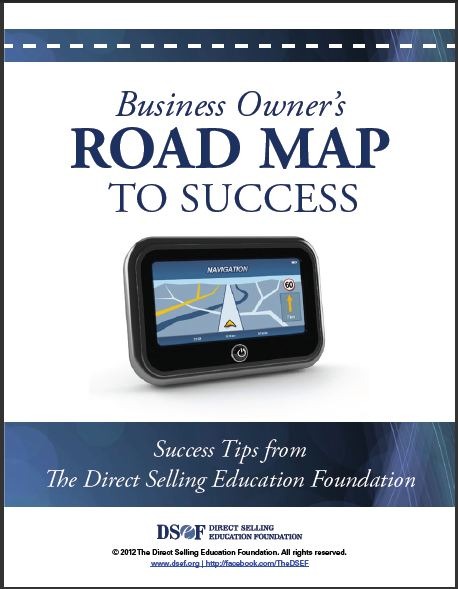
Free e-book “Business Owner’s Road Map to Success.” It has over 50 pages of techniques for everything a small business owner needs to master, from business planning and ethical selling to a success mindset. It’s all there and it’s free for you. To get it, just “Like” our Facebook Page here: http://on.fb.me/KsIN6P Pass it on!

DSEF & FTC: Payday Mayday: Seek Alternatives to Costly Loans that Can Sink You

DSEF & FTC: Payday Mayday: Seek Alternatives to Costly Loans that Can Sink You

Today’s highlighted blog post from FTC/NCPW:

Click here:

Payday Mayday: Seek Alternatives to costly Loans that Can Sink You

The ads are everywhere — on the radio, television, the Internet, even in the mail. They refer to payday loans, cash advance loans, check advance loans, post-dated check loans, or deferred deposit loans. And their promises of quick cash to get out of a financial bind can be tempting to many.

For 13 years, the DSEF has been proud to partner with the FTC and other organizations to offer a wide array of education events and resources that encourage consumers nationwide to take full advantage of their rights and make better-informed decisions.

You’ll find a wealth of resources at www.ncpw.gov that will help you protect your privacy, manage your money, learn more about credit and debt, decipher advertising messages, and steer clear of fraud and scams.

Please take a moment to share the resources on this Web site with others in your communities and companies and, together, we’ll help build a nation of better-informed and educated consumers.

Charles. L. Orr
Executive Director

DSEF & Money Wise Women: Raising Money Smart Kids

DSEF & Money Wise Women: Raising Money Smart Kids

Today’s highlighted post from Money Wi$e Women Get Smart Teleseminar Series:

Raising Money Smart Kids

Learn how parents can help their children develop a healthy attitude towards money. Janet Bodnar will share a wealth of suggestions, ideas and tips on raising money smart kids — from a young age to college bound teens.

Janet Bodnar

Janet Bodnar is editor of Kiplinger’s Personal Finance magazine. During her career at Kiplinger, Bodnar has written about a wide range of topics on investing, money management and the economy. She is also a nationally recognized expert in the field of children’s and family finances, and the author of several books. Her latest book is Money Smart Women: Everything You Need to Know to Achieve a Lifetime of Financial Security (Kaplan). Praising Money Smart Women, Time magazine noted that Bodnar “avoids the patronizing finger wagging and sticks to giving advice that women can really use.” She speaks frequently on the subject of women and money. Bodnar’s “Money-Smart Kids” column appears regularly at www.kiplinger.com/columns/kids. It was chosen by Moneysmartz.com as one of the top financial columns online. And Bodnar is the kids and money coach on the AOL Coaches site.

DSEF proudly sponsors the free Money Wi$e Women Get Smart Teleseminar Series hosted by Marcia Brixey, Founder and President of Money Wise Women Educational Services and author ofThe Money Therapist: A Woman’s Guide to Creating a Healthy Financial Life. The series covers topics related to business and finances and provides women the opportunity to learn from professional experts in a safe, comfortable environment.

To find out about upcoming teleseminars, visit http://www.moneywisewomengetsmart.com/

DSEF Academic Engagement

Complete a brief survey to help us identify academic or university connections companywide.

This survey will help us learn more about:

  • The various partnerships each department has with a professor, college or university.
  • The existing connections that our employees may have with a university.
  • How our team can better support or align with these relationships.

Please provide us with the following contact information:

Do you or your department have an ongoing professional partnership or personal relationship with a university, college professor, program or department?