
All posts in Blog

How to Run a Business on a Shoestring Budget

How to Run a Business on a Shoestring Budget

Running your business on a tight budget is not only possible, but extremely beneficial, even when times are good.  You don’t even need a degree in business or finance to create and stick to a budget; all you need is common sense, organizational and planning skills, and motivation.  Read on for some ways to operate your business on a shoestring budget.

  • Understand your cash flow.  Cash flow, in its simplest terms, is the movement of money in and out of your business.  It is of utmost importance that you know where every penny you spend goes, and where every penny you earn comes from.  This may seem easy, especially if you’re the only employee, but unless you document carefully and review your cash flow frequently, you may find that too much money is being spent that does not contribute to your bottom line.  If you need to tighten your belt, so to speak, it may be necessary to cut back on expenses that are not directly related to income.  For example, that shiny new business card certainly looks nicer coming out of your pocket to hand to a prospect, but is the higher cost going to directly result in a sale?  These are questions you need to ask yourself when creating and/or revisiting your budget.
  • Stick to your budget.  This may seem obvious, but it isn’t difficult to underestimate your expenses and overestimate your income.  When budgeting, be conservative.  Before making any kind of purchase, ask yourself why you need it and how it will bring in money.  Sticking to your budget and reviewing it often will help prevent cost overruns before they happen.  Tip:  Categorize each expense according to a pre-determined system that works for your particular situation.  This will make it much easier to sort your expenditures and decide which ones contributed to your income and which did not.
  • Push sales.  Starting and running on a shoestring budget means you lack capital and that’s not the ideal. To overcome the lack of capital you must be willing to quickly generate sales. You must clearly identify your target market and have prospects ready to buy. Make sure your marketing materials reach those who need your products/services and your sales presentation is effectively closing sales. For free marketing resources, visit the Small Business Administration website.
  • Establish a network. You will need to quickly establish a large targeted network of prospects that are ready to buy, a network of influencers that will help spread the word about your business, and a group of people who’ll support your vision. Having a large network of people is the key to running a business on a shoestring budget. The more people you and your business are connected with, the more sales you will have. This will allow your business to get established, maintain stability and create the foundation to a successful long term business.

If you do go this route you will need strong planning, organization, networking skills, and a commitment to push for sales to quickly generate income to establish your business. Operating on a shoestring budget is definitely achievable as long as you’re willing to put in the work. How do you run your business on a budget?  Please share your ideas below!
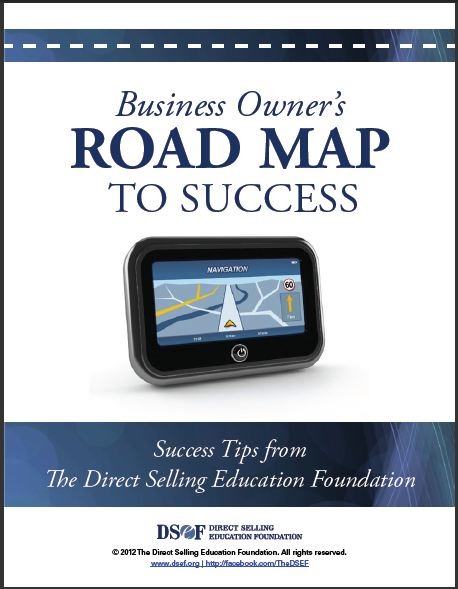
Free e-book “Business Owner’s Road Map to Success.” It has over 50 pages of techniques for everything a small business owner needs to master, from business planning and ethical selling to a success mindset. It’s all there and it’s free for you. To get it, just “Like” our Facebook Page here: http://on.fb.me/KsIN6P Pass it on!

DSEF & Money Wise Women: Your Money Personality and Self-Employment

DSEF & Money Wise Women: Your Money Personality and Self-Employment

Today’s highlighted post from Money Wi$e Women Get Smart Teleseminar Series (Click here):

Your Money Personality and Self-Employment

Mikelann Valterra is the founding director of the Women’s Earning Institute and is passionately devoted to helping women earn at their potential. She is also the author of Why Women Earn Less: How to Make What You’re Really Worth. She’s a nationally sought after expert on women’s work, money and earning issues. For over a decade, Mikelann has empowered women to overcome self-sabotaging beliefs about wealth, transform their relationship to money, and unlock their earning potential.

DSEF proudly sponsors the free Money Wi$e Women Get Smart Teleseminar Series hosted by Marcia Brixey, Founder and President of Money Wise Women Educational Services and author ofThe Money Therapist: A Woman’s Guide to Creating a Healthy Financial Life. The series covers topics related to business and finances and provides women the opportunity to learn from professional experts in a safe, comfortable environment.

To find out about upcoming teleseminars, visit http://www.moneywisewomengetsmart.com/

DSEF & CBBB: Nickeled and Dimed – Six Things That Used to Be Free

DSEF & CBBB: Nickeled and Dimed – Six Things That Used to Be Free

Nickeled and Dimed – Six Things That Used to Be Free

By Katherine Hutt

“Our free society is turning into a fee society,” says Bankrate.com, a website that (still) offers free rate information to consumers. “Many services and goods that were once freebies now cost money.”

On its blog, the online financial newsletter notes that lots of things – like free checking, hotel pillow chocolates, and free online news – are disappearing from the marketplace. Penn State marketing professor Fred Hurvitz chalks it up to creative price increases. “You can up your basic price and include all of the service as if it’s free,” he notes, “Or you can try to keep the base prices as low as possible — and charge separately for extras.”

No-cost banking is rare, according to Bankrate’s 2011 Checking Account Survey. Even noninterest checking accounts usually are not free, and average account maintenance fees are $4.37 a month, compared to $2.49 just a year earlier. And the average fee for a noncustomer to use a bank’s ATM? A whooping $2.40.

Other small fees that hit hard:

• Most pizza chains are now charging $2-3 for delivery (and, yes, you still need to tip the driver)
• Service station often charge to us the air pumps (which means you are paying for air)
• Snacks, headphones and blankets on airplanes now cost you…even seat selection can come with a fee

For the full story, go to Bankrate.com http://www.bankrate.com/finance/personal-finance/freebies-now-you-pay-for.aspx

DSEF and Council on Better Business Bureaus (CBBB) fosters honest and responsive relationships between businesses and consumers—instilling consumer confidence and advancing a trustworthy marketplace for all.

About the Better Business Bureaus
As the leader in advancing marketplace trust, Better Business Bureau is an unbiased non-profit organization that sets and upholds high standards for fair and honest business behavior. Every year, more than 87 million consumers rely on BBB Business Reviews® and BBB Wise Giving Reports® to help them find trustworthy businesses and charities across North America. Visitwww.bbb.org/us for more information.

How to Create an Effective Action Plan

How to Create an Effective Action Plan

Throughout the course of running a business, you will need to set goals for yourself along the way.  These may be related to customer service, marketing, professional development, or anything else that will contribute to the success of your business.  However, it isn’t enough to simply set a goal; you must create a plan of action that will guide you in achieving it.  For most people, a step-by-step guide that includes benchmarks and due dates is effective.  Here is a list of things to consider when creating your action plan.

  • Prepare for success. Think of an action plan like a race. Just like in a race, warm up your body and mind before you make your action plan. See yourself reaching the finish line, celebrating the win, and have a reward ready for once you complete your tasks. Successful people know they will win before they even start the race.
  • PrioritizeMost projects or goals require a multitude of steps to complete, often overlapping and dependent on each other.  As with any other aspect of business, time is of the essence, and you likely will not be able to exclusively work on this project all day every day.  For this reason, prioritize the steps included in your plan so you can work on the most imperative ones first.  Tip:  When deciding on an item’s priority level, also put the most difficult tasks at the top of the list.  This is especially important if the list includes items that you dread.  For example, if your action plan includes making follow-up calls to collect overdue payments from clients, it’s a good idea to put it near the top of the list.  Asking for money, even money owed to us, is never pleasant, so instead of procrastinating, get a task like this out of the way.
  • Break down long-term projects into smaller chunks.  If you have something that needs to be done within the next six months, for example, create more short-term checkpoints that will allow the project to be completed on time.  This way, even if you don’t get to work on it every day or even every week, you will still have a plan in place for getting it done because the tasks involved are more manageable.  If something seems too overwhelming, we tend to do nothing because we don’t know where to start.  Breaking down projects into smaller tasks will prevent this from happening.
  • Plan realistically.  Because you are the backbone of your business, you should have a very good sense of how much time you have to commit to all of your responsibilities.  Keep this in mind when writing the action plan, especially when choosing deadlines and benchmarks.  If you only give yourself three days to completely overhaul your entire filing system, you are setting yourself up for failure.  Consider not only your other business responsibilities, but also your personal ones as well.  If you are the one your family depends on to take your turn in the soccer carpool, have dinner ready when everyone comes home, or walk the dog every evening, don’t forget to factor those types of things into your day.  Planning too much in too little time will only frustrate you, add stress to your life, and even prevent you from accomplishing your goal altogether.
  • Revisit and adapt as needed.  Sometimes in life and in business, things do not play out as we had hoped or planned.  To prepare for and deal with the unexpected, take the initiative to review your action plan and change it if necessary.  Let’s say your goal was to implement online ordering by the end of the quarter.  However, your local competitor has just launched a new website that includes this feature.  You now need to go back to your action plan and re-work it so that you can get your website up and running by the end of the month so you don’t lose customers that want this convenience.  As business owners, we must always be flexible, prepared, and willing to adapt to change and unforeseen circumstances.

How do you create an action plan for your business?  Please share your ideas below!

Free e-book “Business Owner’s Road Map to Success.” It has over 50 pages of techniques for everything a small business owner needs to master, from business planning and ethical selling to a success mindset. It’s all there and it’s free for you. To get it, just “Like” our Facebook Page here: http://on.fb.me/KsIN6P Pass it on!
What a Kid Can Teach You About (Direct) Selling

What a Kid Can Teach You About (Direct) Selling

Recently, Inc. magazine had an article entitled What a 9 Year Old Can Teach You About Selling. The main point of the article is that you need a clear and memorable message about your products/services that all buyers can easily and quickly understand. Here are three questions similar to the questions posed in the article:

  1. What do you do?
  2. Why should I buy from you?
  3. Why don’t I do it myself or get someone else?

Come up with answers to these questions that will help all buyers easily and quickly understand your products/services.

For example – Here are our answers to why you should support the DSEF:

  1. What do you do? We’re an organization that provides useful information and support that empowers direct sellers and small businesses to succeed.
  2. Why should I buy from you? We help direct sellers and small businesses every day to keep their focus on succeeding and we’ve been doing it successfully since 1978.
  3. Why don’t I do it myself or get someone else? Imagine trying to sort through all the current business information and apply it to your business (while still running your business!). We distill all that information for you, work as your help desk, promote the benefits of the direct selling industry and help small businesses like yours succeed.

When thinking about your answers, focus on using simple day to day language, on solving problems, on your personal strengths and why you do what you do. Consumers are bombarded by information overload. So, keep your message short, answer those three questions for them and chances are they’ll remember you when they are ready to purchase.

How would you answer these 3 questions about your business? Share your answers with us in the comments below. What other suggestions or comments would you like to share?

Free e-book “Business Owner’s Road Map to Success.” It has over 50 pages of techniques for everything a small business owner needs to master, from business planning and ethical selling to a success mindset. It’s all there and it’s free for you. To get it, just “Like” our Facebook Page here: http://on.fb.me/KsIN6P Pass it on!

Using Your Strengths to Build Your Business

Using Your Strengths to Build Your Business

Look back on your childhood and think about activities you enjoyed: sports, playing an instrument, performing in a play, etc.  Why did you enjoy the activity?  Most likely, it was because you excelled in that area.  When we have some level of success, it motivates us to continue learning and striving to improve ourselves even further.  Applying your strengths to your business is crucial to achieving your professional goals.

  • Identify your strengths.  Believe it or not, some people don’t even know what they’re good at.  Make a list of things you do well, even if you don’t think they are relevant to your business because there’s a good chance that you can tap into it for even the most minor aspect of being your own boss.  If one of your strengths is that you are well-organized, apply that to anything in your business that requires short or long term planning (marketing strategies, seeking referrals, etc.).  Furthermore, if you are good at making people laugh, then use that in your interactions with customers and prospects.  People always remember others who make them feel comfortable, so don’t be afraid to let your personality shine through.
  • Start with who you know.  If you know other small business owners or direct sellers, pick their brains about areas of your business you’d like to improve.  Don’t be afraid to ask for advice and even for some referrals or contacts if appropriate.  Even if you don’t know anyone personally, consider secondary contacts, such as your best friend’s cousin, who owns the local pastry shop.  Any connection you have to successful people in business can be an asset to your own.
  • Be yourself.  You may have a lot of competition, but there’s only one you.  Both employees and customers alike will be turned off if you present yourself as someone you’re not.  People respond well to sincerity, especially in business, where it is imperative that you build meaningful relationships with others.  If you’re uncomfortable talking about yourself, get the other person talking about themselves.  Ask questions that will give you some more insight about how your product or service can help them, and show a genuine interest in what they are saying.  The more at ease you are with yourself, the more the customer will be at ease with you.
  • Have fun!  You’re probably involved in a business because something about it appealed to you.  Maybe you have always enjoyed cooking, so being a consultant for a kitchenware company allows you to share your culinary talents with others.  Even though owing a business requires hard work and can be stressful, don’t forget why you’re doing it.  Take the initiative to share your love of what you do with others in creative, out-of-the-box ways.  For example, in addition to throwing a traditional home party for that kitchenware company, host a community cook-off where local residents can demonstrate their own recipes using different products, vote on the best, and the winner can receive a nice prize from your catalogue.  By showing others that you enjoy what you do, you spread a positive feeling that people want to be around.

Reflecting upon your strengths and not letting your weaknesses become obstacles are two key elements to small business success.  How do you use your strengths to build your business?  Please share with us in the comments section below!

Free e-book “Business Owner’s Road Map to Success.” It has over 50 pages of techniques for everything a small business owner needs to master, from business planning and ethical selling to a success mindset. It’s all there and it’s free for you. To get it, just “Like” our Facebook Page here: http://on.fb.me/KsIN6P Pass it on!

How to Make the Sales Process Faster

How to Make the Sales Process Faster

In today’s busy world, everyone is looking for ways to make things faster and easier.  That’s why large retail chains like Target and Best Buy do so well; they cater to people’s need for one-stop shopping.

As a small business owner, you can serve this need as well by implementing some shortcuts and conveniences that will make a customer’s shopping experience both easy and quick.  The better the experience is for the customer, the more likely that person will be to patronize your business repeatedly in the future.

Here are some suggestions to speed up the actual process of completing a sale.

  • Keep payment methods on file.  This works especially well if your customer uses the same card to pay every time. With your customer’s permission and as long as you are in compliance with government requirements, you can keep a credit or debit card on file.  This way, the customer doesn’t have to bother with presenting the card, signing receipts, or entering the card number online over and over again. With a payment method on file, you’re eliminating an often time-consuming step of the sales process.
  • Set up your website for online orders.  This involves a few details, such as obtaining an SSL Certificate for encrypting transactions as well as setting up a payment system such as Google Checkout or Paypal.  If your website includes a product listing, it makes sense to allow your customers to not only browse, but order too.
  • Allow automatic refills of consumable products.  If you have express payments implemented, this type of shortcut is a logical progression.  For example, the cosmetics company Bare Escentuals offers a club membership where customers can have their personalized color combinations of makeup delivered to their door at their chosen frequency.  This eliminates the need for customers to have to keep reordering the same thing, it ensures that the customer never runs out of what is needed, and it also keeps the reorders and payments steady for the company.  This mutually beneficial setup makes shopping much more convenient.
  • Go mobile.  Use the explosion of smartphones to your advantage.  Consider implementing QR codes that users can scan from their phones.  The code can take them directly to an order form, a product review, and/or a list of related products/services.  QR codes are not difficult to implement, especially if you use some of the simpler services such as Delivr or QR Stuff.  You may also want to consider accepting mobile payments. This can be done by individual salespeople using a mobile phone reader like ProPay’s JAK or Square, or you can have a mobile app developed that customers can download and shop through. You should also make sure that your website is mobile-friendly (not just visible in a mobile browser). Consider developing a mobile version of your site that is sized appropriately for a mobile browser that allows customers to shop easily from their phones without a lot of scrolling.

As with any aspect of your business, make sure that whatever shortcuts you put in place for your customers act as a help to your business rather than a hindrance, which can occur if you dive in without deciding how it will truly impact the sales process.  Tailor each shortcut to meet your customers’ needs, and make sure that all links and scannables are working properly.

How do you implement shortcuts to make the sales process faster and easier for your clients?  Please share with us in the comments section below!

DSEF & CBBB: 3 Easy Steps to Protect Yourself From Investment Scams

DSEF & CBBB: 3 Easy Steps to Protect Yourself From Investment Scams

3 Easy Steps to Protect Yourself From Investment Scams

By Monica Bradford

When looking to invest your hard earned dollars, take the time to do your homework. Anyone can be a victim of investment fraud. Before considering an investment, ask questions, do your research, and reach out to your local investment firms and advisers.

FINRA Investor Education Foundation, specializes in Investment Fraud and has a plethora of valuable information to help you sort through your next investment decision. FINRA, along with BBB, recommend three key strategies to help distinguish good offers from bad ones:

End the conversation. Practice saying “No.”  Simply tell the person, “I am sorry, I am not interested. Thank you.” Or tell anyone who pressures you, “I never make investing decisions without first consulting my___. I will contact you if I am still interested.” Fill in the blank with whom ever you choose- your spouse, child, investment professional, attorney or accountant. Knowing your exit strategy in advance makes it easier to leave the conversation, even if the pressure starts rising.

Turn the tables and ask questions. A legitimate investment professional must be properly licensed, and his or her firm must be registered with the Financial Industry Regulatory Authority (FINRA), the Securities and Exchange Commission (SEC) or a state securities regulator- depending on the type of business the firm conducts.

Talk to someone first. Be extremely skeptical if the person promoting the deal says, “Don’t tell anyone else about this special deal!” A legitimate investment professional won’t ask you to keep secrets.

Exercising these three key strategies will go a long way when protecting yourself from fraudsters. Remember, the more knowledgeable you are when making investments, the less likely you are to become a victim. When making an investment there’s no urgency to race against the clock – take your time and make an informed decision.

For more information on protecting yourself from investment fraud, visitwww.saveandinvest.org.

DSEF and Council on Better Business Bureaus (CBBB) fosters honest and responsive relationships between businesses and consumers—instilling consumer confidence and advancing a trustworthy marketplace for all.

About the Better Business Bureaus
As the leader in advancing marketplace trust, Better Business Bureau is an unbiased non-profit organization that sets and upholds high standards for fair and honest business behavior. Every year, more than 87 million consumers rely on BBB Business Reviews® and BBB Wise Giving Reports® to help them find trustworthy businesses and charities across North America. Visitwww.bbb.org/us for more information.

Simple Ways to Add Value to Your Business

Simple Ways to Add Value to Your Business

In this economy, it has become the norm for consumers to seek out products and services that will bring them the most bang for their buck.  In other words, everyone is looking for the best value.  Even an everyday trip to the grocery store involves a search for the best value; why buy three individually packaged rolls of paper towels for $3.00 each when you can get a 6-pack of the same kind for $14.99?  As a small business owner, it is important to add value to your own products and services, so your customers are assured that they are making the best decision by patronizing your business.

Problem:  A higher-priced product is perceived as too expensive and rarely sells.

Solution:  Highlight the versatility of the product, and educate customers on its many uses, some of which they may be unaware.  For example, a cashmere blend sweater wrap in your company’s catalogue is one of the priciest products at $79.  Most of the customers who see it and try it on absolutely love it, but don’t want to spend so much on one article of clothing.  Add value to the product by highlighting its ability to be worn on its own, as a wrap over a dress or blouse, tied in front or in back, etc.  You may also point out that because of the high-end fabric, it will last many years and serve as a staple in one’s closet.  Once all of that is considered, the price does not seem so high.

Problem:  Most people don’t patronize small businesses because they don’t think they can offer the same conveniences as big box stores.

Solution:  Emphasize your excellent customer service and throw in conveniences when possible.  For example, if someone wants to make an exchange or purchase an add-on to one of your products, offer personal delivery so the person doesn’t have to make the extra trip.  Take it one step further by making a follow-up call a few days later to make sure the customer is completely satisfied.  Most people are willing to pay a bit more for top-quality service and convenience.  The ability you have to be more personal with your customers is something you should take full advantage of when marketing your business.

Problem:  Customers seem skeptical about making the purchase.

Solution:  Offer a test drive of your product or service.  This is an effective way to demonstrate your confidence in your business as well as an opportunity for you to showcase what you have to offer.  One local masseuse who works out of her home offers three-minute “mini-massages” for just $3, but it becomes free when the client decides to either stay or book a future 30-minute or longer session.  This strategy allows potential customers to literally try out her service completely risk-free, which works especially well for this kind of business since you can’t “return” a massage if you’re not happy with the results.

Adding value to your business doesn’t have to cost you any money.  With a bit more time and effort, you could find yourself an increased customer base that is spreading the good word about your products and services to family and friends.  How do you add value to your business?  Please share your ideas below!

Free e-book “Business Owner’s Road Map to Success.” It has over 50 pages of techniques for everything a small business owner needs to master, from business planning and ethical selling to a success mindset. It’s all there and it’s free for you. To get it, just “Like” our Facebook Page here: http://on.fb.me/KsIN6P Pass it on!

DSEF & CBBB: Who Called Me? How to Find Out

DSEF & CBBB: Who Called Me? How to Find Out

Who Called Me? How to Find Out

By Holly Doering

When you get a call from an unfamiliar number, call it back and there’s no answer, what do you do? Here is what I do. First, I go to a few websites where you can enter the number that’s bothering you and see if other people know who it is or what they want:

www.whocalled.us
www.800notes.com (for area-code 800 numbers)

You can also Google the number, or run it through an online directory likewww.411.com or www.anywho.com. Use an “area code locater” website to find out what city and state the call is coming from.

Stopping unwanted calls isn’t easy, but legitimate businesses should put you on their internal do not call list if asked. You can also try using a call blocker.  According to the Who Called Us website:

  • Uniden DECT1288 blocks up to 20 numbers, plus Private and Unknown, with the reject tone, without ringing the phone.
  • Panasonic KX-TG106 blocks up to 30 numbers, plus all unidentified callers, with a busy tone, after the phone rings once.
  • JF Teck Caller ID with Ring Controller blocks up to 70 numbers, and can be set to always allow up to 100 to ring through.

If the pests won’t quit calling, you can contact your telephone company and file a complaint with the Federal Trade Commission, which runs the National Do Not Call Registry. You can also complain at the Federal Communications Commission website or by calling 888-225-5322.

Personally, I have found that signing up with the Do Not Call list and switching to an unlisted phone number have drastically reduced the number of nuisance calls made to my family. (Be aware that your status on the Do Not Call list doesn’t prevent alltelemarketing calls—there are exceptions for groups like charities.)

To sign up for the American Do Not Call Registry go to www.donotcall.gov or call 1-888-382-1222 from the phone you wish to register. To sign up for the Canadian Do Not Call List, click here.


DSEF and Council on Better Business Bureaus (CBBB) fosters honest and responsive relationships between businesses and consumers—instilling consumer confidence and advancing a trustworthy marketplace for all.

About the Better Business Bureaus
As the leader in advancing marketplace trust, Better Business Bureau is an unbiased non-profit organization that sets and upholds high standards for fair and honest business behavior. Every year, more than 87 million consumers rely on BBB Business Reviews® and BBB Wise Giving Reports® to help them find trustworthy businesses and charities across North America. Visitwww.bbb.org/us for more information.