

Dr. Sandy Jap
The direct selling channel seems to be a favored target for Federal Trade Commission (FTC) scrutiny. In 2019, the Direct Selling Self-Regulatory Council (DSSRC) was established by the Direct Selling Association (DSA) in partnership with the BBB National Programs (BBBNP). The mission of the DSSRC is to enhance consumer and regulatory confidence in the advertising and marketing practices of the direct selling channel through independent, third-party review of claims disseminated by or on behalf of direct selling companies. Since its founding in 2019, the job of the DSSRC has been to educate and encourage direct selling companies to follow and comply with ethical sales and advertising practices.
Has this self-regulation effort in the direct selling channel been effective? Industry self-regulation is an important, yet under-studied phenomenon in business of which we know little. And whether self-regulatory organizations are truly successful at curbing marketing misbehavior is an open question that I seek to answer. To this end, we conducted an evaluation of the effectiveness of the DSSRC’s efforts and case outcomes since its inception in 2019 through February 2024. This analysis was based on their internal reports as well as those represented in the BBB and DSSRC database. Here is the evidence, by the numbers. For the full report, please click here.

Self-monitoring reduces inappropriate marketing practices. First and foremost, there is substantial support for the DSSRC’s value in promoting self-regulation and ethical sales and marketing practices in the direct selling channel. Over the five-year period, the DSSRC accomplished the following:
- The DSSRC addressed more than 3,600 product and income earning claims involving over 236 different direct selling companies. These inquiries involved an almost identical number of DSA member companies and non-DSA member companies, which might suggest a lack of bias towards DSA members in program administration and self-regulatory efforts.
- The DSSRC brought about a wide range of claim responses from direct selling companies ranging from product and income claim removal and modification, additional disclosures or substantiation to social media posts, changes in company policies, increased monitoring and education, and consultant actions such as the removal/modification of misleading or false claims or termination/suspension.
- DSSRC inquiries have resulted in over 400 instances of expeditious resolutions, formal administrative closures, additional education, and dialogue, as well as 25 referrals to the FTC.
This leads to the conclusion that the DSSRC’s self-regulation efforts represented a substantial workload that did not land on the FTC’s desk, require an intervention by a state attorney general office or persist unaddressed.
DSA membership matters. DSA members showed clear evidence of better and more compliance with ethical marketing practices than non-DSA members. While the full report details a substantial number of statistically significant differences between the behaviors, claims and investigative outcomes of inquiries brought against DSA member companies and non-DSA member companies, I highlight a few here:
1) DSA member companies (compared to non-DSA member companies) have fewer product and earning inquiries than non-members. Moreover, their DSA member company consultants are more responsive at removing and modifying problematic product and income earning claims.
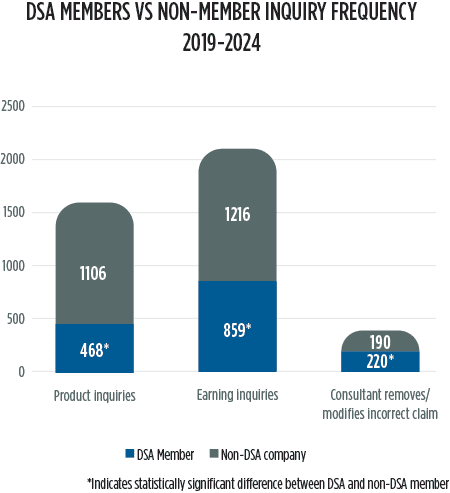
2) DSA member companies also average fewer problematic product and income earning inquiries than non-member direct selling companies, and when the problematic inquiries arise, they are removed or resolved significantly faster than the problematic inquiries of non-member companies.
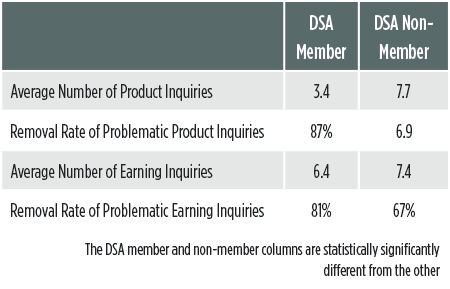
Specifically, DSA members average 3.4 product inquiries versus 7.7 for non-DSA members and will remove 87% of those problematic product inquiries versus 69% for non-DSA members. Additionally, DSA members average 6.4 earning inquiries versus 7.4 for non-DSA members and will remove 81% of those problematic earning inquiries versus 67% for non-DSA members.
3) DSA member companies are less likely to require actions to remedy non-compliance and have a greater number of expeditiously resolved inquiries.
4) DSA direct selling companies demonstrate greater compliance with DSSRC final decisions than non-member direct selling companies.
This suggests that DSA membership is very meaningful in terms of encouraging appropriate sales and marketing practices among direct selling companies. This is likely because DSA members adhere to a written Code of Ethics which established industry standards for consumer protection, receive access to additional educational materials, get updates on the “rules of the road,” and the opportunity to engage in and acclimate to supplementary regulatory and compliance dialogue than non-DSA member companies.
Is self-regulation working in the direct selling channel? Absolutely! I find substantial support for the DSSRC’s value in promoting self-regulation and ethical sales and marketing practices in the direct selling channel. Through February 2024, the DSSRC has accomplished the following:
- The DSSRC has addressed more than 3,600 product and income earning claims in 450 inquiries involving over 236 different direct selling companies. These 450 inquiries involved almost an identical number of DSA member companies and non-DSA member companies.
- It has brought about a wide range of claim responses ranging from removal and modification, additional disclosures or substantiation to social media posts, changes in company policies, increased monitoring and education and consultant actions such as the removal/modification of false claims or termination/suspension.
- The DSSRC’s investigations have resulted in over 400 instances of expeditious resolutions or administrative closures, additional education, and dialogue, as well as 25 referrals to the Federal Trade Commission (FTC). An administrative closure means that the direct selling company has made a bona-fide, good faith effort to address DSSRC’s concerns (i.e., by removing the claims at issue or showing that they have attempted to contact the individual responsible for the claims to have the claims removed or significantly modified).
How can the direct selling channel continue to build trust? The research highlights potential next steps in self-regulation of the direct selling channel. Along with publishing this report in its communications and on its website, the DSSRC and the direct selling channel should consider the following:
1) Pool this data report with other findings from the academic self-regulation task force and promote a direct selling white paper that assesses self-regulation efforts since the DSSRC was established.
It is critically important that the DSA and the DSSRC continue to publicize and make available aggregate data on the number of cases, companies, and inquiries that are regularly investigated through its self-monitoring efforts. This has been a constant source of criticism from both the FTC and groups such as Truth in Advertising (TINA) at annual DSA compliance and legal events. These statistics should be regularly shared through social media and prominently displayed on the DSSRC and DSA websites.
2) Standardize reporting to the DSSRC. The DSA’s Ethics and Self-Regulation Committee and General Counsel Committee should standardize internal reporting activities to the DSSRC. The goal is annual reporting of aggregate measures of their self-policing activities and enforcement efforts over time.
3) The DSSRC should collect anonymized aggregate data from compliance officers at direct selling companies on the nature, and effectiveness of their company and consultant education efforts.
4) A survey of DSA-member company compliance officers should be conducted to:
a) Measure and validate the perceived value of the DSSRC.
b) Identify additional support needed from the DSSRC in self-regulation efforts and education.
DSA members should continue to work together to learn best practices from each other regarding policy compliance, as well as shaping and developing corporate policies and monitoring encouraging salesforce compliance. Such roundtable groups have been shown to be particularly effective in a wide range of industries and are a useful template that could be fruitfully applied to the direct selling channel as well.
5) The DSSRC would benefit from receiving regular feedback from DSA members on what type of policy information, education content, and other actions that would be of most use to direct selling companies and their employees.
6) Collect data on education efforts and outreach effectiveness. Such data should be regularly collected on how often its education content is being shared or presented to DSA member companies and with which employees. It is not enough for compliance officers and team members to be educated. Company leadership, marketing teams – all direct sales corporate employees – as well as independent sales consultants need to be regularly instructed and informed on appropriate marketing sales practices and product and income earning claims. Moving forward, information on the number, names, and positions of attendees at DSSRC education events should be retained. Efforts should also be made to provide education in a wide range of formats including synchronous and asynchronous media forms, at industry events, in blog forms, and in podcasts.
Importantly, the value of self-regulation is not solely evidenced by casework, but by education regarding appropriate sales and advertising practices, ongoing dialogue with direct selling companies, and program socialization of industry commitment to meaningful and effective self-regulation. Establishing the DSSRC is not enough. Continuing this commitment and building upon it as evidenced by DSA members working together to build consumer and FTC trust, disseminating the quantitative evidence of these efforts, and ongoing education, is the path forward to building and sustaining trust in the direct selling channel.
