All posts tagged consumer rights

DSEF & CBBB: My Experience With Multi-Level Marketing

DSEF & CBBB: My Experience With Multi-Level Marketing

Today’s highlighted blog post from the Council on Better Business Bureaus (CBBB)

My Experience With Multi-Level Marketing

By Holly Doering

When I was a little girl, my mom stayed at home to look after us kids while my dad worked. That was just what women did. Especially in a small Idaho town with a limited job market. One day my mother brought home a trunk of cosmetics: almond face lotion, peppermint foot rub. There was even something called “Royal bee jelly”—I think—that was thick and soft but not greasy. The company was called “JAFRA”—Jan and Frank were the owners—and all Mom had to do to make money was to host parties and invite her women friends.

What happened next was what often happens—Mom threw a few parties, went to a few parties, and then the creams and lotions sat in the cupboard for the next decade. (They were really good products though!)

In college, I worked for a fast-food franchise owner who was big into Amway. She bought all their cleaning products for the restaurant. She was convinced that this company was her ticket to early retirement and possibly multi-millionaire-dom. As far as I know, she’s still trying to become a Diamond.

The BBB sometimes gets calls about multi-level marketing (MLM) opportunities. Are they scams? While any particular scenario could be a scam, the short answer is no. MLM is a legitimate business model that has made certain individuals extremely wealthy. However, it isn’t easy.

Many people who get into network marketing don’t have the personality or the tenacity to make a go of it. They chicken out of making cold calls or meeting strangers at Perkins. They don’t want to invest all the time into their home business that would be necessary for it to succeed. Or, they get divorced and end up splitting their downlines.

You see, I worked for a network marketing company for a few years. But not as a distributor—I stayed with a steady paycheck from the corporate offices. It was there that I met a company executive who had gone from abysmal failure—sleeping in his car—to  becoming a millionaire with these MLM products. And when he did, his sponsor, the man who recruited him, became a multi-millionaire.

I chose this particular MLM company to work for because their products:

  • Were environmentally-friendly
  • Were not tested on animals
  • Were not significantly more expensive than items in the store
  • Were something I could believe in

Here are some tips on how to research a MLM company and make sure it’s right for you. Think about:

  • How transparent is the company? Are you getting real answers to your questions, and not just the run-around or a company line? Do they disclose their financials?
  • Has the company been around for awhile? (The longer, the better.)
  • What is the initial investment?
  • Who will support you? Does your sponsor seem like they will actively coach you and have time for you? Can you meet other people in this person’s downline?
  • How are refunds—to you and to your customers, clients, prosumers, or whatever they call them—handled? How do they deal with complaints?
  • Is their technology easy to use or is it kind of a pain?
  • What is the competition?
  • Are they aware of or do they subscribe to the Direct Selling Association (DSA) Code of Ethics?

Final thoughts

1)      Remember that pyramid schemes, which can look like MLM to begin with, are not legitimate. A genuine MLM opportunity involves product and is not simply mailing cash back and forth.

2)      You may not want to make your living from your MLM business—I’ve been to plenty of Cabi, Partylite, Avon, and Pampered Chef parties hosted by friends who just wanted to get these products that they liked discounted or cheaper. Even so, do your homework first. You won’t be sorry you did.
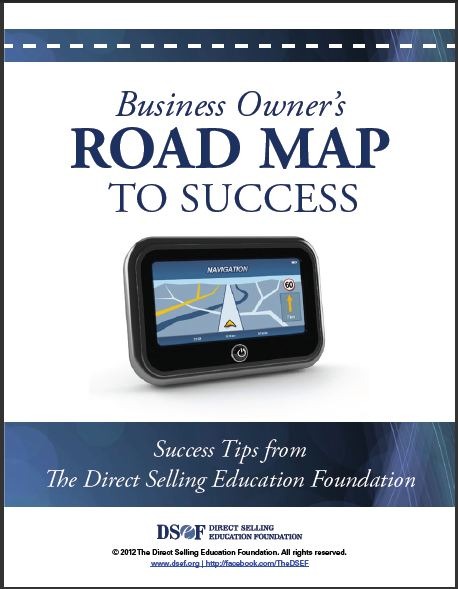
Free e-book “Business Owner’s Road Map to Success.” It has over 50 pages of techniques for everything a small business owner needs to master, from business planning and ethical selling to a success mindset. It’s all there and it’s free for you. To get it, just “Like” our Facebook Page here: http://on.fb.me/KsIN6P Pass it on!

DSEF and Council on Better Business Bureaus (CBBB) fosters honest and responsive relationships between businesses and consumers—instilling consumer confidence and advancing a trustworthy marketplace for all.

About the Better Business Bureaus
As the leader in advancing marketplace trust, Better Business Bureau is an unbiased non-profit organization that sets and upholds high standards for fair and honest business behavior. Every year, more than 87 million consumers rely on BBB Business Reviews® and BBB Wise Giving Reports® to help them find trustworthy businesses and charities across North America. Visitwww.bbb.org/us for more information.
DSEF & CBBB: Facebook to Start Charging for New Profile Changes?

DSEF & CBBB: Facebook to Start Charging for New Profile Changes?

Facebook to Start Charging for New Profile Changes?

Will Facebook start charging due to the new profile changes? The answer is NO!

There’s a chain letter spreading through social media saying that Facebook will begin charging due to the new profile changes. It’s false.

It says:

IT IS OFFICIAL. IT WAS EVEN ON THE NEWS. FACEBOOK WILL START CHARGING DUE TO THE NEW PROFILE CHANGES. IF YOU COPY THIS ON YOUR WALL YOUR ICON WILL TURN BLUE AND FACEBOOK WILL BE FREE FOR YOU. PLEASE PASS THIS MESSAGE ON, IF NOT YOUR ACCOUNT WILL BE DELETED IF YOU DO NOT PAY


DSEF and Council on Better Business Bureaus (CBBB) fosters honest and responsive relationships between businesses and consumers—instilling consumer confidence and advancing a trustworthy marketplace for all.

About the Better Business Bureaus
As the leader in advancing marketplace trust, Better Business Bureau is an unbiased non-profit organization that sets and upholds high standards for fair and honest business behavior. Every year, more than 87 million consumers rely on BBB Business Reviews® and BBB Wise Giving Reports® to help them find trustworthy businesses and charities across North America. Visitwww.bbb.org/us for more information.



DSEF & CBBB: Should I Buy Medication Online?

DSEF & CBBB: Should I Buy Medication Online?

Today’s highlighted blog post from the Council on Better Business Bureaus (CBBB)

Should I Buy Medication Online?

– DECEMBER 13, 2011 POSTED IN: HEALTH CARE SERVICES, NATIONAL

You gotta love spam. Or maybe not. Either way, an unsolicited email from “CANAD1AN-DRUGSTORE” caught my eye this morning. It promised me “80% OFF CIAL1S-V1AGRA-LEV1TRA.”

Hmmm. I need two bottles of insulin about every three weeks in order to live. Not to mention test strips, syringes, ketone kits, emergency blood sugar tablets and other supplies. These items are very expensive. Worse than a $5 a day coffee habit. Eighty percent off would be fantastic. But…

But me being me, I’m a little leery. Here’s what the U.S. Food and Drug Administrationhas to say about buying medications online:

Good points

  • It’s easier to get products. This is helpful if you can’t leave your home or live far from a drug store.
  • You can check many different sites to check out products and prices.
  • You can ask a pharmacist questions in private.

Dangers

Some web sites:

  • May not know the cause of your health problem. They could also give you the wrong medicine for your illness.
  • Some sites will sell you prescription drugs even if you don’t have a prescription. This is against the law.
  • Don’t protect your private information, like your credit card number.

Some medicines sold online:

  • Are fake
  • Have things in them that are could hurt you
  • Are too strong or too weak
  • Are too old to work
  • Aren’t approved by the FDA
  • Aren’t made using safe standards
  • Aren’t safe to use with other meds or products you use
  • Aren’t labeled
  • Aren’t stored or shipped the right way

How can I buy online safely?

  • There is a program that makes sure online drug stores are legal and honest. It is called the VIPPS (Verified Internet Pharmacy Practice Site). Websites can choose to apply or not to apply to use the VIPPS seal. Before using a website, check for the VIPPS seal.
  • Don’t buy from sites that sell:
    • Prescription drugs even if you don’t have a prescription.
    • Products that are not approved by FDA.
  • Use sites that have a pharmacist to answer your questions online. Only buy from sites based in the US. It’s against the law to buy prescription drugs from other countries. It could also be unsafe.
  • Go to your doctor or clinic before using any medicine for the first time.
  • For more information, you can contact the National Association of Boards of Pharmacy, which works with the FDA to ensure drug safety, or the FDA athttp://www.fda.gov/default.htm or 1-888-INFO-FDA.

If I do decide to try to buy diabetic supplies online, it won’t be by clicking on an unsolicited email with suspect spelling, that’s for sure.

DSEF and Council on Better Business Bureaus (CBBB) fosters honest and responsive relationships between businesses and consumers—instilling consumer confidence and advancing a trustworthy marketplace for all.

About the Better Business Bureaus
As the leader in advancing marketplace trust, Better Business Bureau is an unbiased non-profit organization that sets and upholds high standards for fair and honest business behavior. Every year, more than 87 million consumers rely on BBB Business Reviews® and BBB Wise Giving Reports® to help them find trustworthy businesses and charities across North America. Visitwww.bbb.org/us for more information.
 

DSEF & FTC: Thinking about Layaway? Know the Fees Before You Shop

DSEF & FTC: Thinking about Layaway? Know the Fees Before You Shop

Today’s highlighted blog post from FTC/NCPW:

Thinking about Layaway? Know the Fees Before You Shop

November 17th, 2011 by Lisa

As Black Friday draws near, thoughts turn to holiday shopping, and how to get the items you want for a price you can afford.  If you choose to buy using layaway, the Federal Trade Commission (FTC), the nation’s consumer protection agency, has a few holiday tips for you:

  • First, get all the details about the retailer’s layaway plan in writing before you shop.  Look for the terms of the plan — including the time you have to pay for your items, the store’s refund policy for layaway items, minimum payments, and layaway charges or other fees.
  • Second, it’s useful to compare the costs of using layaway versus using credit.  Add up the total amount in fees you will pay at a specific store before you get your item(s) out of layaway.  Then, if you have a credit card, determine how much money in interest you would pay if you charged the same item(s).
  • Third, be sure to check out the store, including online retailers, before you shop there at all. Your state Attorney General’s Office (www.naag.org), local consumer protection agency (www.consumeraction.gov), and your local Better Business Bureau (www.bbb.org) can tell you if consumers have filed complaints against the retailer or online service.

Before you hit the stores, take a look at the FTC’s consumer alert on layaway plans.  Also, if a store fails to disclose important terms of its layaway plan, it may be breaking the law.  If a retailer hasn’t explained its layaway terms, or has otherwise misled you about them, file a complaint with the FTC at ftc.gov/complaint or by calling 1-877-FTC-HELP (382-4357).

For 13 years, the DSEF has been proud to partner with the FTC and other organizations to offer a wide array of education events and resources that encourage consumers nationwide to take full advantage of their rights and make better-informed decisions.

You’ll find a wealth of resources at www.ncpw.gov that will help you protect your privacy, manage your money, learn more about credit and debt, decipher advertising messages, and steer clear of fraud and scams.

Please take a moment to share the resources on this Web site with others in your communities and companies and, together, we’ll help build a nation of better-informed and educated consumers.

Charles. L. Orr
Executive Director

Direct Selling Education Foundation

DSEF & CBBB: Facebook Lottery Scam

DSEF & CBBB: Facebook Lottery Scam

Today’s highlighted blog post from the Council on Better Business Bureaus (CBBB)

Facebook Lottery Scam

BBB has received reports recently about an email scam involving Facebook.  The email purports to be directly from Facebook founder Mark Zuckerberg and says you’re the winner of a million-dollar Facebook sweepstakes.  The email is a scam and it’s suspected that it’s being used to deliver malware onto consumers’ computers.  As a result, BBB warns anyone who receives it to avoid clicking any links and to delete the email immediately. 

Aside from the use of Facebook to draw consumers in, the email scam carries with it many common red flags: consumers are being emailed out of the blue, they’re being asked to click on suspect links in order to “claim a prize,” and there’s often an explicit demand for confidentiality, as well.

Should you receive an email like this, you can report it to the Internet Crime Complaint Center at www.ic3.gov.

DSEF and Council on Better Business Bureaus (CBBB) fosters honest and responsive relationships between businesses and consumers—instilling consumer confidence and advancing a trustworthy marketplace for all.

About the Better Business Bureaus
As the leader in advancing marketplace trust, Better Business Bureau is an unbiased non-profit organization that sets and upholds high standards for fair and honest business behavior. Every year, more than 87 million consumers rely on BBB Business Reviews® and BBB Wise Giving Reports® to help them find trustworthy businesses and charities across North America. Visitwww.bbb.org/us for more information.

DSEF & CBBB: Should I Put My Social Security Number on a Job Application?

DSEF & CBBB: Should I Put My Social Security Number on a Job Application?

Today’s highlighted blog post from the Council on Better Business Bureaus (CBBB)

Should I Put My Social Security Number on a Job Application?

You’ve been laid off. Your full-time job now is looking for a full-time job. Naturally, you turn to the Internet.

Wow, there’s something in your field on Craigslist. It’s recent. The salary looks good. All you have to do is email them…and provide your social security number.

WAIT.


DSEF and Council on Better Business Bureaus (CBBB) fosters honest and responsive relationships between businesses and consumers—instilling consumer confidence and advancing a trustworthy marketplace for all.

About the Better Business Bureaus
As the leader in advancing marketplace trust, Better Business Bureau is an unbiased non-profit organization that sets and upholds high standards for fair and honest business behavior. Every year, more than 87 million consumers rely on BBB Business Reviews® and BBB Wise Giving Reports® to help them find trustworthy businesses and charities across North America. Visitwww.bbb.org/us for more information.

DSEF & CBBB How Responsible Are You?

DSEF & CBBB How Responsible Are You?

Today’s highlighted blog post from the Council on Better Business Bureaus (CBBB)

How Responsible Are You?

Many years ago, when I was growing up, my dad told me: “A man is only as good as his word.” (My dad is one of these old-fashioned Idaho guys who says “man” when he means “person.” But I got the message.) I didn’t get it from what he said though.


DSEF and Council on Better Business Bureaus (CBBB) fosters honest and responsive relationships between businesses and consumers—instilling consumer confidence and advancing a trustworthy marketplace for all.

About the Better Business Bureaus
As the leader in advancing marketplace trust, Better Business Bureau is an unbiased non-profit organization that sets and upholds high standards for fair and honest business behavior. Every year, more than 87 million consumers rely on BBB Business Reviews® and BBB Wise Giving Reports® to help them find trustworthy businesses and charities across North America. Visitwww.bbb.org/us for more information.


DSEF & CBBB Facebook Adds Virus Protection

DSEF & CBBB Facebook Adds Virus Protection

Today’s highlighted blog post from the Council on Better Business Bureaus (CBBB):

Facebook Adds Virus Protection


Facebook has announced it will now check outgoing links for viruses, reports The Next Web.

Viruses, phishing attempts and Trojans have become increasingly prevalent on Facebook. People often fall prey by clicking on links on the social network itself or on their walls, which in turn posts to their own wall for others to click.

DSEF and Council on Better Business Bureaus (CBBB) fosters honest and responsive relationships between businesses and consumers—instilling consumer confidence and advancing a trustworthy marketplace for all.

About the Better Business Bureaus
As the leader in advancing marketplace trust, Better Business Bureau is an unbiased non-profit organization that sets and upholds high standards for fair and honest business behavior. Every year, more than 87 million consumers rely on BBB Business Reviews® and BBB Wise Giving Reports® to help them find trustworthy businesses and charities across North America. Visitwww.bbb.org/us for more information.

DSEF & CBBB For Businesses & Consumers

DSEF & CBBB For Businesses & Consumers

Today’s highlighted blog post from the Council on Better Business Bureaus (CBBB):

Social Media and Customer Service

Social media can be a tool to strengthen customer service and to give consumers an outlet to complain about a company. According to Convergys Corp, one bad tweet or one negative comment on Facebook can lose a company up to 30 customers.

How do you use social media to strengthen your customer service? Does your business have social media policy in place to deal with complaints? We would love to hear from you. Please share with us in the comments below.

DSEF and Council on Better Business Bureaus (CBBB) fosters honest and responsive relationships between businesses and consumers—instilling consumer confidence and advancing a trustworthy marketplace for all.

About the Better Business Bureaus
As the leader in advancing marketplace trust, Better Business Bureau is an unbiased non-profit organization that sets and upholds high standards for fair and honest business behavior. Every year, more than 87 million consumers rely on BBB Business Reviews® and BBB Wise Giving Reports® to help them find trustworthy businesses and charities across North America. Visit www.bbb.org/us for more information.
DSEF Shares Consumer Resources from the FTC

DSEF Shares Consumer Resources from the FTC

Today’s highlighted blog post from NCPW:

Free Trials Can Cost You

Trying something out for free? It sounds great, but there may be a catch — free trials aren’t always free.You may end up on the hook for lots more products and find it tough to cancel.


For 13 years, the DSEF has been proud to partner with the FTC and other organizations to offer a wide array of education events and resources that encourage consumers nationwide to take full advantage of their rights and make better-informed decisions.

You’ll find a wealth of resources at www.ncpw.gov that will help you protect your privacy, manage your money, learn more about credit and debt, decipher advertising messages, and steer clear of fraud and scams.

Please take a moment to share the resources on this Web site with others in your communities and companies and, together, we’ll help build a nation of better-informed and educated consumers.

Charles. L. Orr
Executive Director

Direct Selling Education Foundation


DSEF Academic Engagement

Complete a brief survey to help us identify academic or university connections companywide.

This survey will help us learn more about:

  • The various partnerships each department has with a professor, college or university.
  • The existing connections that our employees may have with a university.
  • How our team can better support or align with these relationships.

Please provide us with the following contact information:

Do you or your department have an ongoing professional partnership or personal relationship with a university, college professor, program or department?