

Archive for 2012

Executive Spotlight: Angela Loehr Chrysler, Team National

Executive Spotlight: Angela Loehr Chrysler, Team National

From the DSEF: We’re excited to continue our blog series featuring top executives in DSEF-supporter direct selling companies today! Every few weeks we’ll introduce you to another top executive, and they’ll share their thoughts on Direct Sales, Ethics, Social Good, and why they support the DSEF. 

Today we’re thrilled to continue this series with Angela Loehr Chrysler, the President and CEO of Team National, a company that provides membership savings with a wide variety of products and services in over 20 different industries. Team National has been a big supporter of the DSEF for many years, and Angela Loehr Chrysler is a member of the DSEF board. We’re thrilled to have her share her thoughts with you today. Enjoy!

Executive Spotlight: Angela Loehr Chrysler, Team National

Angela Loehr Chrysler

What is the name of your company, and how did you become involved with this company? 

My company is Team National. My dad is the founder of the company. I started in 2000, helping him with some research.

What did you do before you got involved with your company? 

I was in Medical Sales and was briefly involved with a direct selling company…right industry, bad company. They are no longer in business due to improper activities. It was a great learning experience.

What do you love about your company?

I love the people and the opportunity for us to help them change their lives, along with the lives of others around them.

What makes your salesforce amazing?

Great attitudes, fun people, entrepreneur spirit and the desire to help others grow and live their dreams.

Ethics is an integral part of DSA membership. How do you ensure your company maintains the highest level of ethics?

Ethics and integrity are important to us, therefore it begins with us. We believe we need to lead by example.  We need to communicate and model ethical behavior.  One of our leaders often says, “Our actions must speak so loud people don’t need to hear what we are saying.”

Social good is another essential element of direct sales. What kind of social good campaigns does your company participate in or run?

We feel we need to share the blessings we have been given. We support local and national charities. We donate product and marketing tools to regional events to raise money for our Charities of Choice.  We encourage giving back amongst our staff.  We also get involved in local events such as the Boys & Girls Clubs of Broward County, where we collected toys for kids. We walk with our staff in the Broward Humane Society walk for animals.  We attend and sponsor a variety of charity events throughout the year.

Your company has been a Direct Selling Education Foundation supporter. Why do you think the DSEF is important?

DSEF helps us share the positive information about our industry.  There are so many good things DSA companies are part of that we are thrilled to help DSEF tell the good stories and educate others about DSA as a whole. We are passionate about DSA and the opportunities with so many great companies and products.  Therefore DSEF is a natural choice to help educate and communicate information about our industry that allows us the opportunity to help so many.

Thank you, Angela, for sharing your thoughts with us. We are grateful for the support of companies like Team National, that help us to spread the message of ethics, entrepreneurship and integrity around the world. We appreciate you!

Free resource for you
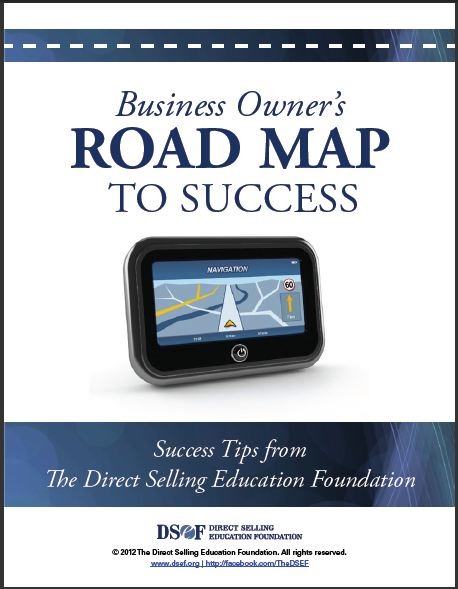
Download our free e-book “Business Owner’s Road Map to Success.” It has over 50 pages of techniques for everything a small business owner needs to master, from business planning and ethical selling to a success mindset. It’s all there and it’s free for you. To get it, just “Like” our Facebook Page here: http://on.fb.me/KsIN6P Pass it on!

Getting Your Message Heard

Getting Your Message Heard

One of the advantages of modern technology is that it is easy to get your information out the masses very quickly.  The downside to this is that there is an overabundance of data everywhere we turn, so our message can get lost in the crowd.  Here are some tips on making sure your message is heard, received, and acted upon.

  • Focus on the customer, not on your product.  People respond well to others taking a sincere interest in them.  Keep this in mind when designing your marketing material, updating your social media presence, and interacting with others face-to-face.  For example, instead of posting a Facebook status centered on your product or service, write one that requires comments from others about something in their lives.  “Nothing better than a morning jog after I’ve had my XYZ Protein Shake. What a boost of energy!  What do you drink in the morning before a workout?”  This status mentions your product, why you love it, and asks others to respond to a question.  It also allows them an opportunity to ask about your product, especially if they share your interests.  When people are talking about themselves, they don’t feel as if they’re being “sold to” and are much more open to listening to your message.
  • Not interested? Say thanks and move on.  If you have presented your product to a customer or your opportunity to a prospect in an effective way and he or she is still showing no interest in your message, accept their response and move on to your next task.  It does not pay (literally!) to waste time, energy, or materials on someone who is not interested.  Not every product or opportunity is for everyone.  For example, when talking to a guest at a home show about your business, you ask to make an appointment with them to discuss your opportunity.  The guest replies that she already works full-time at a job she loves and is stretched pretty thin between work and family.  Instead of pressing on to get that appointment, accept that she is likely not the right person to pursue, thank her for coming to the home show, and continue with business at hand.  Getting your message heard has as much to do with listening to others as it does talking to them.
  • Make it about customers’ needs.  Part of selling involves educating customers about why they would need your product.  At a recent gathering of other health-conscious individuals, a direct seller of nutritional supplements found himself in the company of someone who follows a vegan diet (consumes no animal products).  This person was unknowingly depriving his body of probiotics (good bacteria) needed to break down bad bacteria since he cut out all dairy (yogurt, cottage cheese, etc.).  The direct seller was able to teach the client about the importance of probiotics and what his company’s probiotic supplement line could do for his health.  This approach is requires a good deal of preparedness and listening skills, but can be very effective in getting your message across to others.

People are inundated with all kinds of messages throughout their day.  Make sure yours is heard by focusing on the customers and their needs.  How do you get your message heard?  Please share your ideas below!

Free e-book “Business Owner’s Road Map to Success.” It has over 50 pages of techniques for everything a small business owner needs to master, from business planning and ethical selling to a success mindset. It’s all there and it’s free for you. To get it, just “Like” our Facebook Page here: http://on.fb.me/KsIN6P Pass it on!
Questions to Improve Your Business

Questions to Improve Your Business

Running any kind of business requires a lot of self-awareness and self-reflection.  Self-awareness helps us use our strengths to their fullest potential and minimize our weaknesses, while self-reflection allows us to improve upon past mistakes.  In order to tap into these two qualities and improve your business, ask yourself the following questions to focus your energy in all the right places.

  • What do I do best?  Perhaps you have a unique way of making people feel comfortable, getting them to talk about themselves, and leaving a positive memorable impression on them.  Harness your strengths into selling power for your business.  Make it a point to chat up as many guests at a home party as possible, and conduct your networking opportunities face-to-face when you can.  Whatever you happen to be good at, find a way of incorporating it into your business because you’re not just selling a product; you’re selling yourself.
  • What is my product’s best solution?  The product or service you sell must be the solution to a customer’s problem.  Most likely, it has several uses.  Decide which is most valuable and desirable for consumers and emphasize it in your demonstration and marketing efforts.  For example, your company’s line of educational books for children comes with a trade-in program for customers who make at least one purchase every six months.  This solves the all too common problem of children’s rooms being overfilled with books they’ve outgrown.  Such a unique and valuable solution to a problem plaguing most parents should definitely be one of the first things a customer learns about your product, as it sets it apart from competitors.
  • Where are most of my sales coming from?  This applies to both your demographic and your method of sale.  What is the profile of the customer who is buying the most?  (Businesswomen between 25-45 years old, mothers of young children) How are those sales being made? (online, at a home show, through referrals)  Analyzing your sales will help you maximize your marketing efforts so you get the greatest return on your investment.  It will also reveal any dead-ends you may have been unknowingly pursuing.

You’ve asked the questions; now what do you do with the answers?

Make the best use of this information by creating an action plan.  Set a goal (be specific with numbers and deadlines), create benchmarks, plan rewards for yourself, and map out your path to completing the goal.  If your goal is to implement a target marketing campaign, use the information you have about your strengths to come up with a way to execute the plan. Identify the solutions your product provides in order to hook your target market, and plan sales methods that will reach them.  Now your business approach is based on proven information about just a few elements which are essential to improving your business.

Being aware of yourself and being willing to reflect on past actions are two qualities that can make you a strong business owner.  Remember to always be honest with yourself about the answers to these questions, and commit yourself to putting your action plan into effect.  What questions do you think should be added to the list?  Please share your ideas below!

Free e-book “Business Owner’s Road Map to Success.” It has over 50 pages of techniques for everything a small business owner needs to master, from business planning and ethical selling to a success mindset. It’s all there and it’s free for you. To get it, just “Like” our Facebook Page here: http://on.fb.me/KsIN6P Pass it on!

Techniques to Get Motivated

Techniques to Get Motivated

Motivation, for most people, comes from within, but there are techniques you can use to get moving.  Running a business requires a great deal of self-discipline, so it can be hard to maintain that all of the time.  Here are some suggestions for getting motivated and staying the course.

  • Set your goals and put them in writing.  Identifying your goals is a great start to achieving your dreams and making them happen, but if you aren’t putting them in writing, they can lie dormant in your subconscious forever.  The act of writing down your goals is a call to action that will drive you to take the steps necessary to accomplish them.  Tip:  When writing these goals, be specific about any numbers involved; also, include a completion date.  For example, if your goal is to increase the number of times you share your opportunity every month, be specific about how much it needs to increase by.  “I will share my opportunity 5-7 times per week,” is a much more specific and attainable goal than “I will share my opportunity more often.”  The easier your goal is to visualize, the more motivated you will be to achieve it.
  • Use benchmarks.  Much of what is involved in a direct sales business requires long-term projects and objectives.  It can be difficult to stay on track, so implement benchmarks to keep you focused along the way.  Using the aforementioned goal of sharing your opportunity 5-7 times per week, create a benchmark of 1-2 per day.  By doing so, you won’t let the entire week go by and feel like you have to cram it all in to meet your goal.  Create benchmarks that are not impossible to meet, but challenge you enough that you feel satisfied with your work, and tailor them to suit the needs of your goal.
  • Reward yourself.  We all need and want something to look forward to.  Many nutrition experts suggest that people who are trying to lose weight reward themselves in non-food related ways each time they achieve a goal.  The anticipation of a meaningful reward can be a very effective motivator.  Not only will it help you reach your immediate goal, but it will help you stay on the path to achieving any long-term objectives you have set.
  • Read and/or listen to inspirational people.  There are a ton of books out there written by motivational speakers both in the sales industry and not.  Take some time each week to read a bit or listen to them on your iPod.  You can learn a great deal from those who have been where you are, and sometimes all we need is a little extra push from an outside source to keep us on track and get us re-energized.  Think of it as another form of professional development.
  • Focus on excellence rather than perfection.  If you set out to be perfect, you are setting yourself up for failure because nobody is perfect.  Even the most successful people in the world didn’t get where they are without making mistakes along the way.  So instead of focusing on perfection, strive for excellence.  You will then be able to celebrate your own personal and professional victories, large and small, and continue reaching for more.  You may be your own worst critic, but you should also be your own best cheerleader.

How do you find self-motivation?  Please share your ideas in the comments section below!

Free e-book “Business Owner’s Road Map to Success.” It has over 50 pages of techniques for everything a small business owner needs to master, from business planning and ethical selling to a success mindset. It’s all there and it’s free for you. To get it, just “Like” our Facebook Page here: http://on.fb.me/KsIN6P Pass it on!

Why Price Doesn’t Matter

Why Price Doesn’t Matter

Whether you’re making a big purchase like a new car or a small one like a jar of baby food, there is a variety of factors to consider besides how much something costs.  Like virtually all direct sellers, you really cannot control the price of your products, but successful salespeople know how to think like a customer.  In doing so, you can showcase those other factors that most likely outweigh price.

  • The product is a solution to a problem.  You’ve probably heard before that you should be educating your customer about the benefits of your product and how it can solve a problem.  For example, a businessman who travels frequently wants to improve his diet, but finds it very difficult to do so on the go.  Your company’s individually-sized protein powder packets can easily be mixed into a bottle of water and supplemented with whatever else he happens to be eating at the airport or in the hotel.  This convenience may come with a higher price tag, but in this case, the benefits far outweigh the cost.
  • Present a good value.  Customers are always in search of a good value.  As a representative of this product, it’s up to you to know what the product’s overall value is and how to share that information with your customers.  In the example above, the product offers convenience and nutrition, two things that contribute to its value.  Find out what the customer is looking for, since value can be perceived differently by everyone.  Aside from the protein powder’s nutrition and convenience, it also mixes well and pours easily out of the packet to eliminate messes; most people would rather pay a bit more for a product that suits their needs in so many ways.  Everyone wants to get the most value out of a hard-earned dollar.
  • Know why you have a competitive edge.  Knowing what your consumer wants and needs is important, but it’s also important to know what your competitors are offering.  It’s not uncommon for a customer to say, “But the XYZ company has this same kind of thing for a lower price.”  Such a statement can make or break the sale, depending on how prepared you are to respond.  Your customer may not realize that the competitor offers an inferior guarantee or that its product is made from lower quality materials.  Educate yourself about not only your product line, but also how your company competes with similar products and prices.
  • Offer peace of mind.  Because there is some degree of risk involved in making any kind of purchase, you want to be the one to minimize that risk and offer peace of mind to your customer that he or she is making the right decision to buy from you.  Of course you want to emphasize any guarantee policy that your company has in place, but you should also emphasize the quality of the product and your commitment to satisfying the customer.  Let’s say at a home show, one of the guests is visiting the hostess from out of state and is worried about the hassle and cost of having to make a return or exchange.  Offer to cover the postage and personally take her through the process if she needs to send something back.  With someone’s biggest concern no longer an issue, the sale can easily be made.

The price of a product is only one of many factors that contribute to a customer’s decision to make a purchase.  With a bit of research and preparation, you can be sure to overcome any obstacles you feel the price point has created when it comes to closing a sale.  How do you show your customers that price doesn’t matter?  Please share with us below!

Free e-book “Business Owner’s Road Map to Success.” It has over 50 pages of techniques for everything a small business owner needs to master, from business planning and ethical selling to a success mindset. It’s all there and it’s free for you. To get it, just “Like” our Facebook Page here: http://on.fb.me/KsIN6P Pass it on!

DSEF & CBBB – Go On, Trust Me: Why We Trust Some People But Not Others

DSEF & CBBB – Go On, Trust Me: Why We Trust Some People But Not Others

By Holly Doering

Ever think about why you trust some folks and not others? Author and psychologist Michael Lovas once conducted an experiment using body language. He stood at one end of the airport and walked toward someone at the other end, copying their gait, head position, and hand gestures. Almost always, the other person nodded, smiled, or otherwise acknowledged — even kids who looked like gangbangers.

I can remember a customer review on www.bbb.org that mentioned the author was initially inclined to trust a certain business because of the store cat, a well-fed, rescued animal. But the customer ended up unhappy. I don’t know who is wrong, right or misunderstood in that situation, but I do know this: If you want to “start with trust” when you research a company, it’s great if they’re kind to animals, a family-owned, multigenerational minority business, donate to charity, or in some other way seem similar to you. But!

The real substance is their track record. When you check out a company at www.bbb.org, you’re starting to build a picture of its past actions in the marketplace. Are they properly licensed? Do they generate a pattern or volume of complaints? How do they handle complaints? Remember that scam artists love to prey on your sympathies by telling you they, too, are Christian, policemen, disabled, teachers or something else that seems trustworthy.

A recent study at the Kellogg School of Management found that using subliminal clues, like the name of a good friend, could stimulate feelings of trust for a stranger without people realizing it. Con men, the professor says, commonly drop names to stimulate trust. So investigate before you invest: A gut feeling is fine, but trust ideally is earned.

Previously published in the Spokane Spokesman-Review.

DSEF and Council on Better Business Bureaus (CBBB) fosters honest and responsive relationships between businesses and consumers—instilling consumer confidence and advancing a trustworthy marketplace for all.

Free e-book “Business Owner’s Road Map to Success.” It has over 50 pages of techniques for everything a small business owner needs to master, from business planning and ethical selling to a success mindset. It’s all there and it’s free for you. To get it, just “Like” our Facebook Page here: http://on.fb.me/KsIN6P Pass it on!
About the Better Business Bureaus
As the leader in advancing marketplace trust, Better Business Bureau is an unbiased non-profit organization that sets and upholds high standards for fair and honest business behavior. Every year, more than 87 million consumers rely on BBB Business Reviews® and BBB Wise Giving Reports® to help them find trustworthy businesses and charities across North America. Visitwww.bbb.org/us for more information.

Leverage Your Productivity

Leverage Your Productivity

Which would you rather do: spend two hours completing a task or get it done in 45 minutes?  You may be spending more time than is necessary on various projects and day-to-day responsibilities for your business because you may not be working efficiently.  Take a look at the list below to learn how you can make the most of your time and increase your productivity.

  • Find your best time of day.  We all have a certain time of the day during which we are the most energized, motivated, and therefore productive.  For example, if you’re a morning person, plan on tackling the most challenging of tasks as soon as you begin your day.  Not only will you be able to make the most out of your peak time, but you will also be able to enjoy the remainder of your day much more because you already completed the hardest part. On the other hand, if you know you work best after lunch, make a point to eat something healthy and filling enough to give you the fuel you need to kick the next chunk of time into high gear.  By identifying when you work best, you can plan your day around those times.
  • Focus on what makes you money.  It isn’t difficult to side-tracked with several smaller tasks like answering emails, updating your Facebook status, and de-cluttering your filing cabinet.  Although these are all things that need to be done regularly, when time is of the essence, pour your energy and attention into things that actually make you money.  Call your referrals about hosting a party, book a meeting with a prospect to share your opportunity, or work on your demo for that upcoming vendor sale.  Money-making activities should always be a top priority when creating your day’s agenda.
  • Keep a time journal.  Whether your do it electronically or by hand, keeping a time journal can be a very helpful tool that you can use to improve your work habits.  Document every activity for at least a full work week. Don’t forget to include snack breaks, time spent sending and receiving personal texts, and anything else that you think only take a second.  Those “seconds” quickly add up, and by seeing in writing how you have been spending your time, you may realize that a change is in order.  On the other hand, you may also find that you are generally good at tuning out distractions, but certain times of day are less productive for other reasons (less energy, something unexpected comes up).  Analyze your time journal to further improve your good habits and eliminate bad ones.
  • Take advantage of what your upline has to offer.  One of the great things about the direct selling industry is the access you have to people with experience and success doing exactly what you’re doing.  Reach out to your upline to help you stay on task.  Ask them for tips on staying focused, how they manage a typical day, and what strategies they have used to increase their own productivity.  Your upline is a wonderful resource that can both help you directly or refer you to others who can.  Do seek them out to help you make the most out of your day.

Leveraging your productivity requires knowledge of your own strengths and weaknesses, a willingness to reflect and adjust, and motivation to succeed.  How do you leverage your productivity?  Please share your ideas in the comments section below!

Free e-book “Business Owner’s Road Map to Success.” It has over 50 pages of techniques for everything a small business owner needs to master, from business planning and ethical selling to a success mindset. It’s all there and it’s free for you. To get it, just “Like” our Facebook Page here: http://on.fb.me/KsIN6P Pass it on!

Effective Sales Calls

Effective Sales Calls

Making sales calls are a necessary part of your business, though for many people, it is one of their least favorite things to do.  We are sometimes hindered by a fear of rejection, but by implementing a few suggestions and preparing well, you will find your sales calls to be much more pleasant and effective.

  • Use referrals.  When making your list of contacts, use your referrals as a starting point.  You already have an opening when you make the call by telling the customer who referred you; this can even lead to a bit of small talk that will put the person at ease. For example, “Jane Woodson referred me to you. Our sons play on the same baseball team, and she mentioned that your son is on the team as well?  How is he enjoying the season so far?”  Using referrals can help you take a genuine interest in your contact, which will motivate them to listen to your pitch.
  • Offer a good value.  This can be a bit tricky, as value is perceived differently by different people.  However, as long as you are knowledgeable about the benefits of your product or service and how it compares to others, you will be able to demonstrate its value in ways other than price.  For instance, if a product you carry has similar features to a competitors’ but is more expensive, point out that it is made from higher quality materials, that it comes with a lifetime guarantee, or that the customer can try it risk-free for 60 days.  Whatever the incentive, always be clear in emphasizing a product’s value.
  • Provide solutions.  Most consumers are seeking certain products that have a purpose in their lives.  What solution does your product provide for a customer’s problem?  Reflect on your own experiences to help you answer that question.  One consultant for a jewelry company first fell in love with the product line because it allowed her to take her outfit from the office to an evening out by simply changing out one necklace for another or clipping an extra piece onto her bracelet to make it sparkle for her night out.  This may not be a life-altering solution, but it is a common one that most women would love to know about.  Be the answer to your customers’ problem.
  • Know your client.  A client never wants to feel as if he or she is just a number on your list of calls to make.  Tailor your calls to be specific to each person; this doesn’t mean that every single call will be different, but it does mean that you have done a certain amount of preparation for the call so that you can appeal to a client’s unique need.  You wouldn’t have the same conversation with a repeat customer that you would have with a prospect you’ve never met or done business with.  Take a few minutes to find out something about each contact before picking up the phone. Often that research can be done when receiving the referral.
  • Anticipate objections.  Sometimes you will encounter one or more objections to what you are trying to sell.  Before making a call, prepare a list of possible objections and decide how you will respond to each one.  You will not be able to anticipate every possible objection, but having a good idea as to how you will handle them can be useful in helping you overcome objections and make the sale. The more prepared you are, the less likely you are to be caught off guard without knowing what to say.
  • Use scripts wisely.  Writing a script is a great way to get started with sales calls.  You can literally map out your ideal conversation, and then using the suggestions above, prepare yourself for the many different turns the conversation may take.  One thing to be aware of, however, is not to sound like you are reading from a script which can sound extremely impersonal, and may cause a client to either tune out or cut the call short.  Use the script as a guide only; know what you are going to say and speak in a natural, conversational tone.

Do you have any tips to share for making your sales calls more effective?  Please share them with us below!

Free e-book “Business Owner’s Road Map to Success.” It has over 50 pages of techniques for everything a small business owner needs to master, from business planning and ethical selling to a success mindset. It’s all there and it’s free for you. To get it, just “Like” our Facebook Page here: http://on.fb.me/KsIN6P Pass it on!

Profile of an Easy Sale

Profile of an Easy Sale

Making a sale is not always easy. However, understanding these main points may help you convert more sales and make the process easier.

  1. Identify the right product for the right client. You must define your target market and then make sure that your products/services are solving problems they have. Without this key element you will not make many sales.
  2. Develop and cultivate relationships. If you have some kind of relationship with a prospect it will make it easier to approach them with your products/services. Done correctly, the sales pitch comes across more like helping out a friend. Make sure you are authentic, honest and providing a solution to your friend’s problem. A relationship built on trust and value will generate reorders.
  3. Once you have a relationship with your prospect, find out what their likes and dislikes are. Understand what impresses the prospect. Do they focus on value, style, ease? Lead with that in your solution to their problem (sales pitch).
  4. Finally, make the sales process quick, simple and easy. Your ability to do this will project professionalism and cause the prospect to perceive greater value in your products and services. And the next time he/she needs products/services like yours, he/she will go to you first.

Take a look at your current approach to selling. Do you follow these main points? How well are you implementing them? If you understand and apply these main points in this order, and take the time to do it correctly, in the long run you will generate more sales, reorders and make sales easier.

Free e-book “Business Owner’s Road Map to Success.” It has over 50 pages of techniques for everything a small business owner needs to master, from business planning and ethical selling to a success mindset. It’s all there and it’s free for you. To get it, just “Like” our Facebook Page here: http://on.fb.me/KsIN6P Pass it on!

DSEF & CBBB: Can You Get Rich Quickly By Flipping Houses?

DSEF & CBBB: Can You Get Rich Quickly By Flipping Houses?

By Holly Doering

This weekend, a company is coming to my town to hold a free seminar on “flipping” houses. According to our state’s Department of Labor & Industries, flipping is defined as owning a property for less than one year, making more than $500 in improvements, and selling the property with the intention of monetary gain.

The company in question has advertised in the past that you could earn between $3,000 and $10,000 a month with their program. Now they just say you’ll earn cash and build a massive residual income stream. It’s supposed to be pretty easy. Sound like a sweet deal?

Not so fast. Here’s the rest of the story:

1) While initial seminars are free, additional seminars cost $1,500. You’ll also be encouraged to invest in more training—up to $25,000.

2) Fox Business says that to make a living flipping houses, you’ll need to have at least half a dozen going at once. Other sources caution that flipping isn’t for the financially strapped—it requires cash reserves.

3) Even if you only flip one house per year, your state may consider you a “contractor,” which means you’ll need to be licensed, bonded, and insured with L&I. If the IRS considers you a “dealer-trader,” you’ll have to pay self-employment taxes.

4) This company has earned an F rating with the BBB, based on a government action alleging deceptive trade practices and consumer complaints reporting trouble canceling purchases and obtaining refunds. Always check the track records of companies atwww.bbb.org before doing business.

According to MSN Real Estate, house flipping is not as easy as it looks on TV. They report that on the original video of the A&E reality show “Flip This House,” there was even a warning stating “Do not try this at home. It’s for trained professionals. You will lose money.”

Making money in real estate is possible. But like anything else, it takes time and effort. If you attend a seminar like the one described above, ask a lot of questions and read contracts thoroughly before signing. (Make sure you get the exact name of the seminar you attended.) Understand any cancellation clauses or refund policies too.

DSEF and Council on Better Business Bureaus (CBBB) fosters honest and responsive relationships between businesses and consumers—instilling consumer confidence and advancing a trustworthy marketplace for all.

Free e-book “Business Owner’s Road Map to Success.” It has over 50 pages of techniques for everything a small business owner needs to master, from business planning and ethical selling to a success mindset. It’s all there and it’s free for you. To get it, just “Like” our Facebook Page here: http://on.fb.me/KsIN6P Pass it on!

About the Better Business Bureaus
As the leader in advancing marketplace trust, Better Business Bureau is an unbiased non-profit organization that sets and upholds high standards for fair and honest business behavior. Every year, more than 87 million consumers rely on BBB Business Reviews® and BBB Wise Giving Reports® to help them find trustworthy businesses and charities across North America. Visitwww.bbb.org/us for more information.